Bubbles are hexagonal.
On July 6th this was how I began an article discussing the shapes that occur in nature relative to the shapes that occur on the football pitch.
In nature the hexagon is the strongest structure, forming the basis of carbon, bee hives and even bubbles. In football we generally consider triangles and diamonds as the most important shapes, but these exist as shapes within shapes or as sub phases. As the hexagon is so strong it became of interest to me in the structure of the team when in possession, forming a solid base to prevent easy counter attacks. In combination with a wide a diamond attacking structure, formed by a quartet of players.
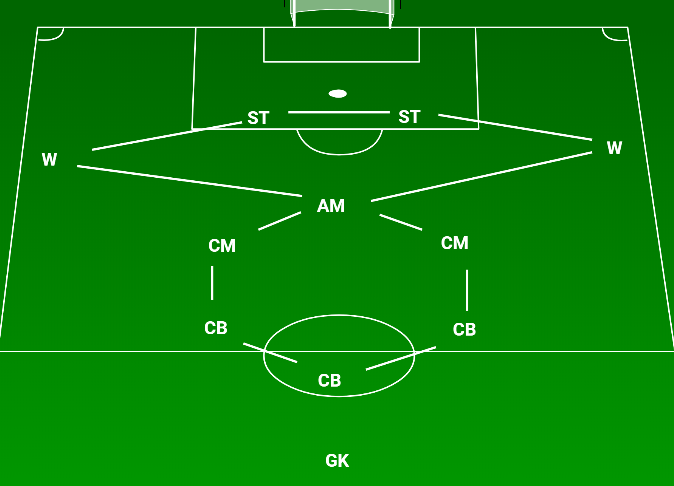
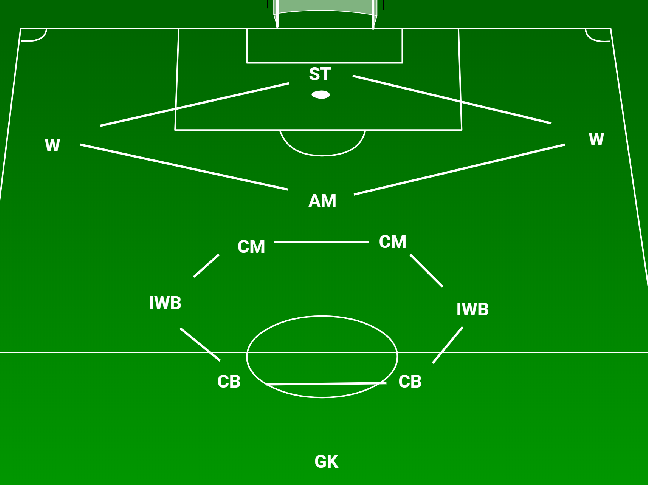
Having considered the concept I decided it might be interesting to attempt to implement the ideas into Football Manager. Should you decide to try the tactics out do keep in mind that I am using FM19, changes to the match engine may cause the tactics to behave differently in other versions but as the tactic is based on principles rather than breaking the match engine there is every chance that it will still work.
For a long time I have been using game breaking 4-4-2, using wingers and attacking full backs to deliver crosses galore. It was so successful that I had no reason to change it, making FM a game about creating transfer stories, rebuilding a formerly great club (Deportivo) or breaking goal records (Lincoln at Flamengo).
Implementing this tactical idea breathed a new lease of life into me and the game. It became fun again.
The tactical principles needed a game plan, or game model. I wanted the team to play a fast paced style, mixing long and short passing in order to combine rapidly. Possession would be important, but I did not want sterile possession. If the team had large amounts of possession it would be because the structure enabled the team to regain the ball effectively. The team would look to press and counter press with ferocity. The final important element would be to counter attack at speed.
My choice of club would be Bentford. The presence of Maupay, Watkins and Benrahma providing suitable attacking options.

With the team squeezing high up the pitch it became clear in pre season that this particular formation would require a very aggressive sweeper keeper, which lead to the selection of an attacking duty.
The roles of the central defenders were quite straight forward, but the fullbacks were very important. I hoped that by giving them inverted wing back and support roles they would form the sides of the hexagon. The central midfielders formed the top of the hexagon, with the Mezzala given licence to get forward. These players provide the stability to the team shape, a defensive shield even when in possession.
The wide players need to stay wide as they are the only players offering any width in the whole team.
Under the hood all players had adjustments to their individual instructions. Every player was instructed to take more risks and shoot less often. Taking more risks is a personal choice and philosophy, reflecting my real world approach of allowing and encouraging all players to express themselves. All players were also encouraged to mark tighter and tackle harder for added pressing ferocity.
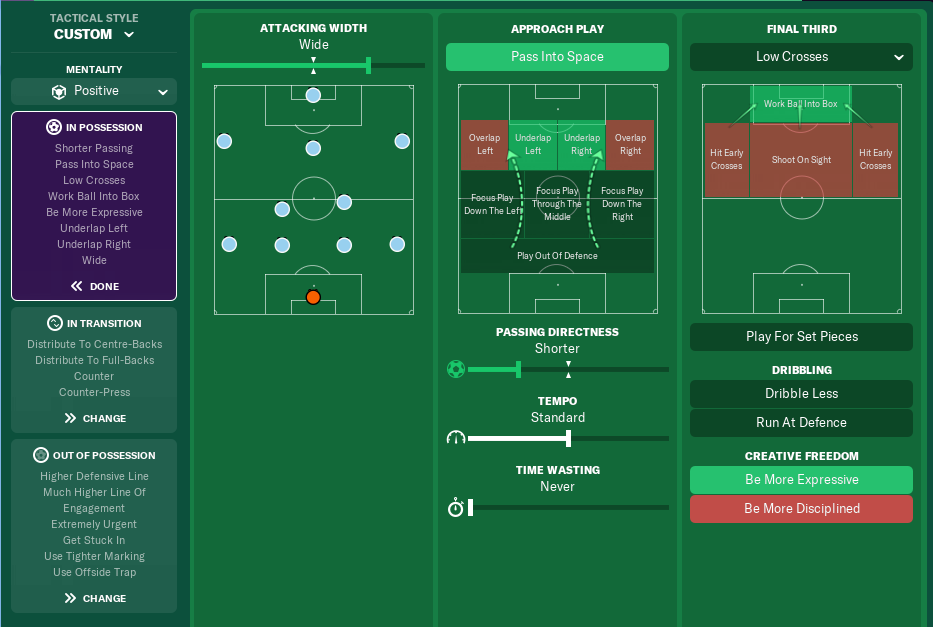
The only selection of real importance is the underlapping to encourage the inverted wing backs and Mezzala to get forward.
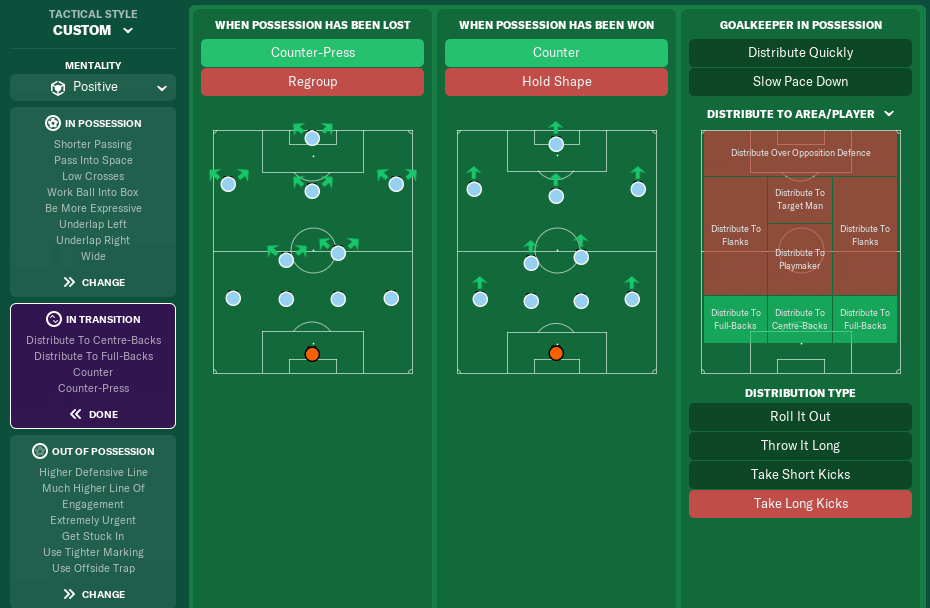
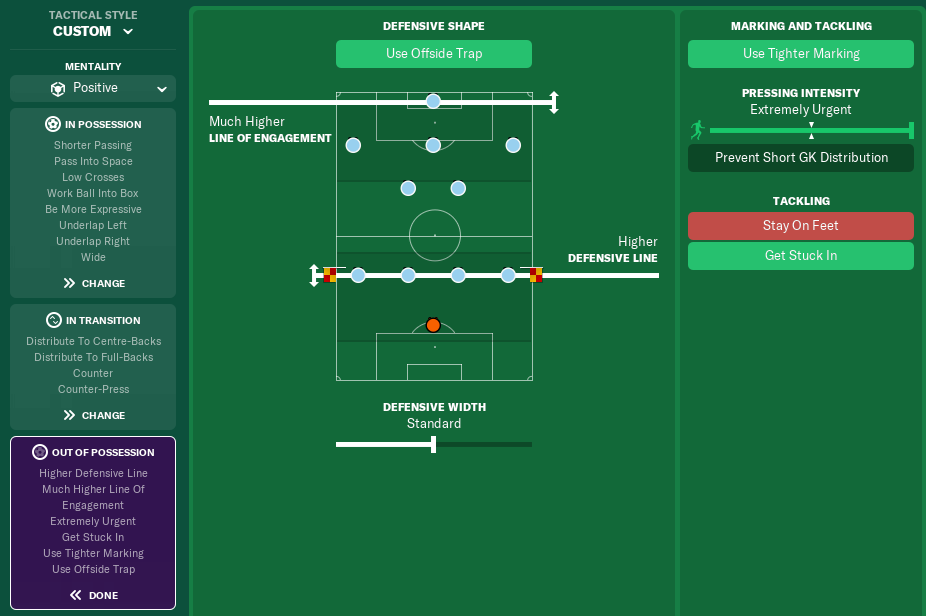
Deselecting prevent short GK distribution is the most important selection here. If we do not allow the GK to play short the forwards have no one to press. All the defenders will be marked, forcing the GK to play over our pressing unit. We must allow the short pass first in order to have something to press.
The early shapes looked promising, as did the attacking play.
The first aspect of the attacking play to stand out was the counter attacking. This exceeded all of my expectations and would continue to do so throughout the evolution of this tactic.
The team built well in possession with impressive attacking play and promotion was achieved with ease. The formation had defensive issues, being opened up from time to time. However, on FM19 Brentford were not particularly well ranked and when introducing a new tactic the defence is often unstable. I chose to keep faith that the defensive side would settle in the long run.

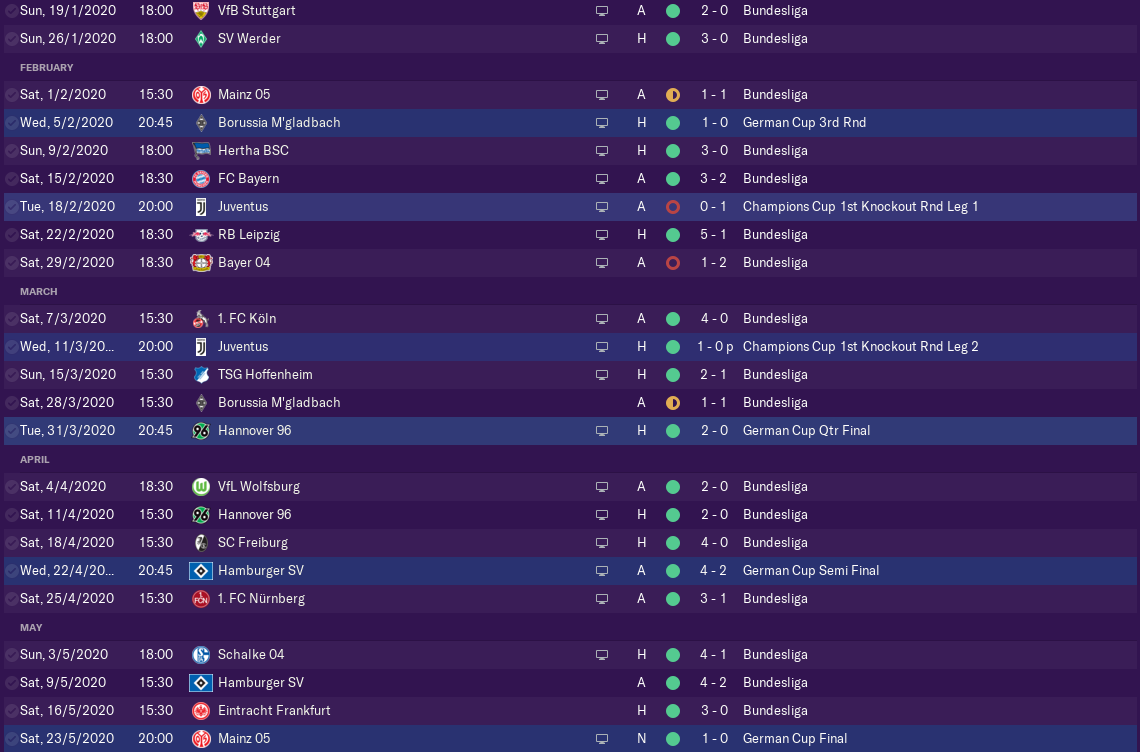
In the Premier League no changes were made to the system. Brentford were 5th when the opportunity to join Dortmund arrived. Promising results and performances were not enough for me to stay as I was keen to see what could be done with better players and some adjustments to the system.
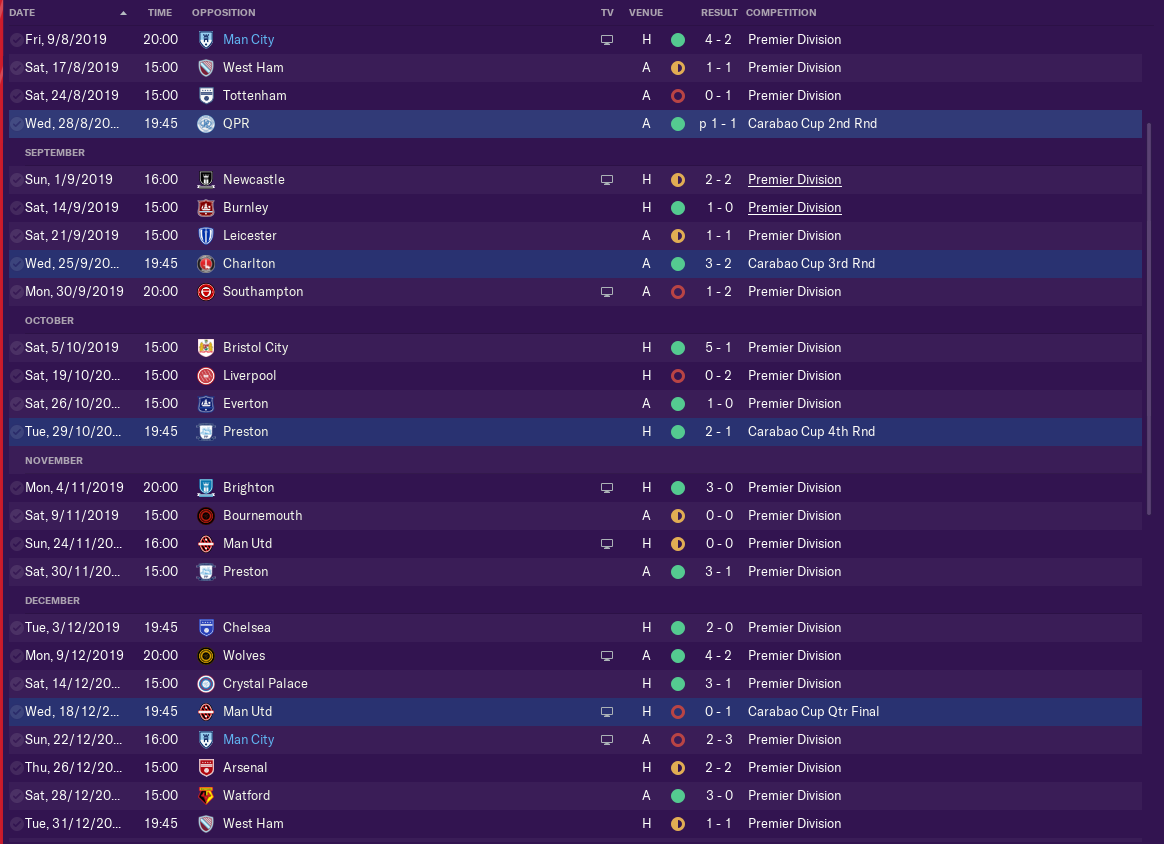
Dortmund sat 5th in the Bundesliga on my arrival. The impact of a new system was good enough to lift the team into first place and win the German cup. Unfortunately we were unable to get past Juventus in the Champions League.
Despite the relative success at Brentford there were problems with the way that the system behaved. The deep lying playmaker positioned himself far too high up the pitch. On the right side of the shape the inverted wing back and the Mezzala often were in each others way. Neither wide player would stay wide enough, making the whole team very narrow. I wanted to retain the principle ideas but help Dortmund’s fluidity in attack.
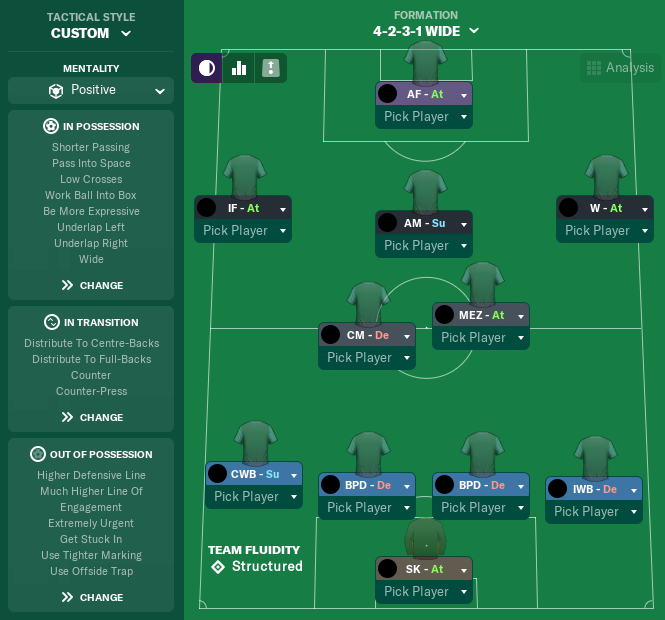
The formation would now be highly asymmetrical. The right sided attacker was still given a wide role but on the left the role became an inside forward, tucking inside. This was to clear space on the left for a complete full back, offering genuine width on the outside. The two midfield roles changed, now a central midfielder with a defensive duty and an attacking Mezzala. The other significant change was the inverted wing back on the right now having a defensive role, meaning that he would take up positions similar to a holding midfielder. The hexagon was now more flexible, with the attacking midfielder and inverted left winger sometimes dropping in. The practical impact in game was that the team now had width on the left and the central midfielder and inverted wing back protected the defence. The result of their positioning was more possession as we were able to pin the opposition inside their half.
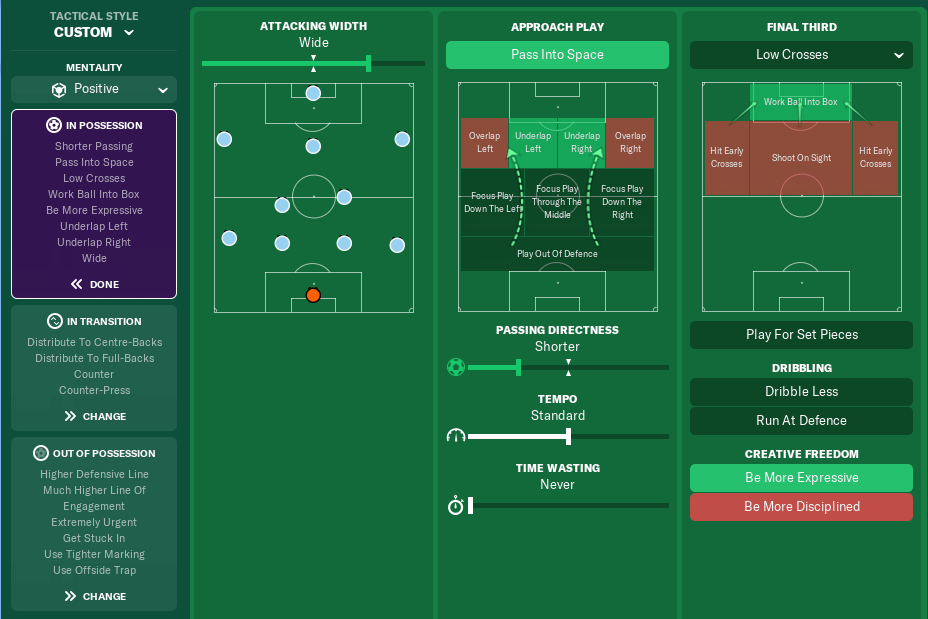
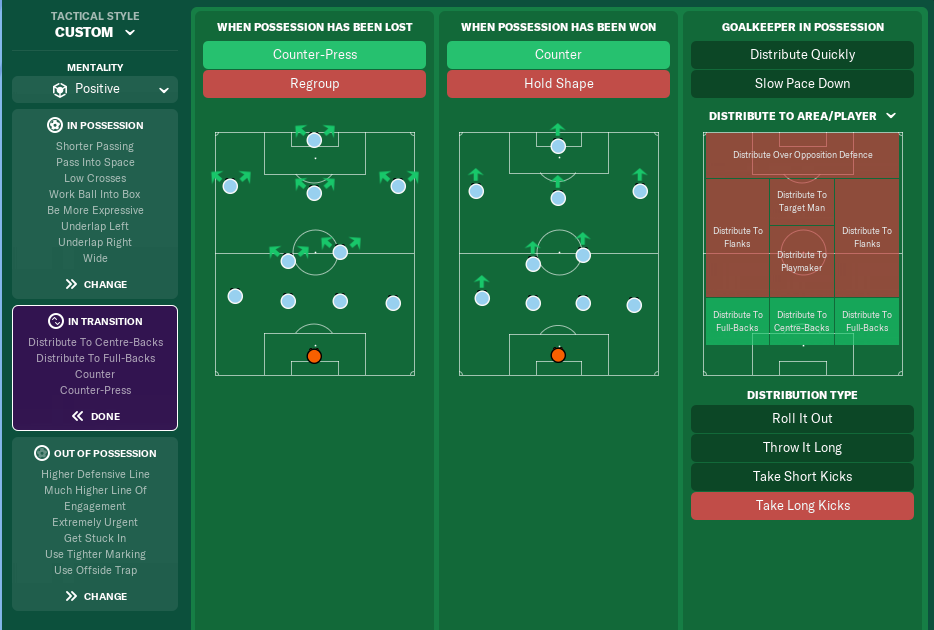
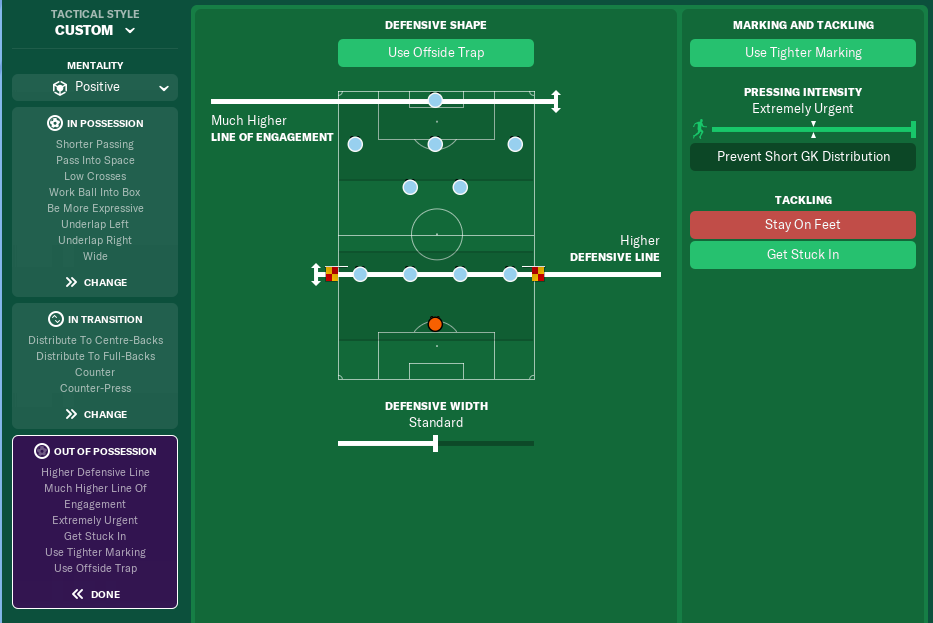
Immediately Dortmund were spectacular on the counter attack.
The game had become fun because the attacks were thrilling to watch.
In the second season further adaptations were made to the system.
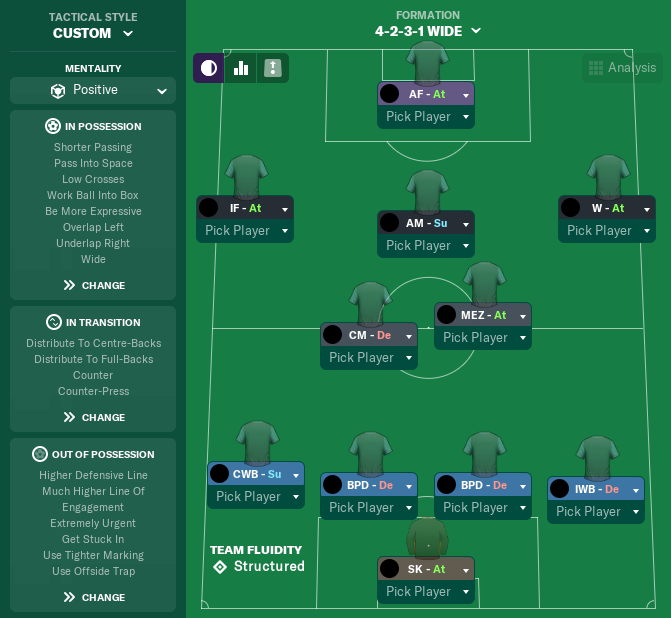
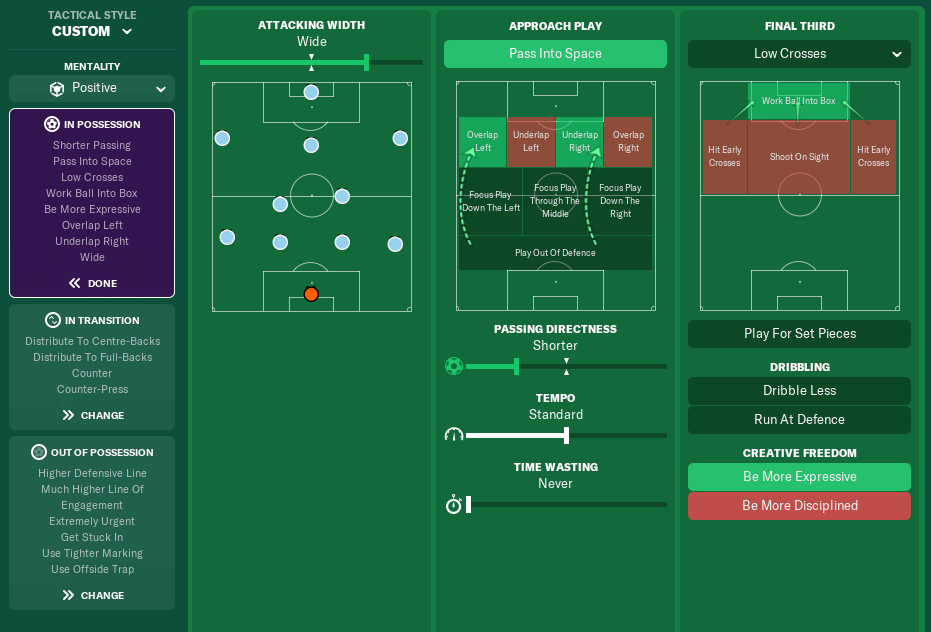
The overlap left should have been introduced immediately as an underlap on that side would have zero effect. The underlap on the right was still needed to push the Mezzala forward.
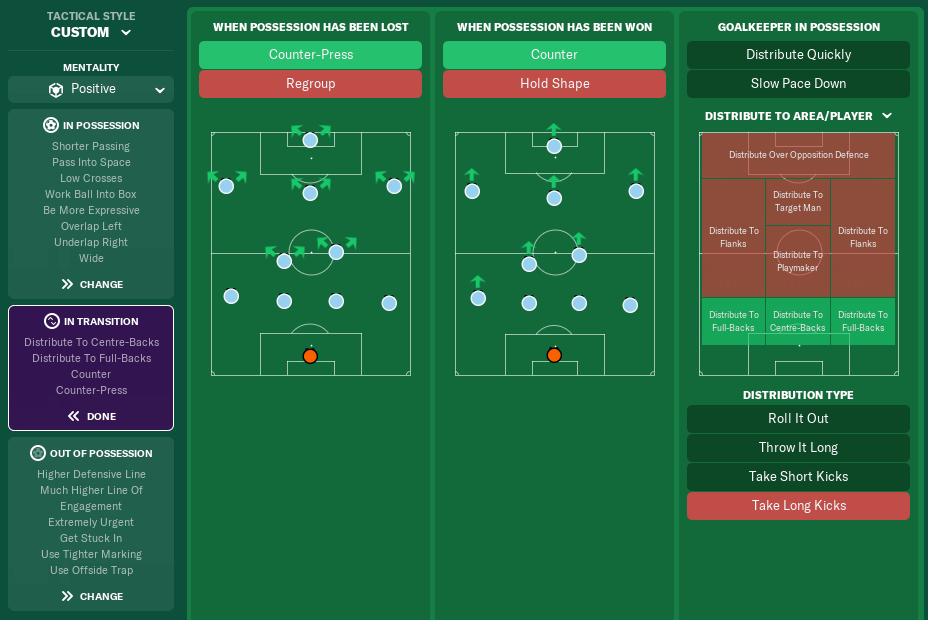
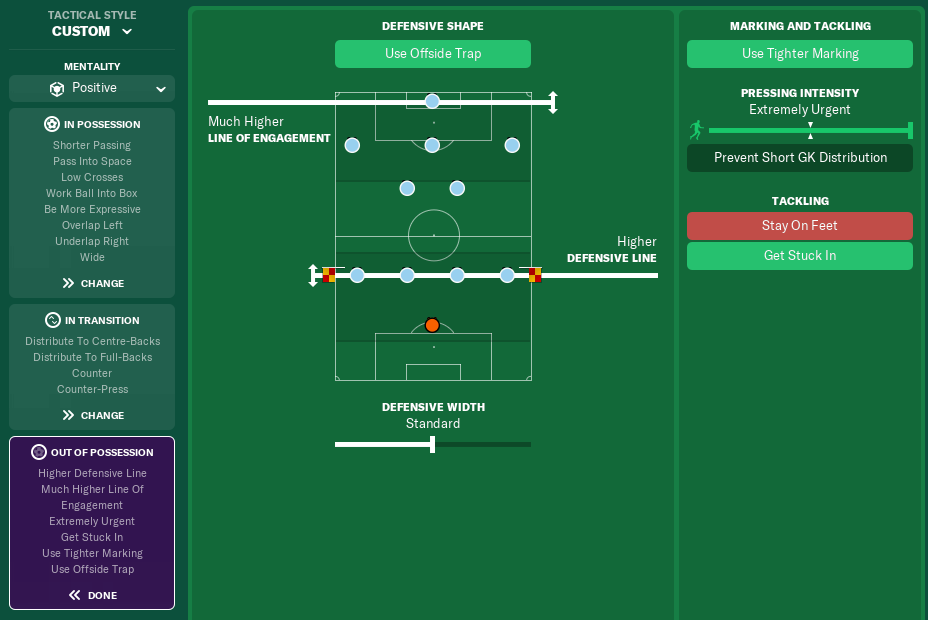
The system still had one significant problem. The attacking midfielder. Although he was involved in counter attacks at times he would get in the way of both the left sided attacker and the Mezzala. When pressing he would pressurise exactly the same spaces as the striker. Sometimes this lead to 2v1 situations and created goals, but at other times this would mean the press could be bypassed far too easily.
Yet, the team was well clear in the Bundesliga and doing well in the Champions League. I decided that I would not make any changes until the next season.
Then came Erling.
Paco Alcacer had done a very good job for the team but he lacked pace and threat in the air. I moved for Erling Haland. In half a season he destroyed all before him.

The Champions League would be on on penalties. Combining this success with another league title and the form of Haland I decided to keep the system the same, mainly to see what Erling would do across a full season. The answer was not quite as spectacular as I had hoped but still very impressive.

What did impress me was the variety of goals within the style of play. There were no creative straight jackets on the players, meaning that the forwards could do the exciting and unexpected.
This team could score solo goals, long range goals, counter attacking goals, goals from crosses, goals following extended periods of possession. In my last couple of saves I have not bothered watching the action, here I felt compelled to do so.
The league was won for a third season in a row and it was time to move on again. Once more, could the quality be upped again and the attacking midfielder developed?

Manchester City would be the destination, with a truly outstanding squad.
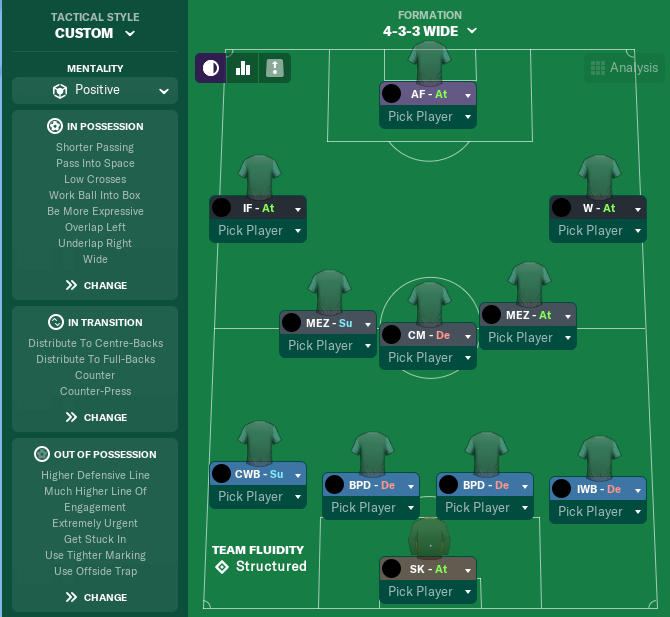
In this incarnation the attacking midfielder had been replaced by a second Mezzala, this time in a slightly withdrawn role. There have been noticeable improvements in the positioning of players, with no one occupy the space of another player. The central midfielder is positioning themselves a little higher than before but possession is still regained regularly. The team dominates the possession stats, but only because they are so good at regaining the ball. The start is extremely promising.
At the moment this tactic is very close to my initial vision, although the hexagon is sometimes a pentagon. This had to happen in order to get enough players forward. It interests me that the game describes the system as structured when it is in actuality very fluid and flexible.
What are the next possible developments? If there are any changes they will likely be connected to the withdrawn Mezzala, but at present this is the most enjoyable and most effective system I have made on any FM game.