The ball hangs in the night sky. A second moon until it disappears into the burning sun of the floodlights. The eyes of a broad chested, strongly built man clad in brilliant white are fixed on the plummeting ball. He plucks it majestically from the sky, the ball dropping at his feet. Zidane. Wonderful touch. Phenomenal control.
“Out of nowhere the mind comes forth”
– Zen koan
In football control has a number of meanings. One team dictating the flow of a match through their play or tactical plan. A player reigning in their emotions. Most commonly control will refer to the quality of a players first touch or ability to keep the ball close whilst dribbling and/or changing direction. Their exquisite close control.
For how long does a player have full control of the ball? A two season study of Ligue 1 in France indicated that the average player has between 40 and 50 possessions per 90 minutes, with approximately 2 touches per possession. At which moment does the player have full control? They clearly don’t have any control before the ball has arrived, but how much control do they have after they have touched the ball? Do they have any?
A ball has been passed to you. With your first touch you push the ball out in front ready to play a pass. At this moment, who has control of the ball?
It depends.
It depends is the correct answer to almost any sporting question.
It depends on my ability to push the ball the exact distance I require. The orientation of my touch. Which depends on how tall I am, how fast my footwork is, even how big my feet are.
It depends how far away the closest opponent is, how are aggressive they are, how fast they are, if they are playing a pressing or containing game at that moment.
It depends on the quality of the surface, the length of the grass, the depth of the sand, the polish on the flooring, the strength of the wind.
Many things can happen to the ball in the time between your first touch and your second touch. To give yourself the best chance of being able to carry out the next action of the ball that point of contact needs to be carried out as you desire. What one might describe as a good first touch. Or Zidane like control. The next moment of full control should then be touch number two, unless touch number one was not good enough, then touch number two will either be uncontrolled (a stretch or a tackle) or not happen at all. Each touch exerts control. The orientation of the touch increasing the chances of being able to command the action of the ball until the moment where the individual task of attempting to retain control of the ball passes to another.
In the moment between touches who has full control of the ball? Does anyone? Where does the ball go?
“Shuzan held up his staff and waved it before the monks.
“If you call this a staff,” he said, “you deny it’s eternal life. If you do not call this a staff you deny its present fact. Tell me just what do you propose to call it?””
– Zen koan
The football does not wish to be under your control. It wishes to obey Newton’s first law, like any other object in motion. An object at rest stays at rest and object in motion stays in motion with the same speed and in the same direction unless acted upon by an unbalanced force. Even at rest forces are acting upon on objects, the most obvious and important being gravity. When our ball is in motion it does not want our fleshy bodies to get in the way, it wants to continue upon it’s path until there is no more momentum. Perhaps our moment of control can be of sufficient quality to remove all motion? It depends on how good we are. Until then the ball exists in the great void of space time, belonging to no one but the forces of physics.
The better we are at the game the less conscious we are of the existence of the void. If we are Zidane we do not notice any void. The quality of our touch is such that the moment between touches is insignificant. For a rapid dribbler like Neymar the void has no fear because of the quality and rapidity of the controlling touches. However, for a young child learning the game the void is very real. Their touch is not in an advanced stage whether receiving the ball or dribbling the ball. When the ball comes to them they are negotiating with the void over whether or not touch number one will display sufficient control as to enable touch number two. There becomes an anxiety between touches especially as the factors around them increase. Opponents. Length of grass. Slow feet. Whether or not the ball will just be swallowed by the void, never to be seen by seven year old feet again. Through practice our seven year old may become Zidane and master negotiations with the void, but the void will always be there.
Our ball is not ours. Yet it also is. We do not have control. Yet we do. How can we have control of anything when Einstein states that time passes more quickly for my head than it does for my feet? And I am not a tall man. Perhaps the football is not ours at all, but Schrodinger’s. The most famous quantum physics theory of Erwin Schrodinger is that of his cat. The theory states that if you were to place a cat inside a box and seal the box, the cat is both dead or alive until it is observed. We have Schrodinger’s football. In the moment between touch one and touch two the ball is both under control and not under control.
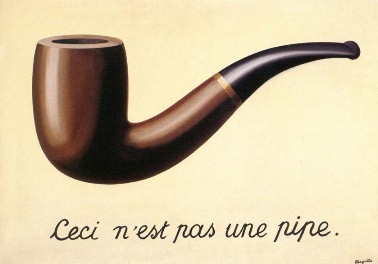
We can increase our chances of being able to carry out the next action of the ball through our controlling touch. The greater the time period of that touch the more likely it is that the ball will do as we wish. The oft used description of the way to control a football in motion is that of a cushion or sponge. Absorbing impact. While as we dribble small striking motions are often combined with elongated touches to drag the ball back from the void.
The elongated touches exert greater control. Bringing us closer to complete control. This is a basic truth that all coaches know from working with young children. Following the “stop” command we often follow up with “foot on the ball”.
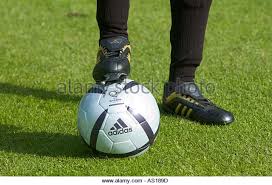
There the ball sits, under the foot of the young footballer. We are safe in the knowledge that the ball is under complete control. The largest surface of the foot in constant contact with the ball. It is not the property of Schrodinger. It is not the property of the void. The coach can impart his or her wisdom upon their young brains with no fear of footballs going every. The coach has control because the kids have control. Without this “foot on the ball” the void could kick in at any moment.
“A puzzled monk once said to Fuketsu: “You say truth can be expressed without speaking and without keeping silent. How can this be?”
Fuketsu answered, “In Southern China in spring, when I was a lad, ah! How birds sang amongst the blossoms.””
– Zen Koan
If one was inclined one might argue that there are various stages of control.
- Complete control
- Sufficient control
- Partial control
- Zero control (the void)
How long we have these periods of control for will be open to negotiation. A negotiation built upon the foundations of our own skill levels but effected by numerous factors, including our own choices. For the player who chooses to dribble or control with the sole of their foot increases their contact time with the ball. There is less negotiation to be had. Less to go wrong. In the past the football boot made dribbling with the sole difficult, the length of studs giving the void an extra weapon with which to claim the ball. Now the studs have shrunk or have been replaced by blades, allowing greater ball manipulation with the sole of the foot.
Futsal anyone?
Peter
15 May 2017With Zidane it wasn’t just ‘total’ control. He would use that first touch to beat a man, or an entire defence too.
That first touch can be proactive.
David Silva does this regularly.
Interesting that when defenders try and do this, there are anxious cries from the crowd