Part 3 – We’re Back
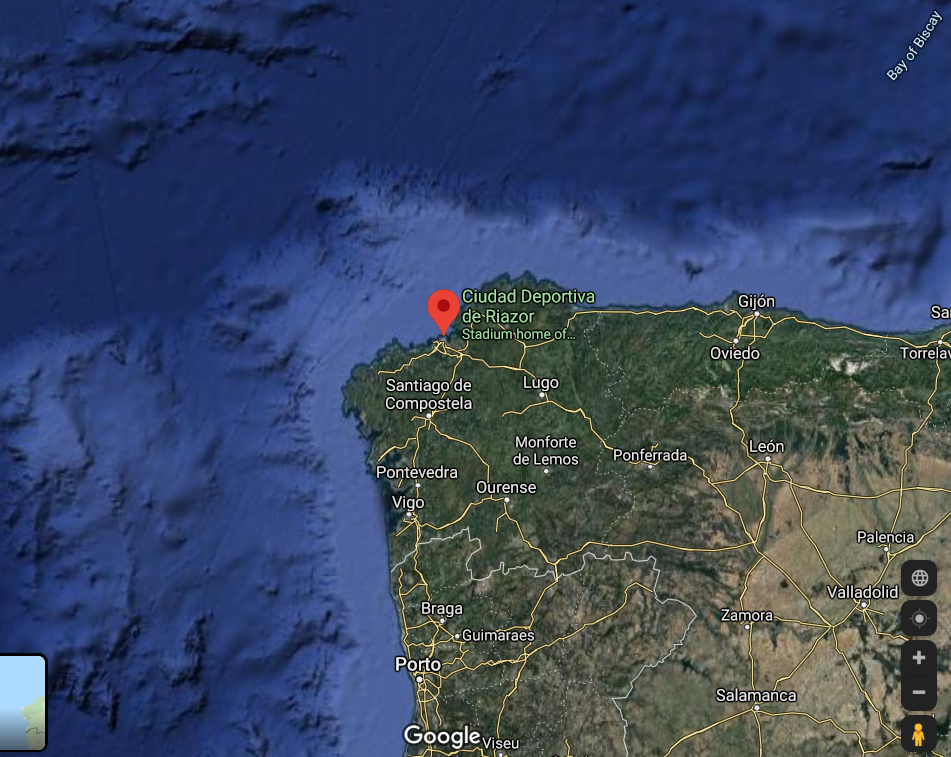
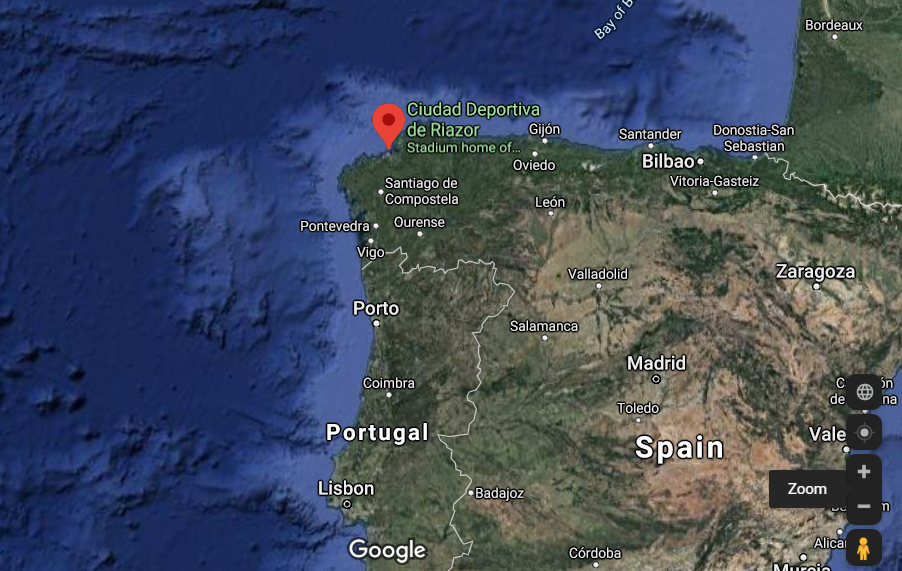
For much of it’s existence Deportivo la Coruna has been a small, inconsequential football club. Positioned in the north west of Spain and closer to Portugal than Madrid, provincial would be an apt description. The city is not a financial power house, but it is the richest in Galicia and can boast that the first Zara store opened there in 1975. The population is a mere 250,000 (approx). There is no reason for Deportivo to be footballing power.
Then came the post WWII era. Deportivo rose to the Spanish top division, managed by the legendary Helneio Herrera and legendary player Luis Suarez (not that one). These two would find European Cup success together at Inter Milan. Though this time was stable, there were no trophies.
From the 1960s until the 1980s Depor bounced around the divisions, they were just another club. Until 1988. The club was £600 million pesetas in debt. A new board took over the club and appointed Arsenio Iglesias as manager. The club rose back into the top flight while finances began to stabilise. The masterstroke came in 1992, with the purchase of the symbol of Super Depor; Bebeto.
This Depor came within a missed penalty of pipping Cruyff’s dream team to the league title. It was the great Bebeto who missed the kick. In 1994 the club remained without any major trophy. This would be rectified the next year, with a Spanish Cup won after a Bernabeu downpour. At 1-1 with 7 minutes to go the match was halted and restarted the next day. Alfredo Santaelena headed in the winner. Years of endeavour finally rewarded. Five years later even greater rewards would follow, but more of that in a future part.
Back in the big time I held little hope of toppling the Messi and Bale inspired giants. I had no transfer budget, no top quality players, just a few prospects and a few million. I did have a few master strokes to pull.
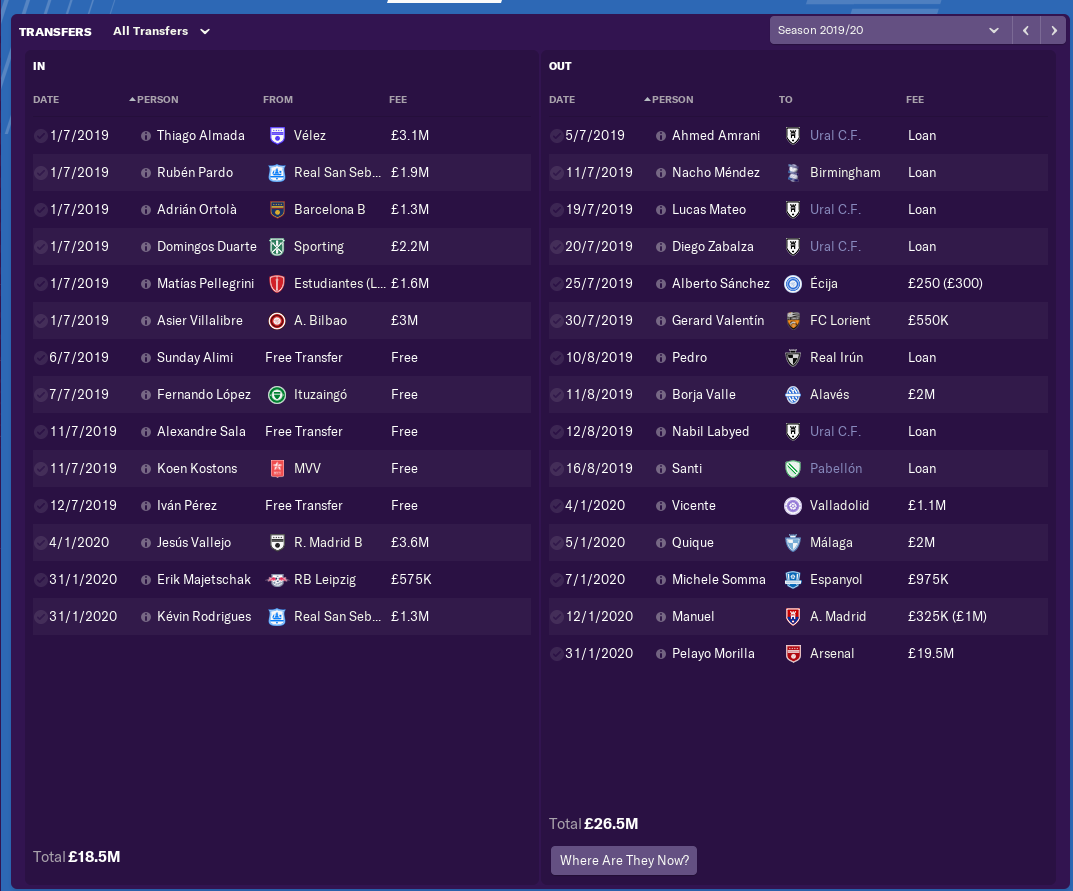
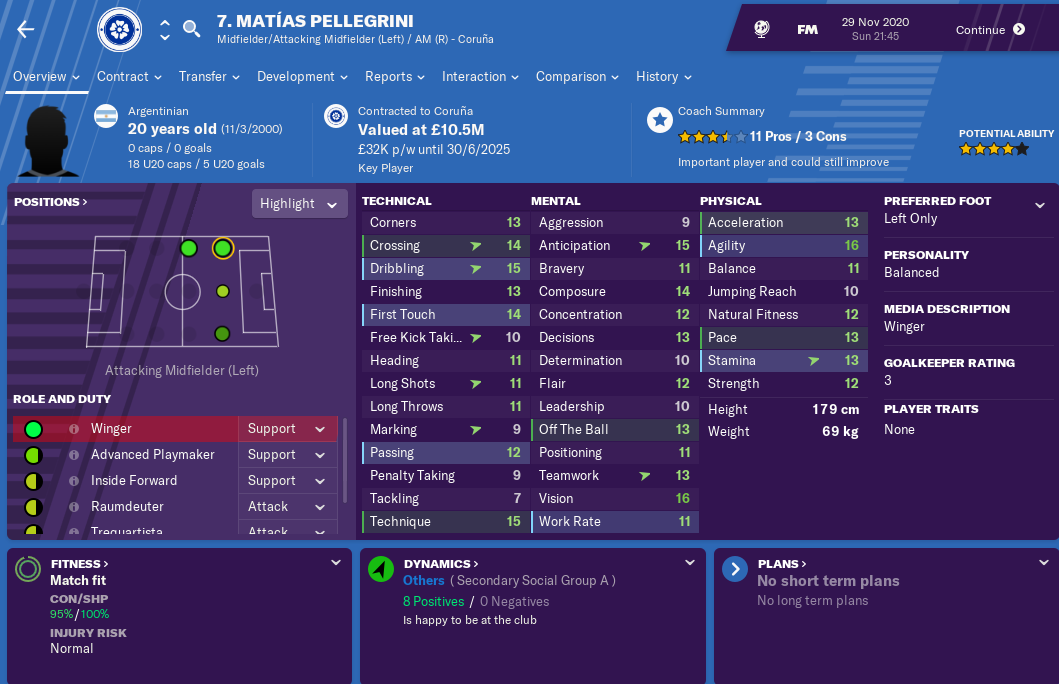
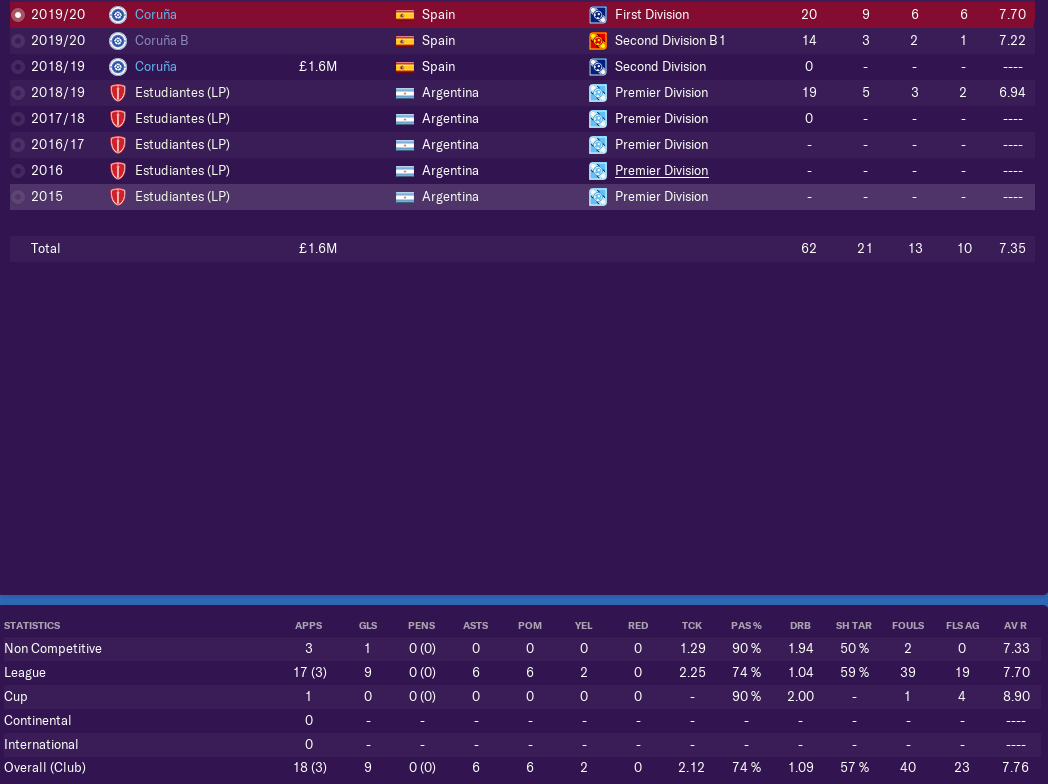
In window one I made certain to purchase Ortola and Duarte as they had performed well for me on loan the previous season. Plus their agreed fees were far below their market value. Villabre seemed to be a good prospect for relatively little money but moves for Pardo, Pellegrini and Almada would prove far more influential.
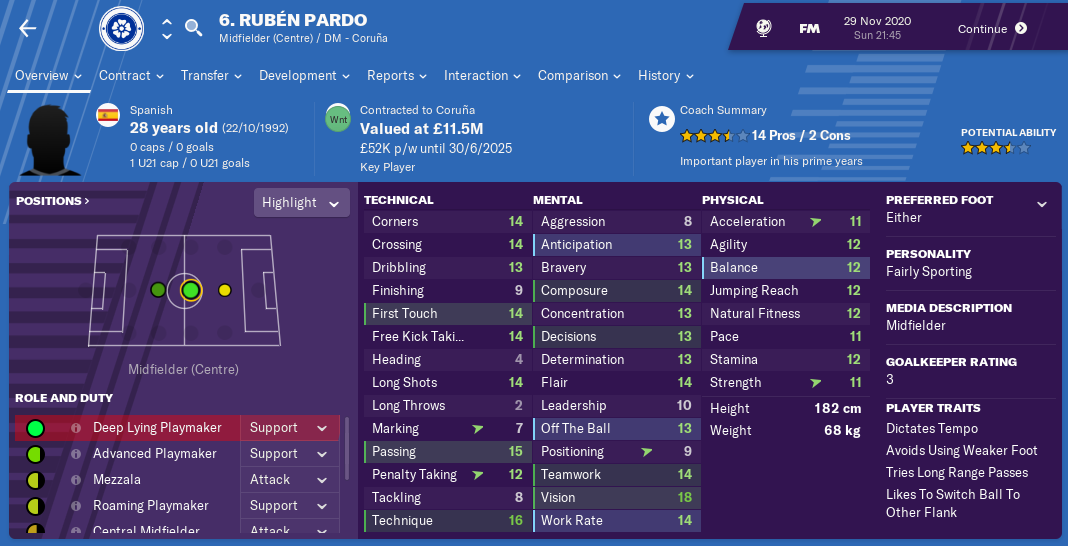
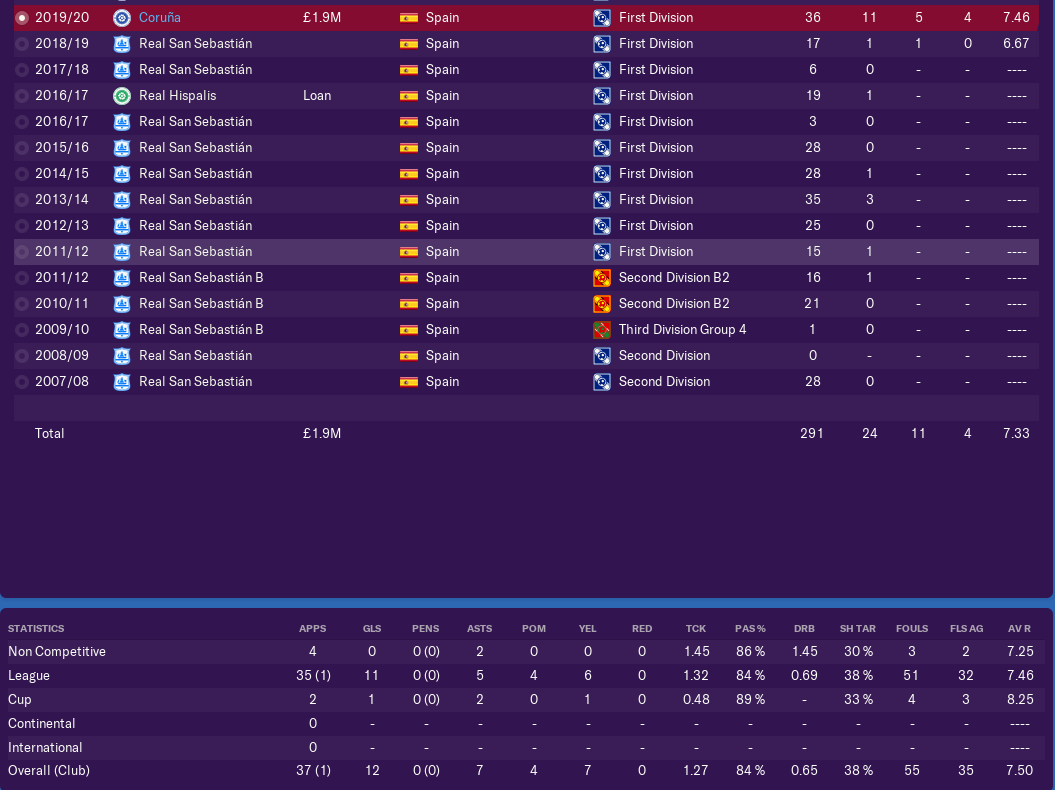
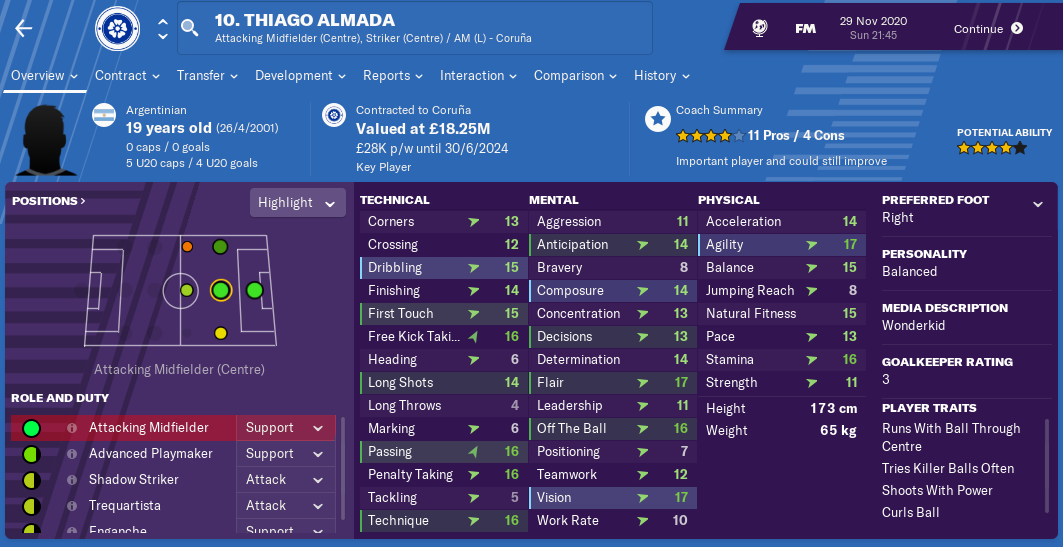
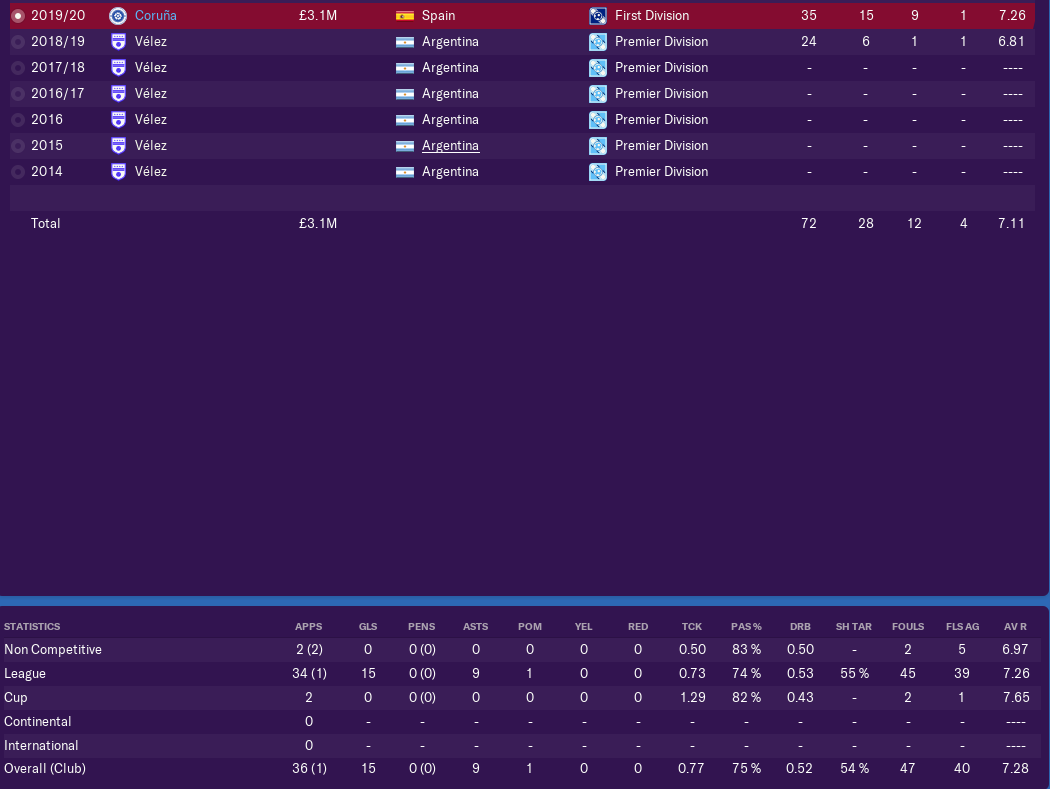
Pardo was signed to bolster the central midfield and ended up as a key player. Almada is a future star of the global game that I will have to work hard to keep. His best position is as an attacking midfielder, but I spent the season retraining him as a complete forward. He scored 15 league goals and picked up 9 assists, numbers that I expect to increase. As these numbers increase, I will have to increase his release clause in order to prevent what happened with Pelayo Morilla.
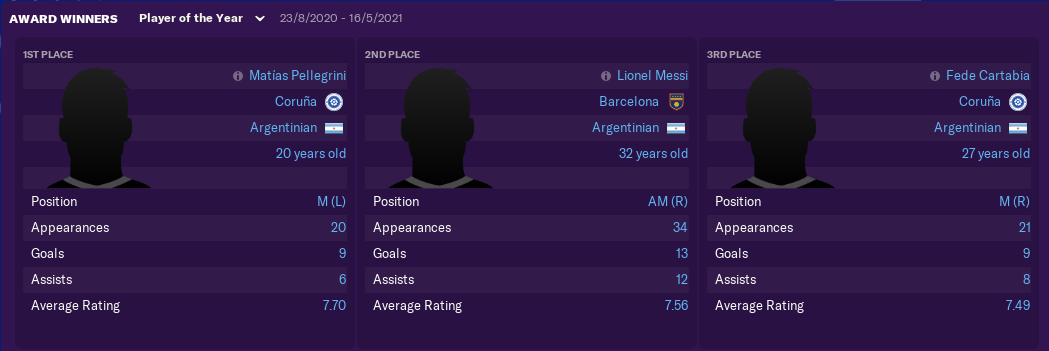
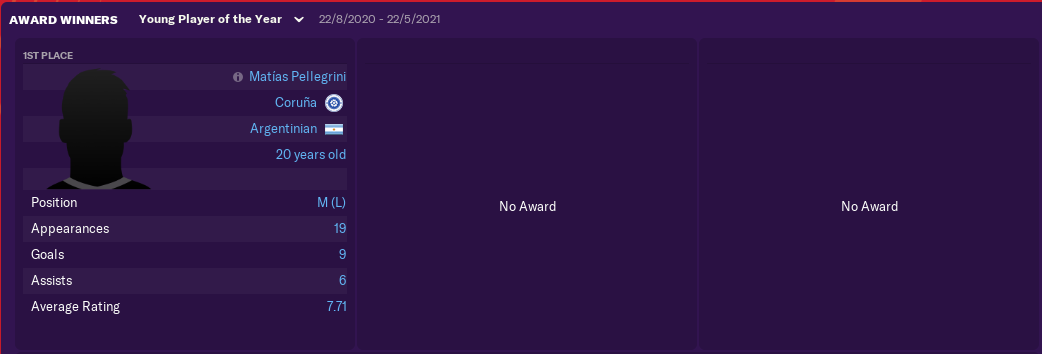
I had hoped to build the club around Morilla. Arsenal has other ideas and paid the £19.5million release clause in January. This represented an £18 million profit, which is extremely healthy and allowed Pellegrini to make his mark. In August I had a furious Pellegrini. I had signed too many foreign players and the rules for La Liga only allowed me to register 3 in the squad. Pellegrini was sent down to the B team. When January came around one of the players had completed enough days to become a Spanish national, opening up a registration spot. Morilla left and Pellegrini became first choice. His performances were good enough to earn him the Spanish league player of the year and young player of the year awards. A stroke of carefully planned luck.
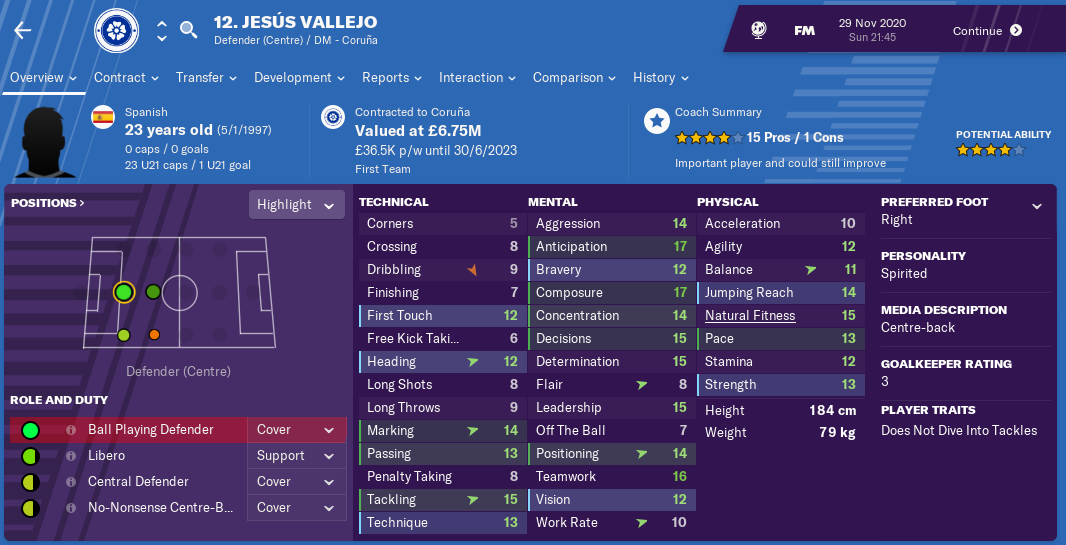
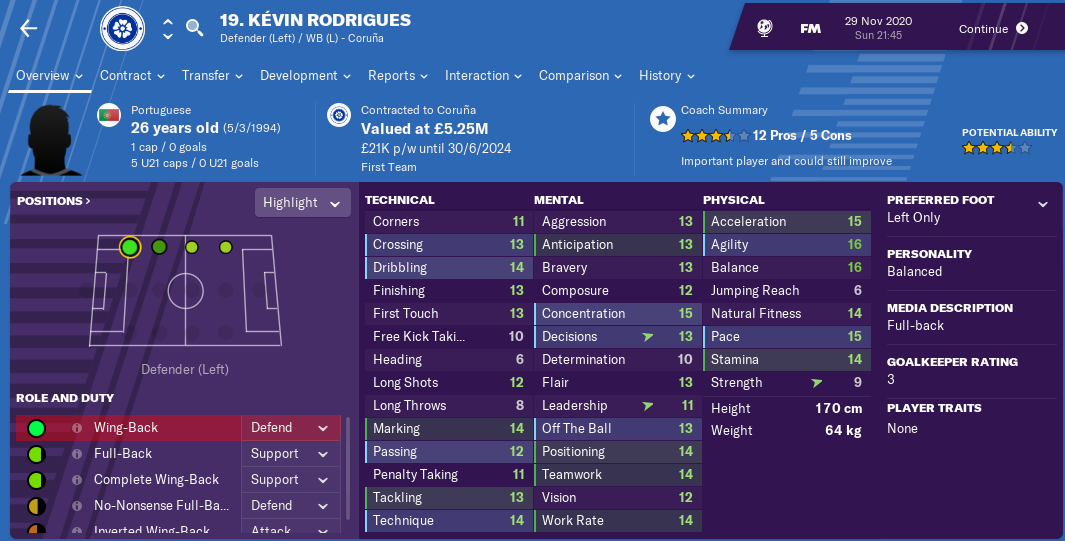
The batch of free transfers in were out of contract players I signed for the B team, hoping to sell them on and make some profits. These profits are yet to show. The big signings in January were Jesus Vallejo and Kevin Rodrigues. Vallejo unable to break past Varane and Ramos into the Real Madrid first team and Rodrigues hidden away and undervalued, a triumph for my scouts.
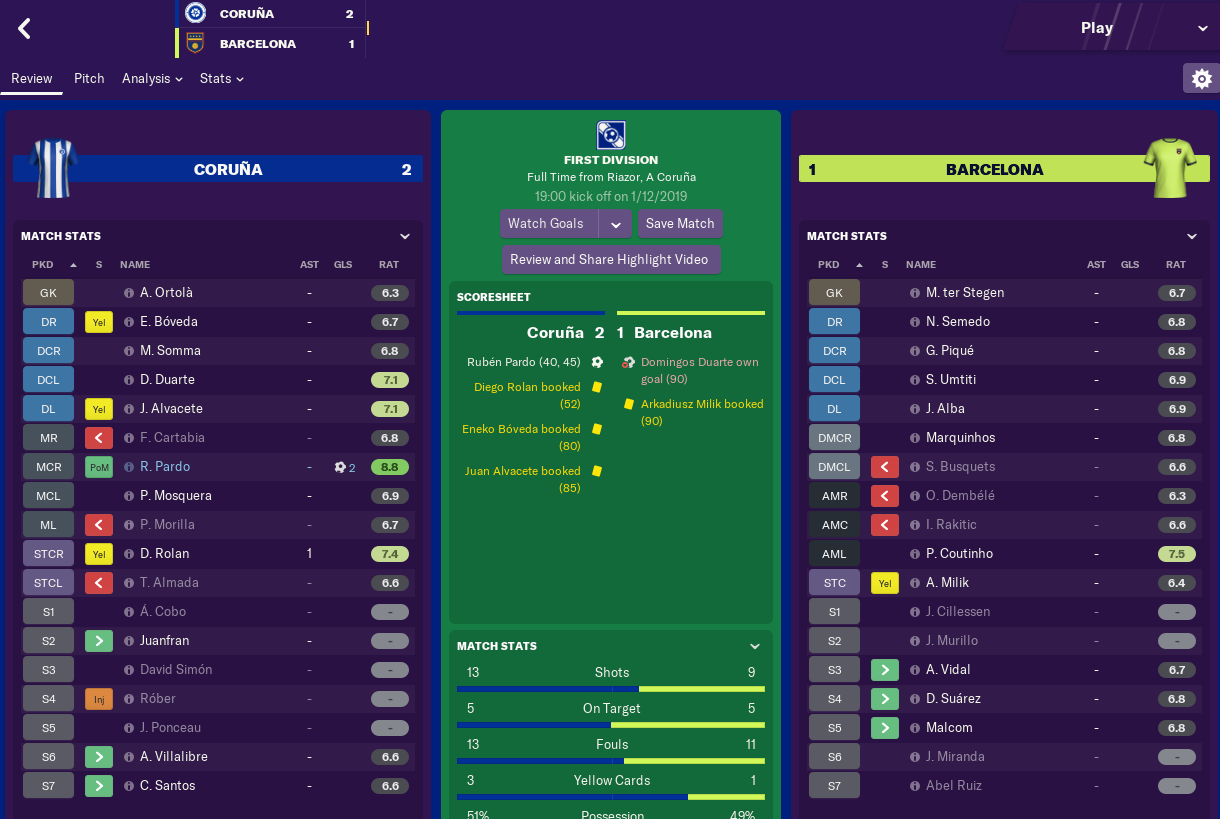
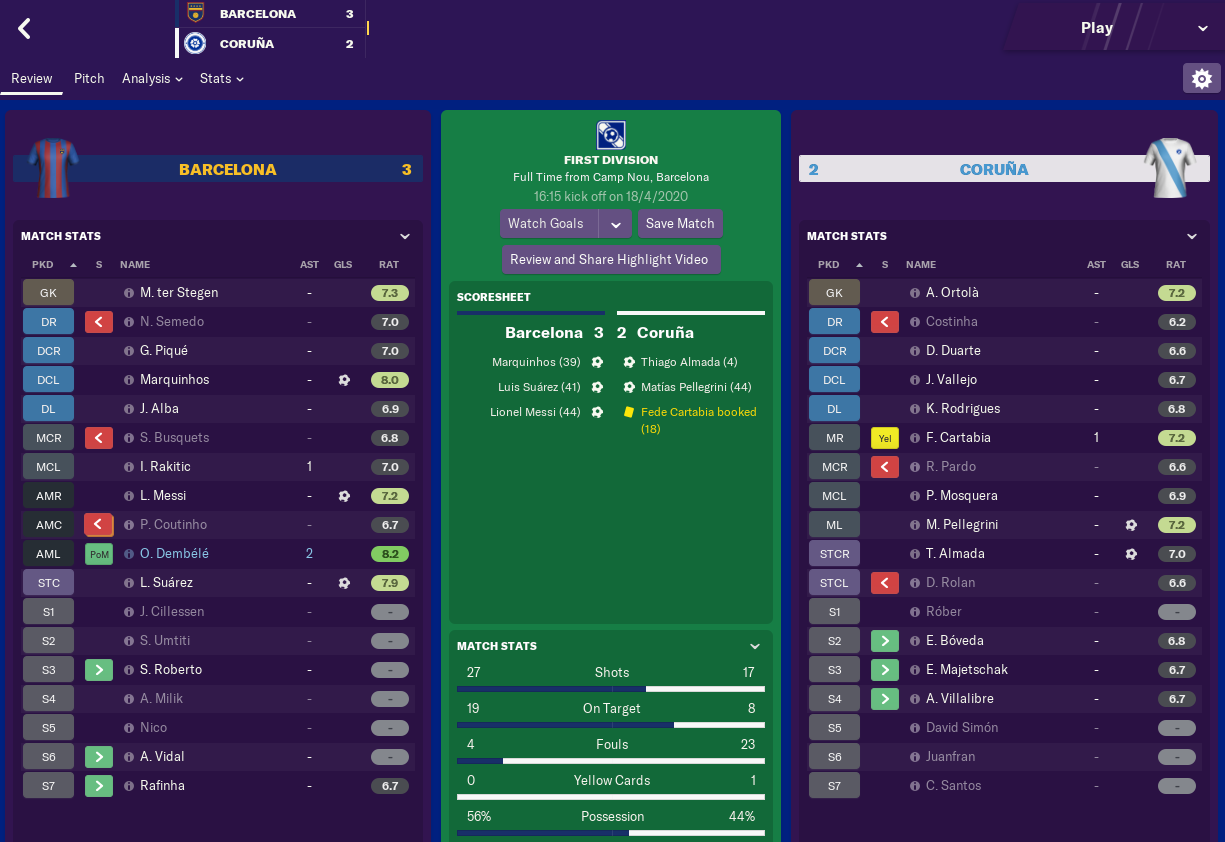
The transfer activity is always going to be important, but ultimately it is the action on the pitch that matters. The pre-Christmas action built strongly. Though the opening fixtures were a little rocky the fixture list was kind and the form was indeed Super, propelling the team into second place, but then came Barcelona. I had my doubts before the game but Depor outplayed the Catalan giants.
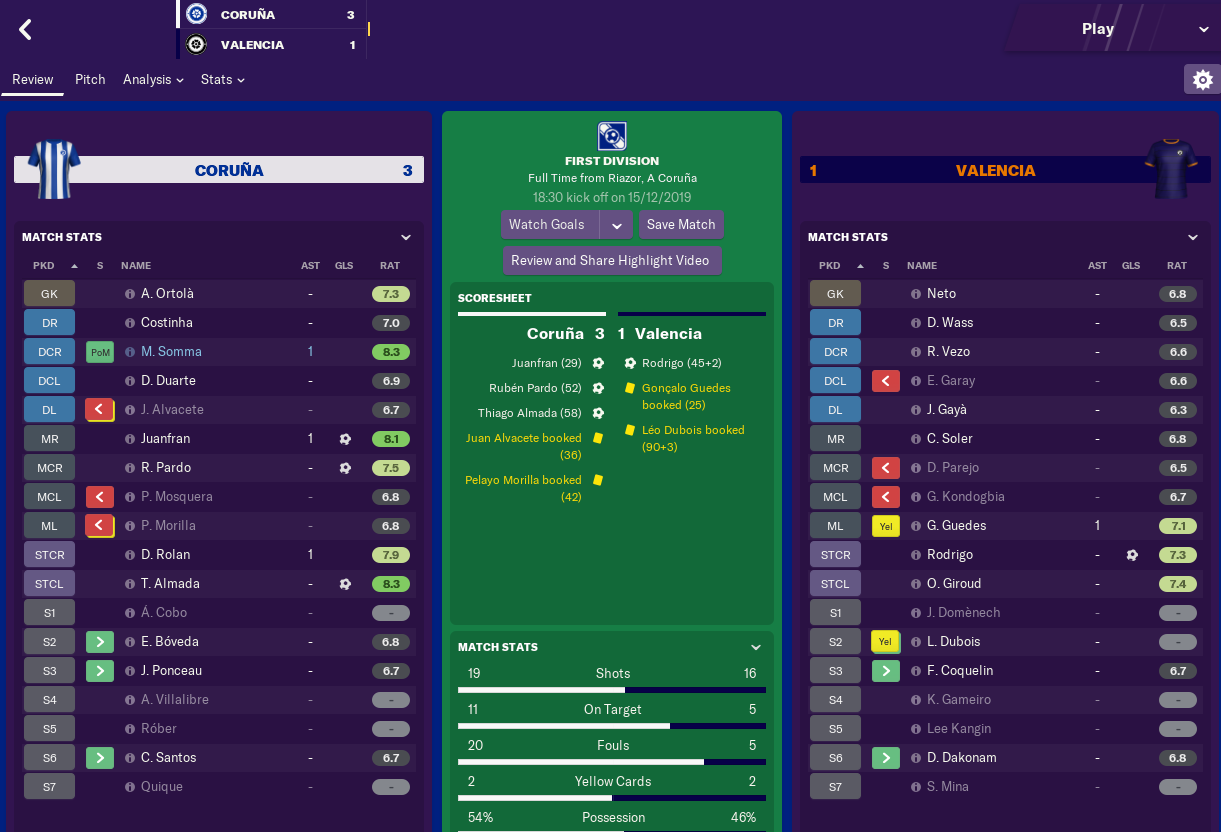
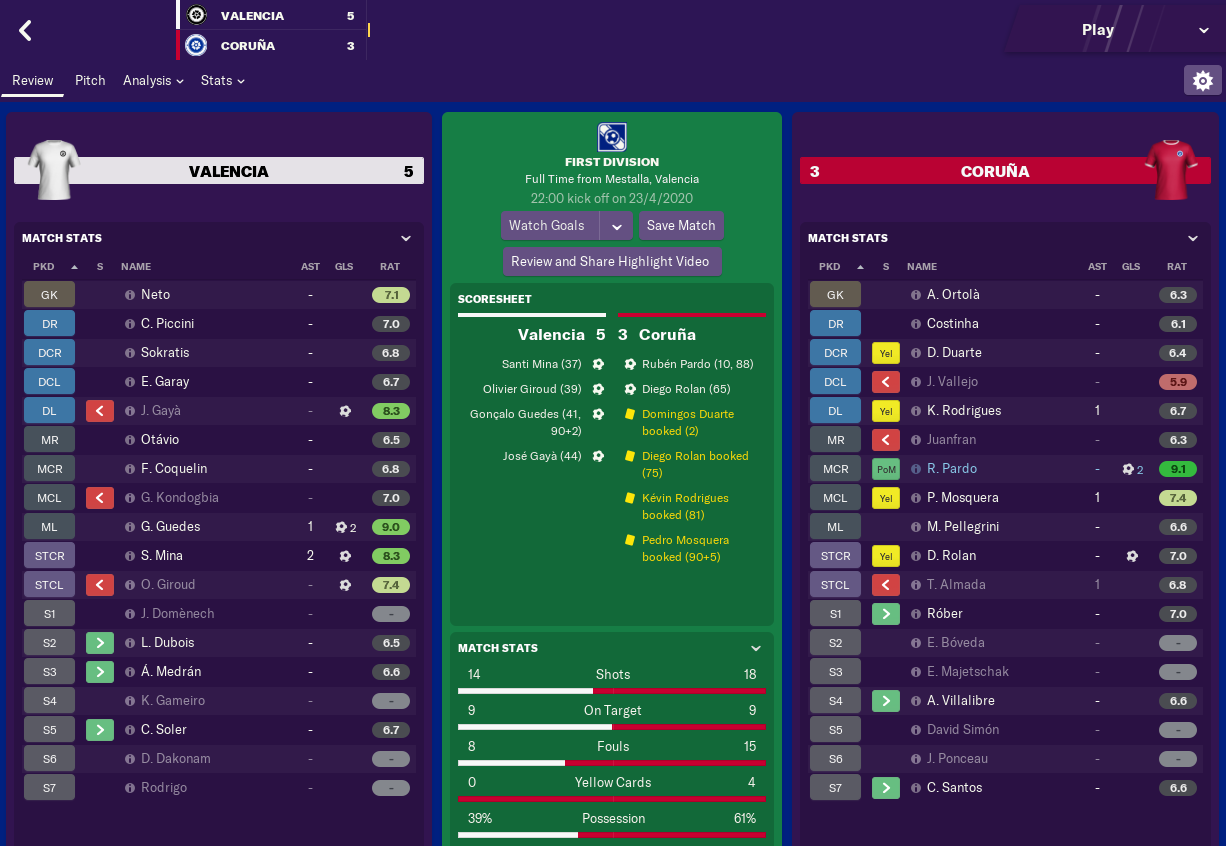
Two games later Valencia would visit the Riazor and leave defeated.
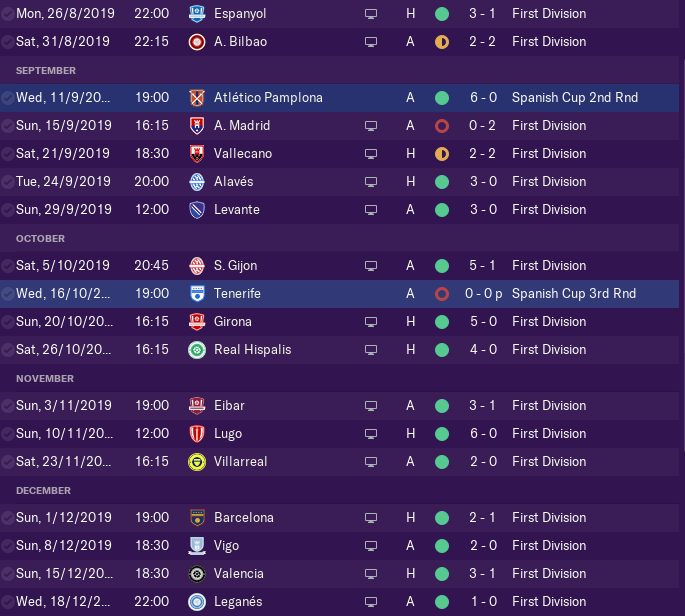
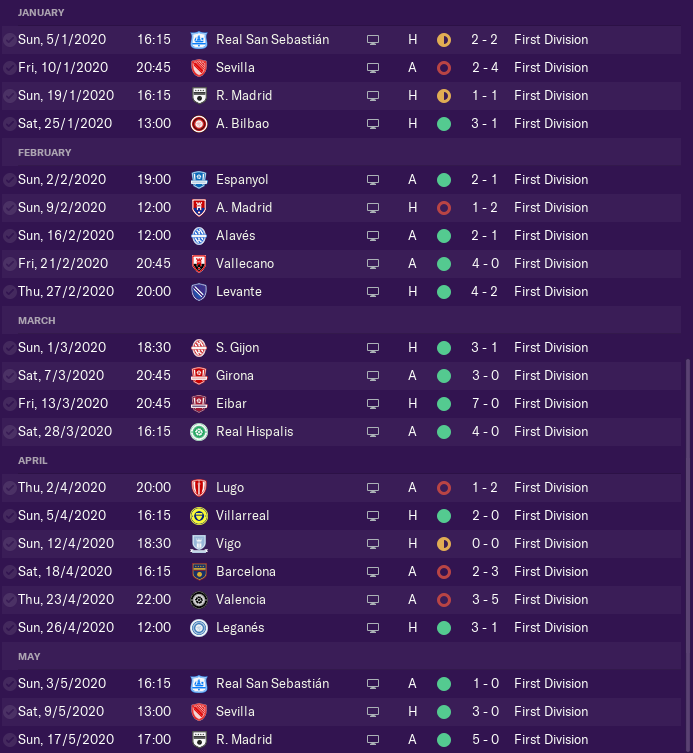
The return to the top flight was starting to look not just like a dream, but like it might end with the ultimate dream, the title. Socieded, Sevilla and Real Madrid would put the brakes on immediately after the winter break. Three games without a win and points dropped at home, though draws with Sociedad and Real would ordinarily be considered good points for promoted teams. A loss at home to Atleti (they completed a double over me) would press the reset button. The sights would surely have to be lowered from title to Champions League qualification.
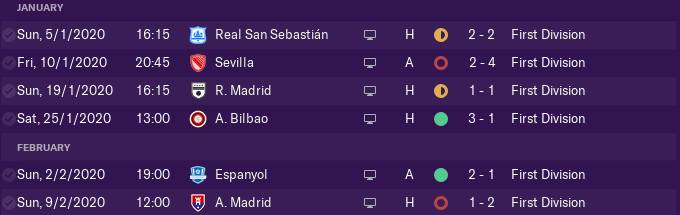
Seven straight wins would change that. Depor were now top of the table. It lasted one game as we abruptly crashed to defeat at bottom of the table Lugo. Depor were no longer the plucky underdogs, pounding on Lugo but being caught twice on the break. The fixture list now threw out the return fixtures with Barcelona and Valencia. Who pounced, viciously, allowing Real Madrid to clinch the league title with three games to go. Conspiring to maintain the status quo amongst the established giants.
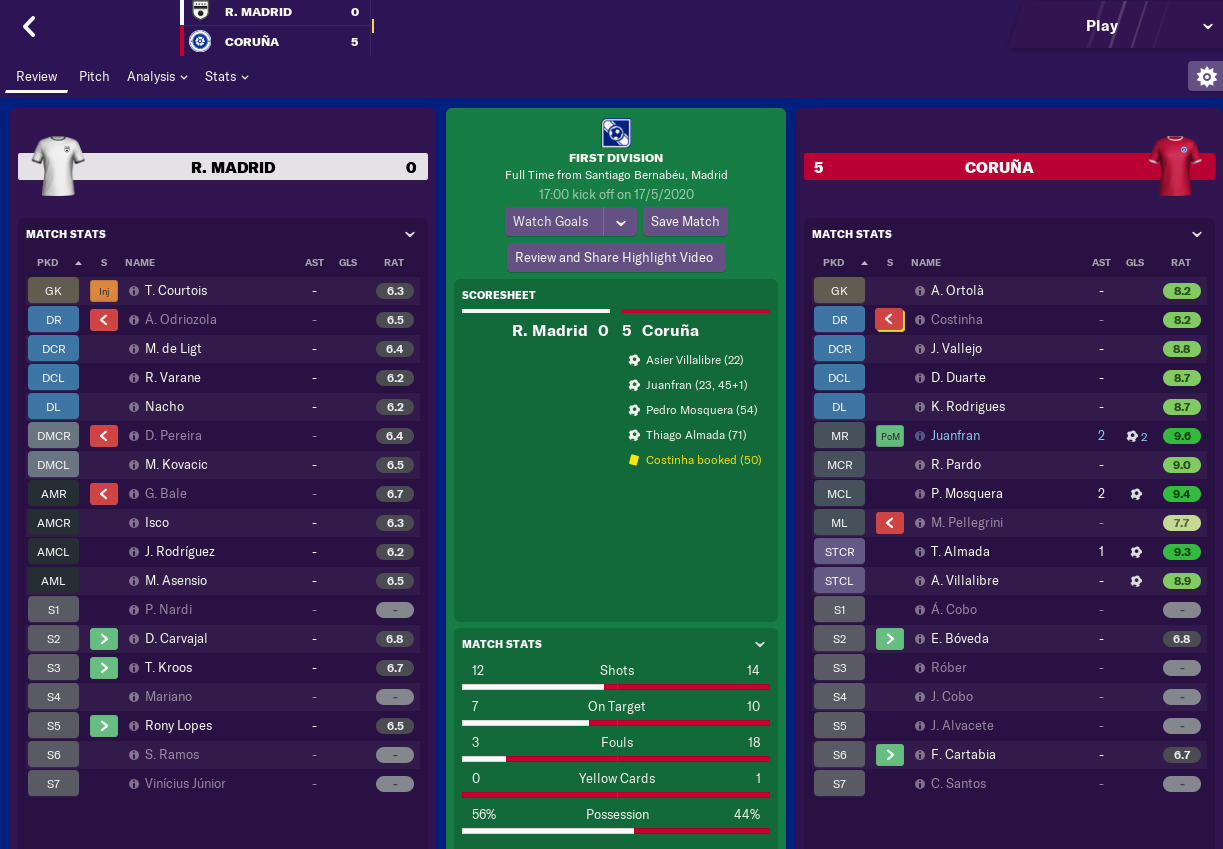
Real then decided to collapse and lose their last two league games, including their final fixture at home, against Depor. We crushed them 5-0, a remarkable end to a remarkable season.
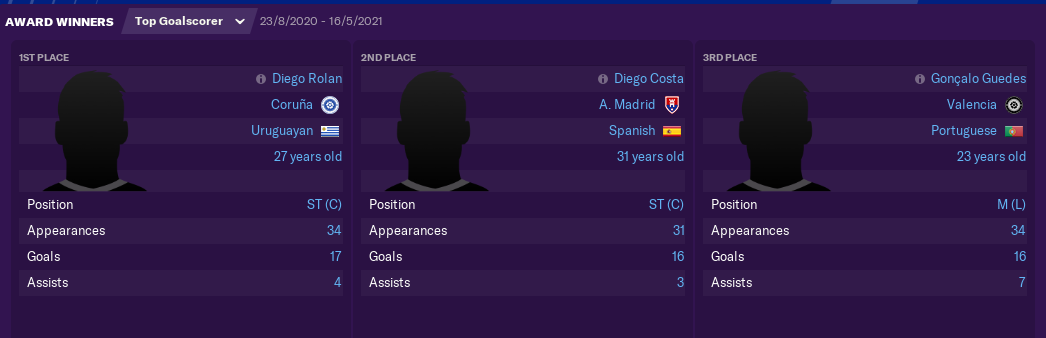
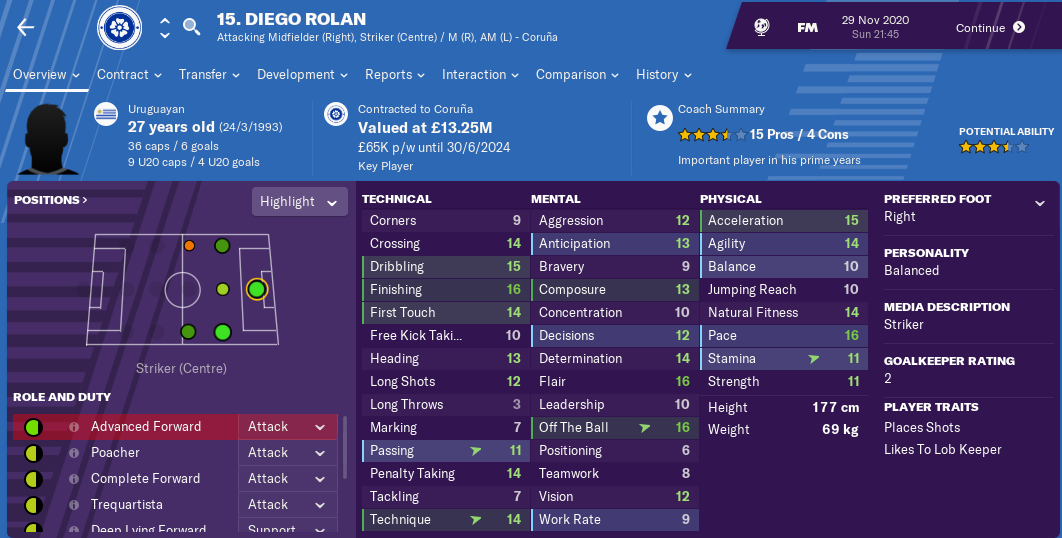
It was not just new signings that helped drive the team. Two quality players returned from loan spells away from the club. Juanfran and Diego Rolan. Juanfran performed consistently on the right, either in midfield or at full back while Rolan formed a fine partnership with Almada, ending the season as the top scorer in La Liga with 17 goals. The Rolan/Almada partnership was worth 32 goals.
The title was not to be but second place was beyond what I had dreamt of at the start of the season. It was not quite as close as 1994, but we can’t have everything.
I was hoping for investment from the board as the TV money brought in £42 million and the end of season saw £70 million sitting in the bank, but the board only offered up £15 million to spend. Upgrading the facilities is always a smart move, so I have no objections to that, but spending £16 million to increase the capacity of the Riazor when it is owned by the council (negligible rent paid) is highly questionable!
It would seem that in order for me to raise the spirit of 2000 it will require more clever trading in the transfer market. Just the way I like it.