Updates can really mess with you on Football Manager.
You think you have perfection and then it gets ripped out from under you.
I had developed a superb 4-2-3-1 with flowing goals and a solid defence, but then came the update. The system then became unstable, sometimes scoring boatloads, sometimes leaking goals horribly. I then had to build a new tactic. A 4-3-3 worked well but didn’t flow with goals.
And if it doesn’t flow with goals, I am not happy. Winning is easy. Setting scoring records is fun.
When developing a tactic I place attack first. Specifically I place scoring first. I don’t want to win the possession statistics, I want to score goals. If we have high possession stats I want that to be because we are brilliant at winning it back rather than good at playing it safe and keeping the ball. The pretty football is not important, that will get prettier as the quality of coaching, facilities and players improves. The defending will improve as teams back off more and more, not wanting to attack and deploying underdog tactics.
Attack first.
Then attack some more.
The key is to overload the opposition, but not be static. We need movement.
I also need strikers. Systems with one forward be that 4-3-3 4-2-3-1 or 4 4-5-1 all seem to work, but I find it dull. I want two strikers to help press and counter press. The 4-2-3-1 was superb for pressing and counter pressing. The striker, attacking midfielder and wide players forming a diamond that was very difficult to play through. I would need an attacking midfielder to support the forwards, link the play and counter press.
Five in attack.
In the real world I love using a back three but on FM I never get along with three at the back. The maths is telling me that if I play a back four I only have room for one central midfielder. This doesn’t actually matter too much. The back four allowed me to utilise the most super powered position in FM, the inverted wing back. Two inverted wing backs plus a central midfielder would mean that the middle of the pitch could be overloaded when in possession while my five attacking players overload their back four (or three).
The system might appear to lack width but the wingers and inverted wing backs would appear in wide areas when the play called for it.
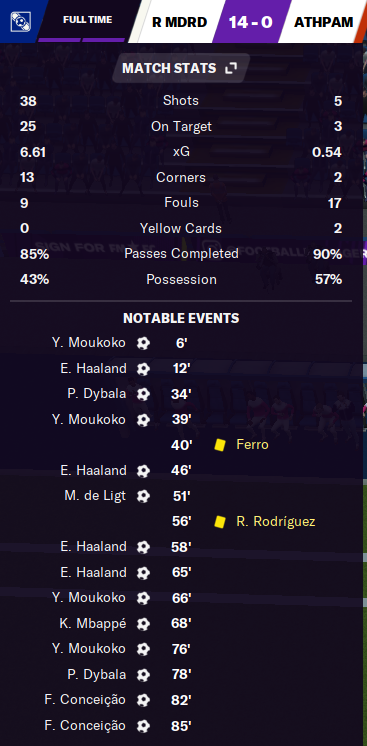
All of which appears to be a big ask, but it worked. It worked to the tune of 200 league goals for Real Madrid.

I first deployed the tactic at Liverpool, so I knew it had the potential to be dominant. From Liverpool I used the tactic at Napoli, winning Serie A each season and then winning successive Champions Leagues. The tactic was then used at Brentford, where defensively it never quite settled (because Brentford were not established enough to shake the underdog status) but it was good enough to win the Premier League and Champions League. Finally I decided to unleash the tactic at Real Madrid. Specifically I decided to unleash the tactic with Mason Greenwood and a club that it felt realistic for Mason to be at.
I picked up Greenwood and Haaland in the first season, but then came elections. The incoming president promised to sign Mbappe and Bernardo Silva, before I knew it I had a super team. Cristiano Ronaldo’s contract was expiring at Juve and he was now added into the mix. In the 200 plus league goal season the 38 year old Cristiano netted over 50 league goals. The season after that Haaland scored 85 in all competitions. My new target is to see if Erling can notch 100 on all comps.
Breaking down the tactic
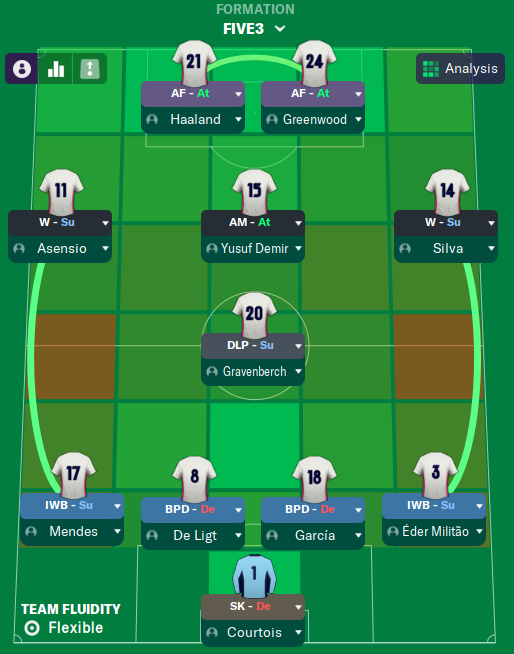
One of the reasons I loved my 4-2-3-1 was that it covered the whole pitch in green. No unsightly red squares. With this shape I accept the red squares on the flanks, knowing that in reality those areas will be covered. having said that the only reason that this is a DLP over other central midfield roles is that it offered the most coverage and was closest to what I wanted from a midfielder. The more dominant the team, the more creative the central player needs to be, likewise with the IWBs.
In Possession
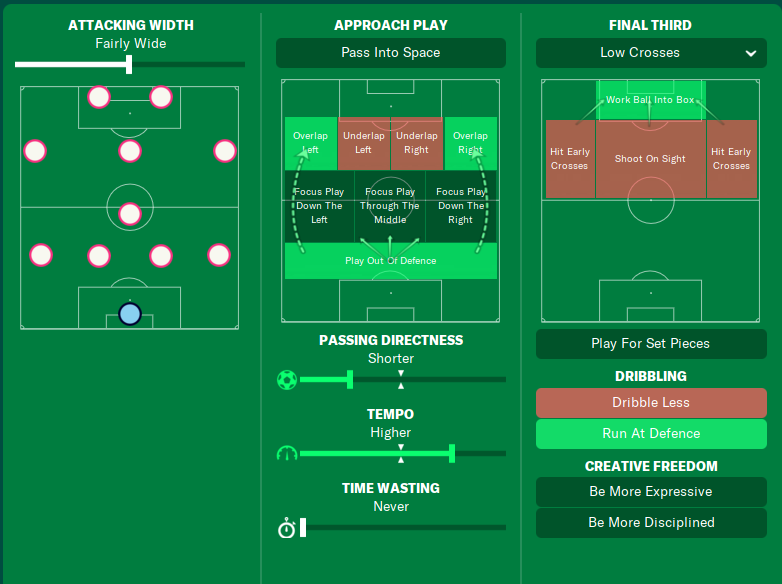
There appear to be some contradictions in these instructions. The shape says “fairly wide” but this is a narrow formation, the IWBs see to that. Through trial and error I found that the instructions to overlap rather than underlap meant that the IWBs didn’t end up as a part of the forward line and would offer width at the right times. When not offering width the IWBs are well placed to regain possession and keep the pressure on.
Transition
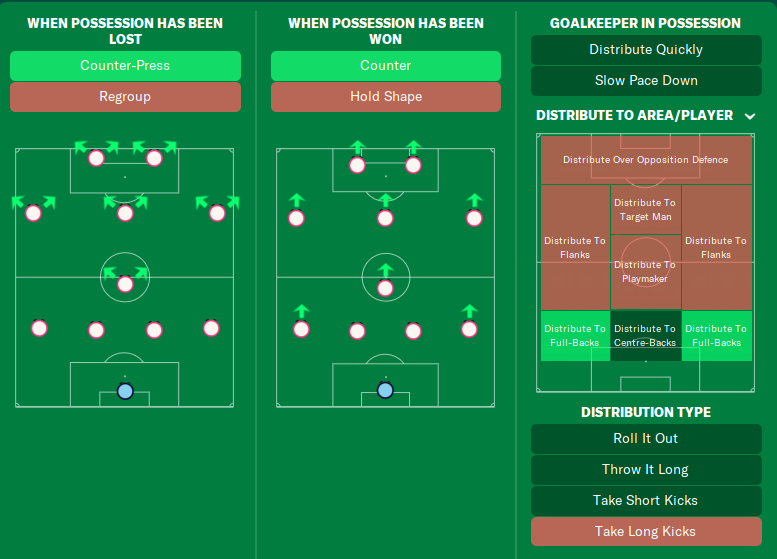
In the transition settings I kept things very simple. The lack of instructions allowing for less predictable play and more variety.
Out of Possession
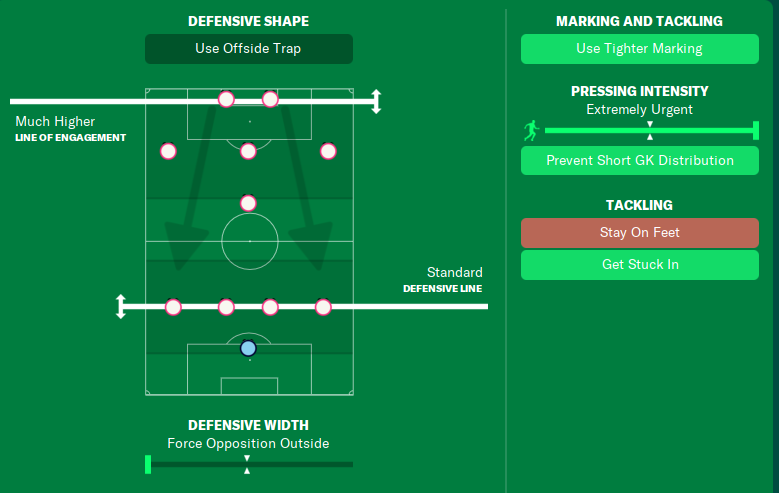
This where things get a little confusing. With five forwards we have to press. With no midfield there is no cover that is close enough to apply pressure unless it is an immediate turnover. The IWBs do drop unless they regain possession in an instant. The back line is set as being deeper, with no offside trap to cover the times the press is broken. Rarely does this system concede goals on the counter attack. During the stages when it is leaking a few goals they tend to come from wide areas or passes straight through the back line, but in advanced positions rather than from deep.
Sweeper Keeper
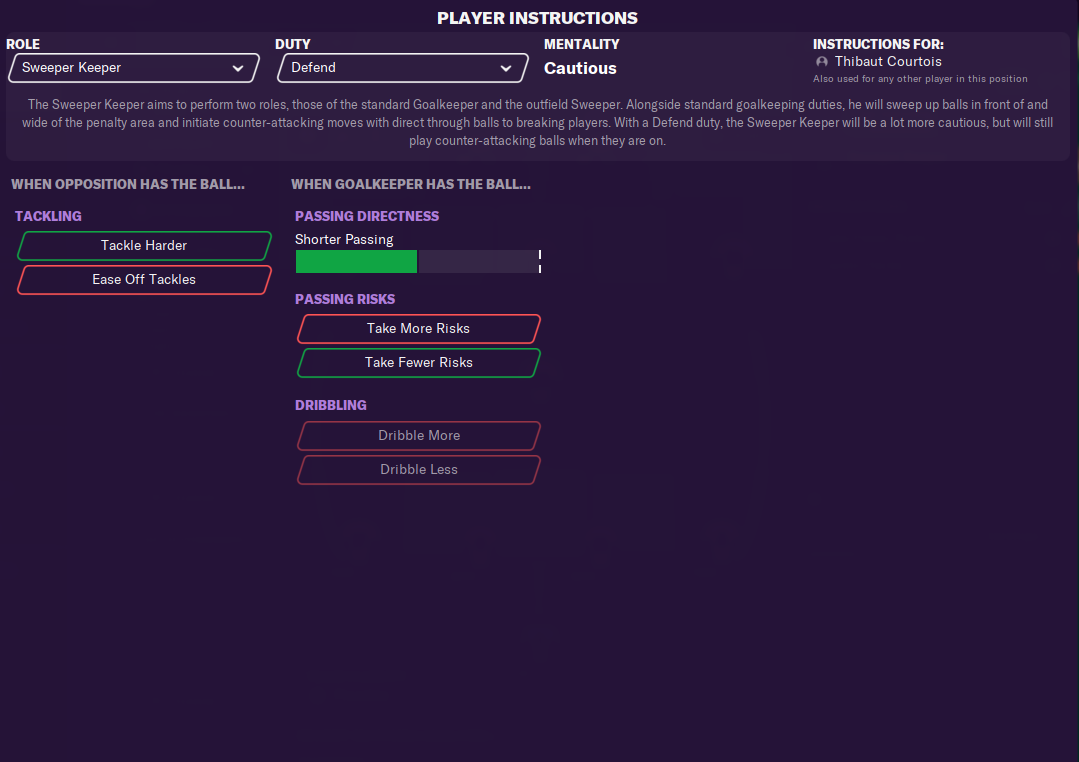
Little of note here, except that the “take fewer risks” instruction came from a number of harsh lessons while I was experimenting with a bolder, more aggressive style of goalkeeper. The goals conceded were at times comical.
Ball Playing Defender
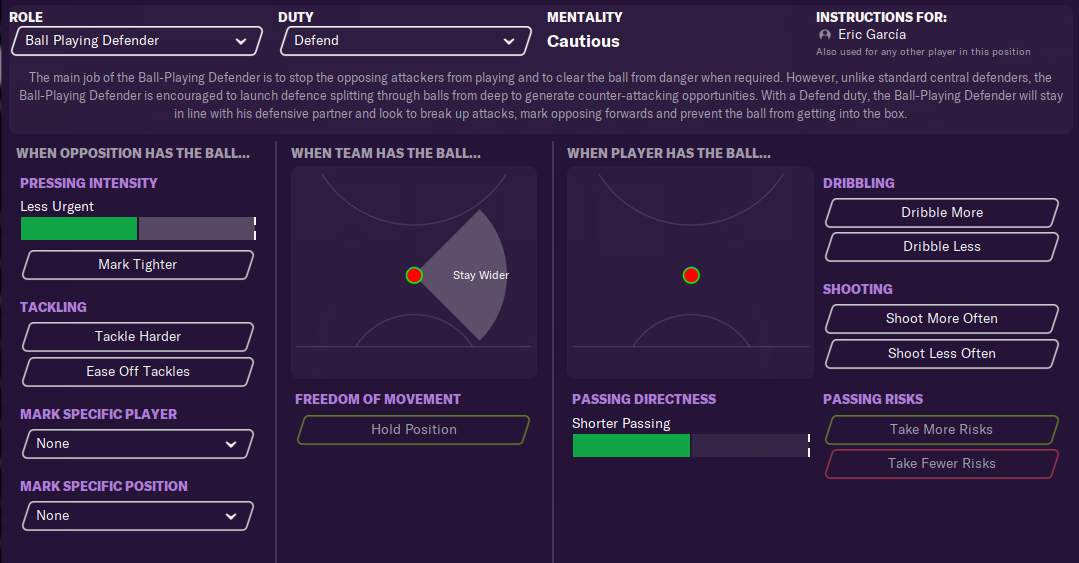
Very simple instructions for the central defenders. In essence trusting the ability of the players to play within their skill set.
Inverted Wing Back
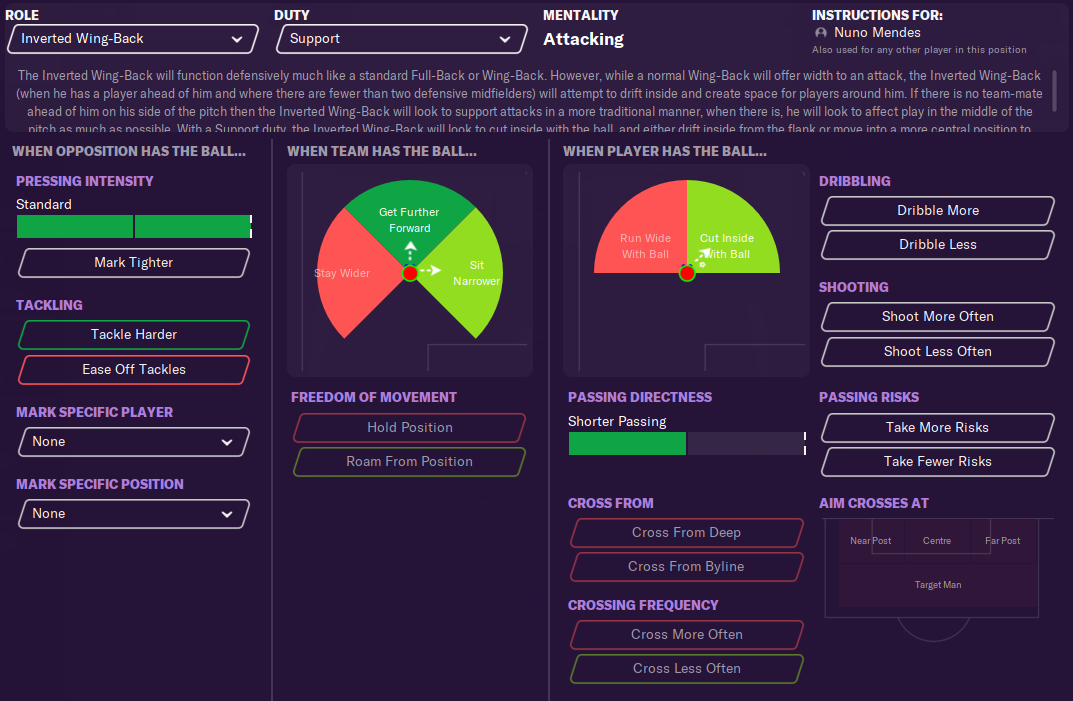
All settings are based on the position and role selection apart from the urgency of pressing and tackling. Everything is designed to keep the IWB in central areas, behaving more like a midfielder than a full back. The team shape becomes more like a 2-3-1-4, with the wingers playing close to the opposition full backs. The closer to our goal the possession is, the wider the players are positioned, narrowing as the play moves forward.
Deep Lying Playmaker
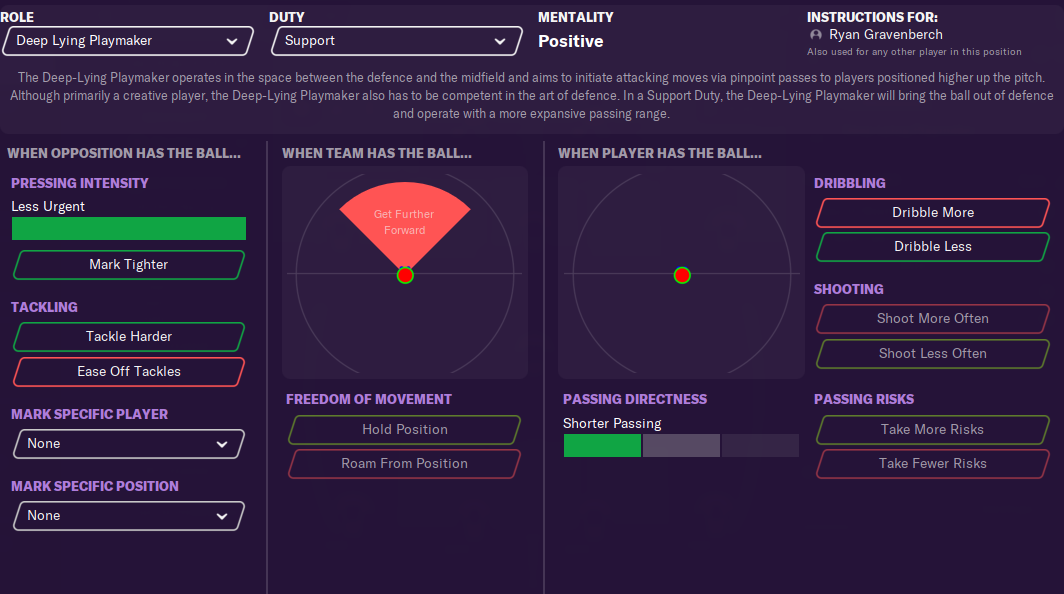
There are more changes to this role than many of the others. All changes are designed to make the player less attack minded and less likely to lose possession. Given the positions of the other players the central midfielder giving the ball away or being caught in possession would provide the opponents with excellent counter attacking opportunities.
Attacking Midfielder
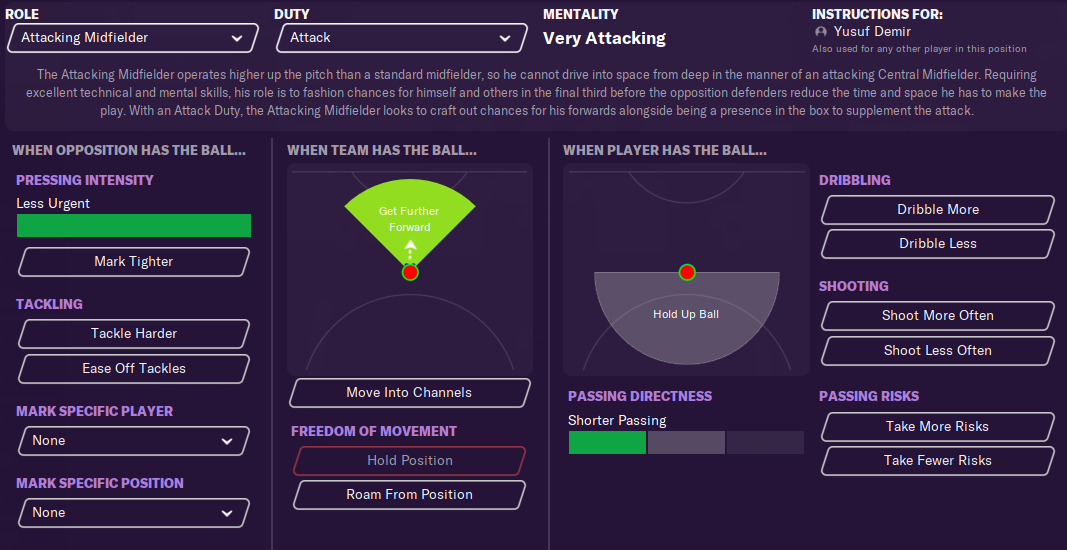
The attacking midfielder role is precisely as it comes out of the FM box. The attacking duty has helped the attacking midfielder to be a goal threat and creator. With a support duty the AM dropped deeper, often very close to the DLP. In doing so the opposition back line would not be as overloaded, impacting the effectiveness of the whole attacking shape.
Winger
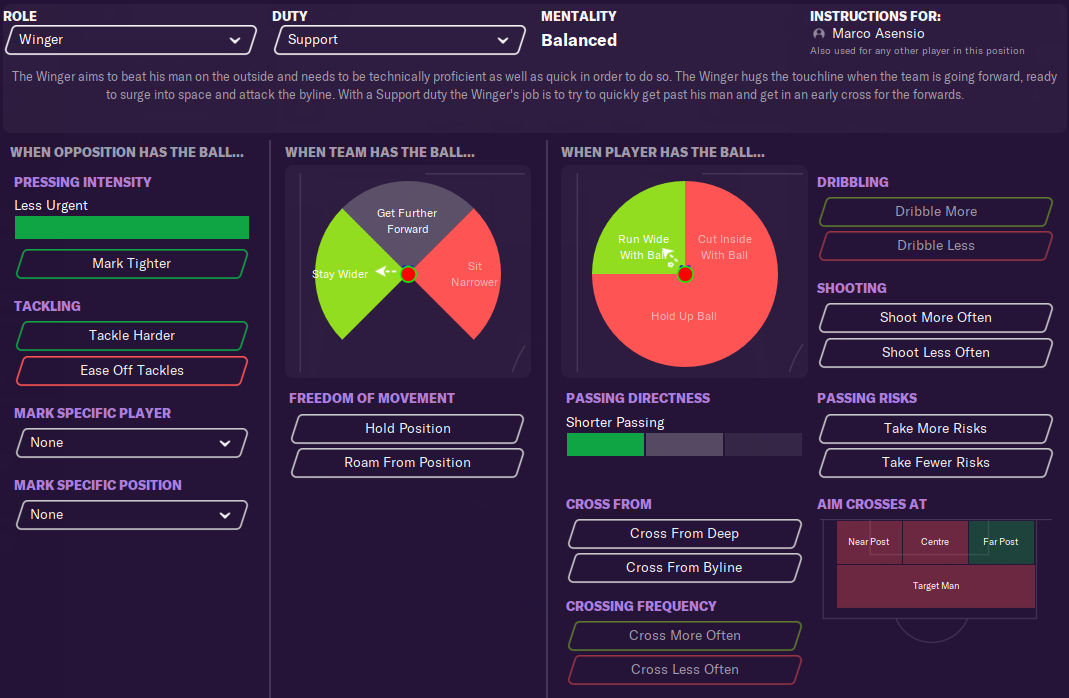
Wingers on FM respond to instructions in interesting ways. The expectation would be that with “fairly wide” team instructions and “stay wider” individual instructions the players would operate outside the width of the penalty area. They mostly did not, operating in line with the width of the penalty area. A far greater impact on how much width the wingers provide was whether I chose to invert their stronger foot. If the left footer played on the left they went outside and put crosses in. If the right footer played on the left they would dribble and pass inside.
Advanced Forward
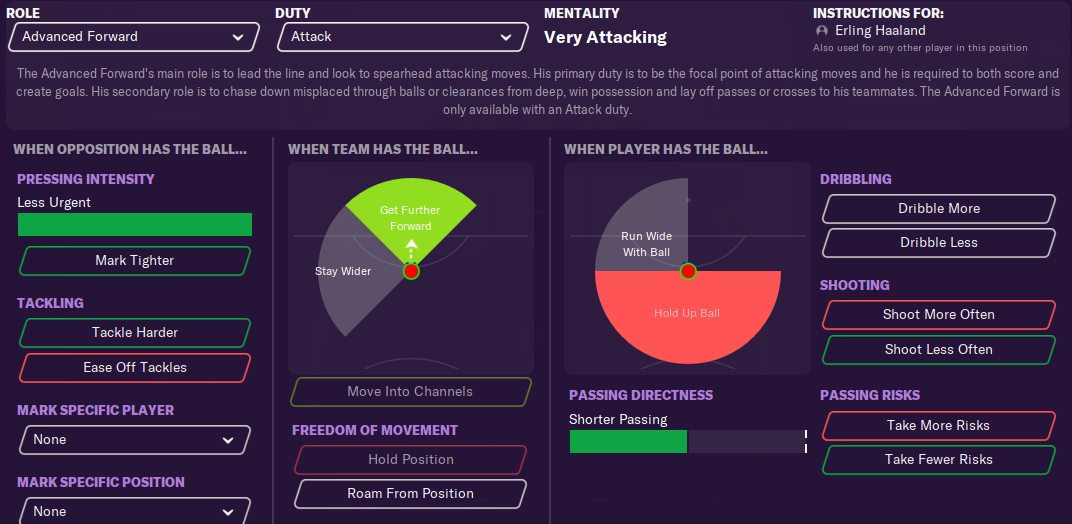
Both advanced forwards have been tweaked. The left advanced forward is generally the main goal scorer. Their freedom has been neutered somewhat, but this does not mean they take fewer shots. Both players have the same settings, yet the left sided player scores more goals.
There you have it. The most powerful attacking tactic I have ever created on Football Manager broken down. Should you choose to use it you will have games where you concede three, four or even five goals, but you will score in huge numbers.
Buckle up and prefer for results like this.