The telling of story’s has been a defining characteristic of humanity through the ages. Stories engage the imagination, mind and spirit. They can be used purely to entertain or to pass on knowledge.
As sports coaches we can harness the power of story in order to help our athletes. We just have to pick the right story for the right athletes.
In part one I outlined the idea of creating a six part story to help footballers with their ability to breach the defences of the opponents. In this second part I will go through the opening episode.
EPISODE ONE
The Pilot
As with the first episode of any show the key actions will be to establish the factors at play.
Who?
What?
How?
When?
Why?
These are good starting points.
In this case our group will be an under 18 grassroots football club who train once a week.
The question of “who” carries more meaning in this setting as it is heavily linked to the question of “what”.
The story is The Siege. This instantly conjures images of attack and defence. This plot has been chosen to aid the team in both attacking and defending situations. The simple objectives (at least initially) are for one group of players to score and for the other group to keep a clean sheet.
During this first episode we have to pay careful attention to the “who” and our casting. Our players will be cast in roles for the six episodes. In some episodes they will star, in others they will be a part of the supporting cast.
Team Bulwark (Rather than being defined as defenders I searched for a synonym for being under siege. Different words can be extremely memorable. I chose bulwark because it sounds strong and has echoes of the word bull, creating images of strength and power).
1 – Goalkeeper
2 – Right back
3 – Left back
4 – Centre back
5 – Centre back
6 – Central midfielder
7 – Central midfielder
Team Raiders (As with Team Bulwark I sought a synonym for laying siege. Raiders created images of attacking at speed, sometimes with great guile)
1 – Striker
2 – Wide left
3 – Wide right
4 – Central midfielder
5 – Attacking midfielder
6 – Defensive midfielder
7 – Second striker
The positions stated may not be entirely precise as players will be capable of playing in multiple positions. Keeping in mind the players that I am basing this on 14 would be the average number for a training session. It may also be necessary to recast or see characters change sides for certain episodes.
In The Pilot the scene must be set. I would propose that the structure of the practice requires a lead in to the story. Using the concept of an ordinary world prior to the call to adventure the first part of our 90 minute session will look like a regular session.
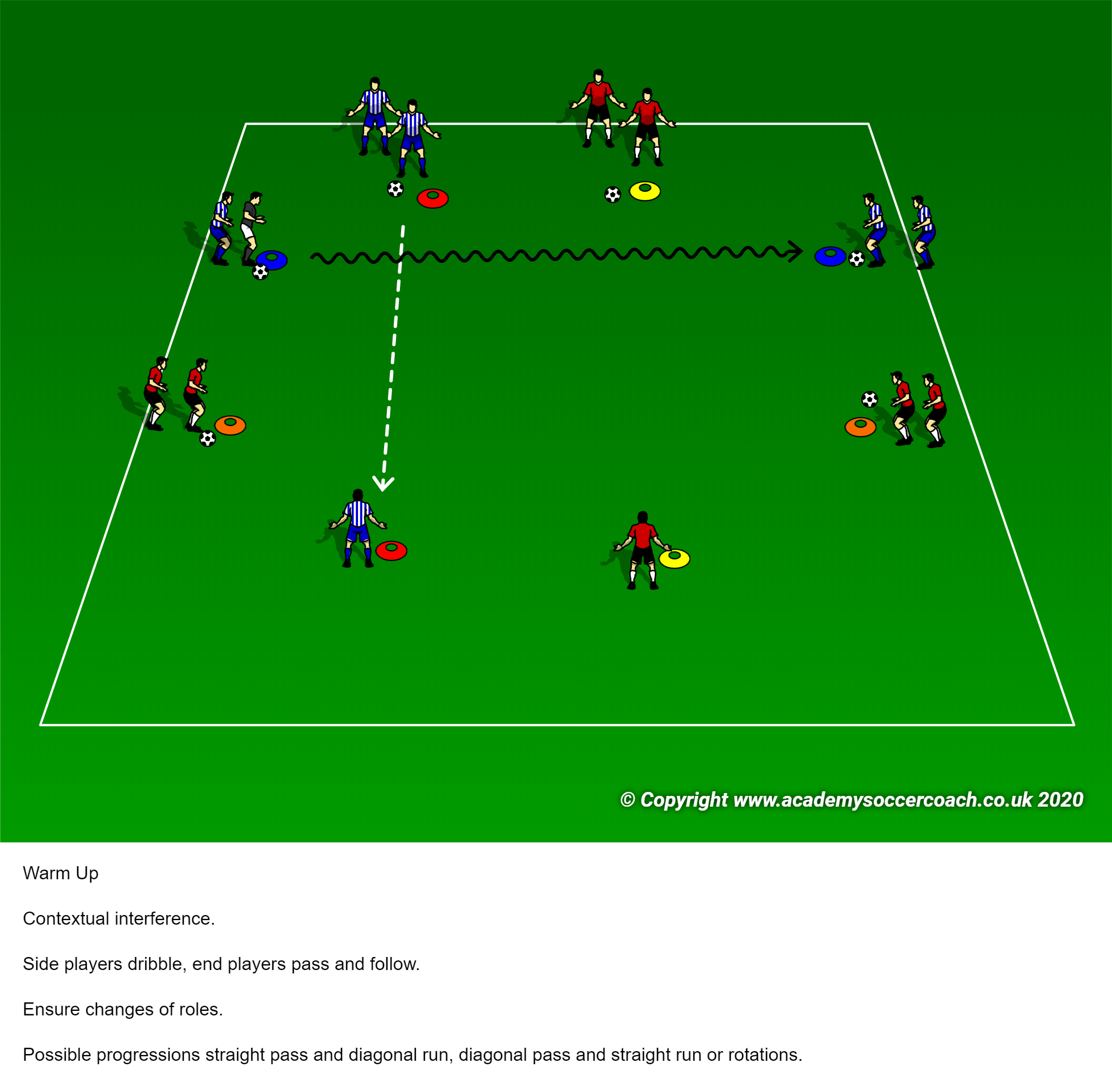
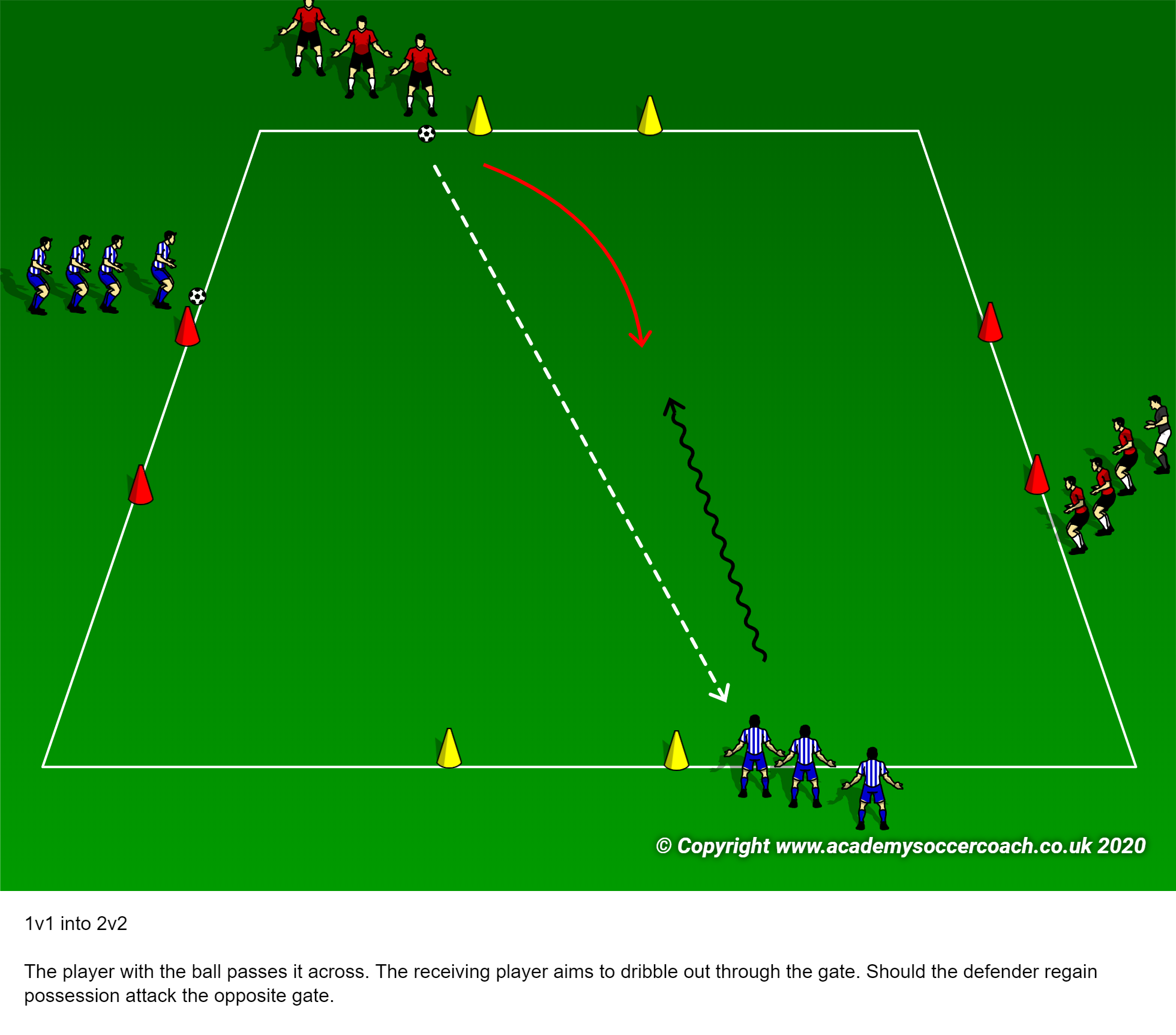
We can build into the main plot with mini games that utilise constraints to encourage our story of The Siege.
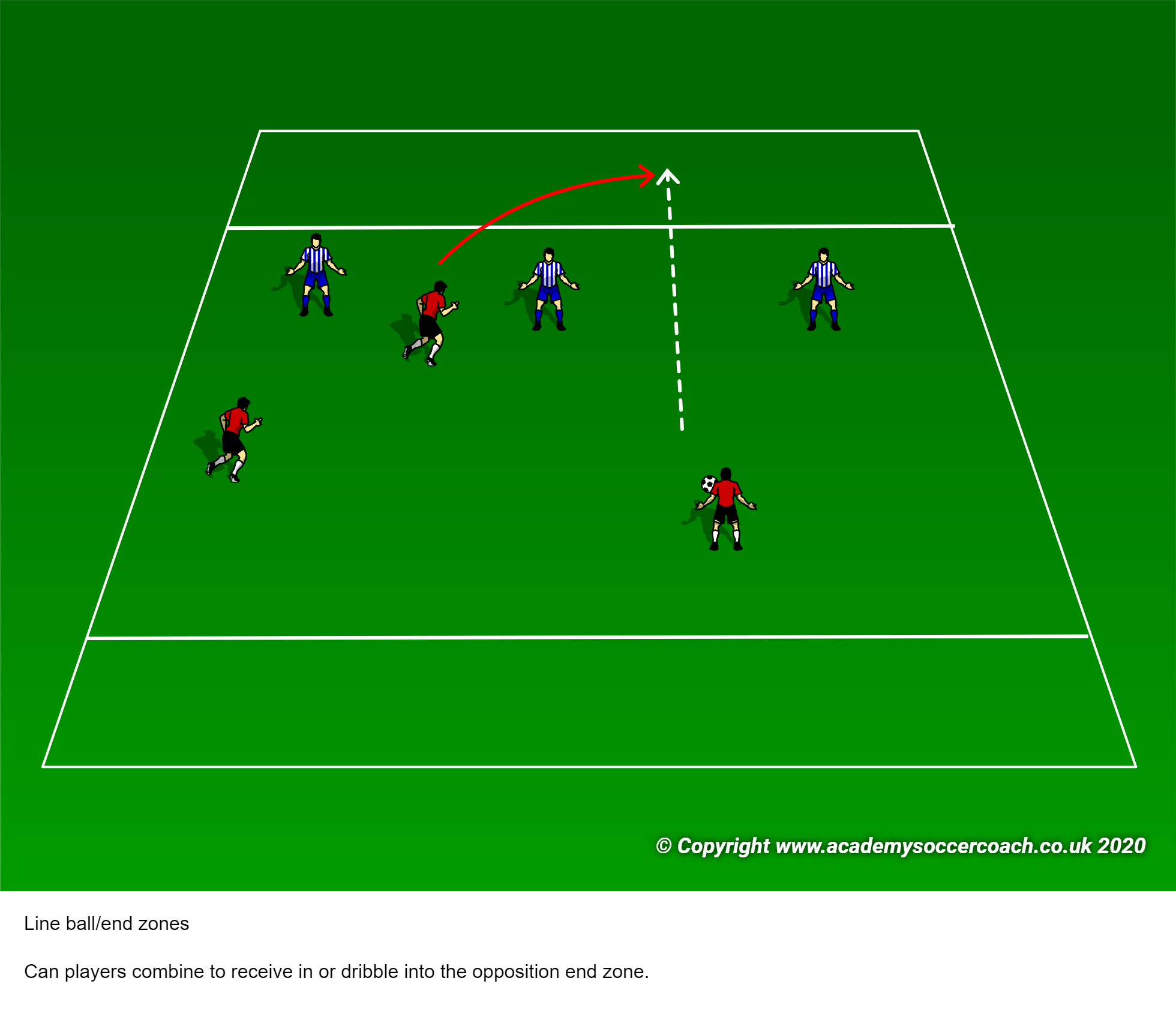
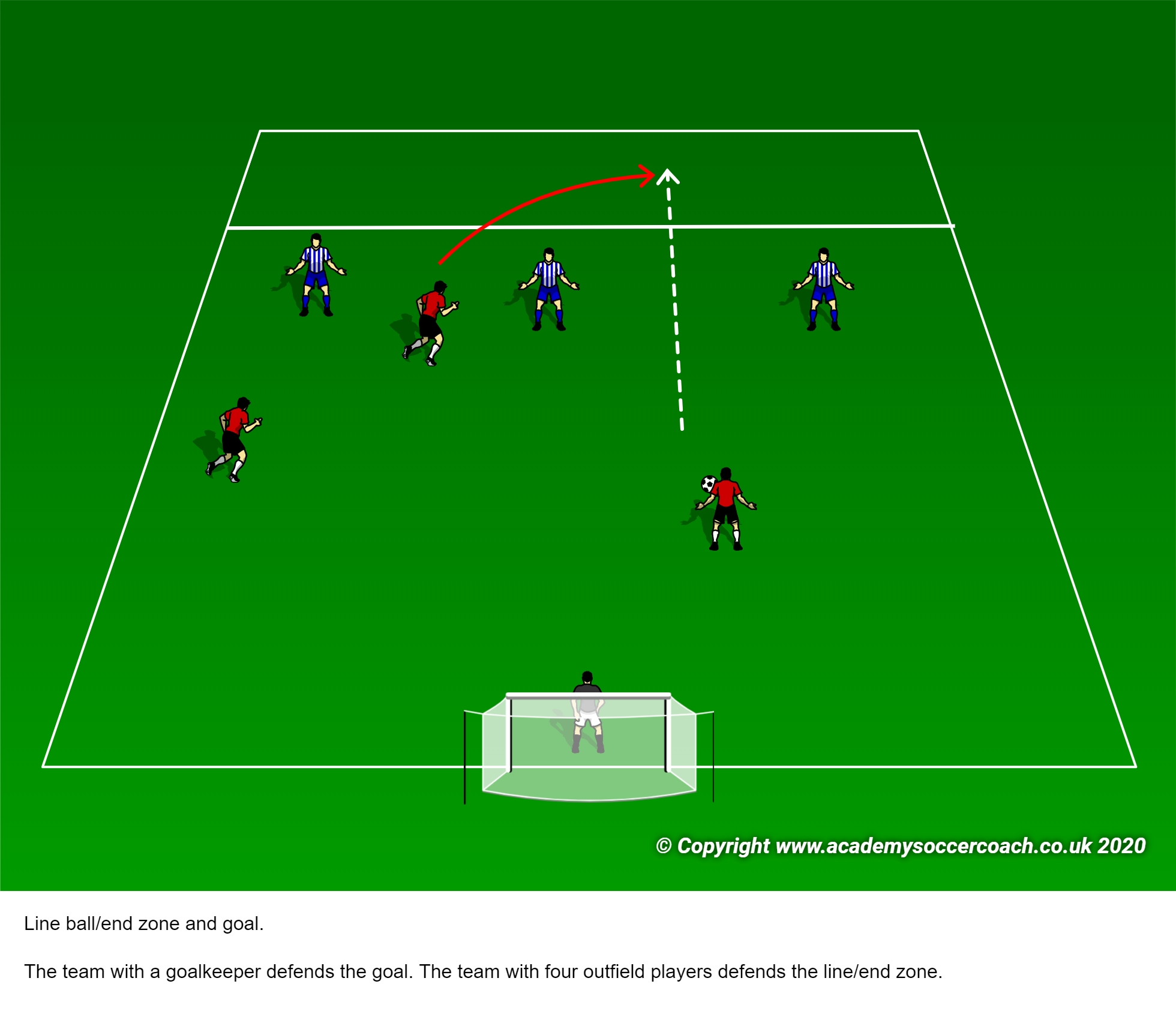
Even in these early skirmishes we have our first piece of casting. The goalkeeper stands apart. He will be important throughout the story, with a big role in each episode. He is the last line of defence, the great threshold guardian. There is a danger that he becomes a loner hero because of his uniqueness, but we would rather that does not happen and our Great Guardian is a group-orientated hero.
These mini games fulfil a device known as foreshadowing. Hinting at later events in the story without giving them away entirely. Here the importance of a particular character and his archetype are revealed. Some of the methods of assault and protection are also going to be revealed or practiced.
THE SHOW BEGINS
Our story telling style will be cyclical, with the beginning of story and the ending of the story echoing each other. This serves as an opportunity to witness the growth of the characters and in sporting terms a chance to see if development, however fleeting it may be, has occurred.
The practice side will feature levels for both Team Bulwark and Team Raiders. In episode one we may have a winner as a team could complete all three of their levels. If there is this only serves to set up the rest of the story, making the finale a story of redemption or domination.
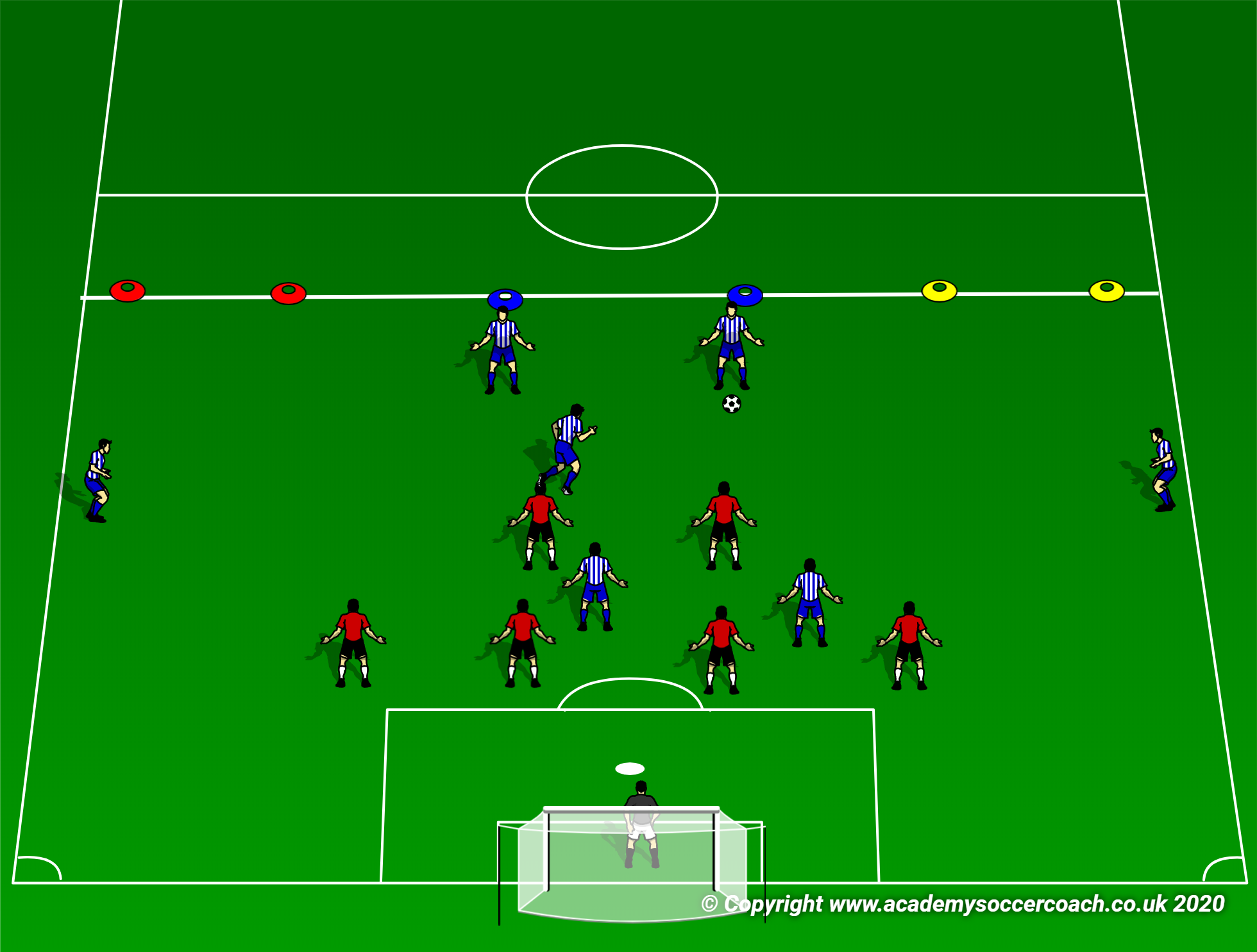
TEAM BULWARK
Level 1 – Keep out the raiders for 5 consecutive minutes
Level 2 – Keep out the raiders for 7 consecutive minutes
Level 3 – Keep out the raiders for 10 consecutive minutes
TEAM RAIDERS
Level 1 – Achieve 5 penalty area entries
Level 2 – Get 5 shots on target from inside the penalty area
Level 3 – Score three goals
For both teams we want to retain the importance of scoring. Team Bulwark score a point by escaping out of the gate. Team Raiders score a point by scoring a goal. Whenever one of the teams does this it reduces their target by one. For Team Bulwark that equates to four minutes to survive rather than five. For Team Raiders that might reduce the task to four penalty area entries rather than five, or it might reduce it to three if the goal came via a penalty box entry.
Both teams will have access to commercial breaks, or time outs. As director I can also call for a break. Each team may call three breaks as a maximum and I can also call a maximum of three.
Neither team will be given any direct instructions from me but they will be asked key questions.
TEAM BULWARK
How might you prevent the opposition from scoring?
Which players from your team will be key to stopping the Raiders scoring?
Which Raiders might be the biggest threat to you? How? What might stop them?
TEAM RAIDERS
Are there methods you have previously used to attack that might help you?
Who might be important players to help you score?
How many ways to organise your team can you think of? Which are most likely to help you score?
From these questions the teams will begin to formulate their own strategies in attack and defence. They will also begin their own casting. Team Bulwark might decide that their central defenders will be key and christen them as the Warrior and the Limpet, one who is a brave blocker and the other who sticks to his designated attacker tightly. Team Raiders might decide on the Magician and the Predator, a creator and a finisher. Other roles could emerge, a leader, a king, a general. The role of bombardier, blocker, conductor. The roles may suit the individual or the group and this could evolve over the story, possibly not fully evolving until the final encounter.
From these initial answers the rest of the drama can unfold, casting and recasting as necessary should the tactical blockade or raiding plans change. This first episode shows the viewers where the characters are beginning, what they are thinking and what they know. They might even indicate the areas of potential growth and future arcs.
A minimum of five of our stars have already been cast. We may seek to cast more in this episode but we could equally wait until the next episode for further casting. It is not uncommon for a show to mainly focus on our key characters in the first episode, slowly elevating the other cast members. However, we should all be aware of the roles (or potential roles) that each character can play in our story.
In the next part we will plot out the remaining episodes based around my imaginary casting of roles and identify further possible benefits or challenges of a storytelling coaching style.