Football Manager is numbers driven.
Whatever love and attachment we may have fro FM. Whatever levels of emotion and commitment FM drags out of us. It is ultimately a calculator pretending to be a football match.
Those playing know this, that is why when they are playing manager they are looking at the players attributes, the numbers assigned to a particular aspect of football which are broken into technical, mental and physical. The calculator is essentially looking at how good a player is doing at something (for example shooting) and then how likely they are to be able to do it well in a game situation.
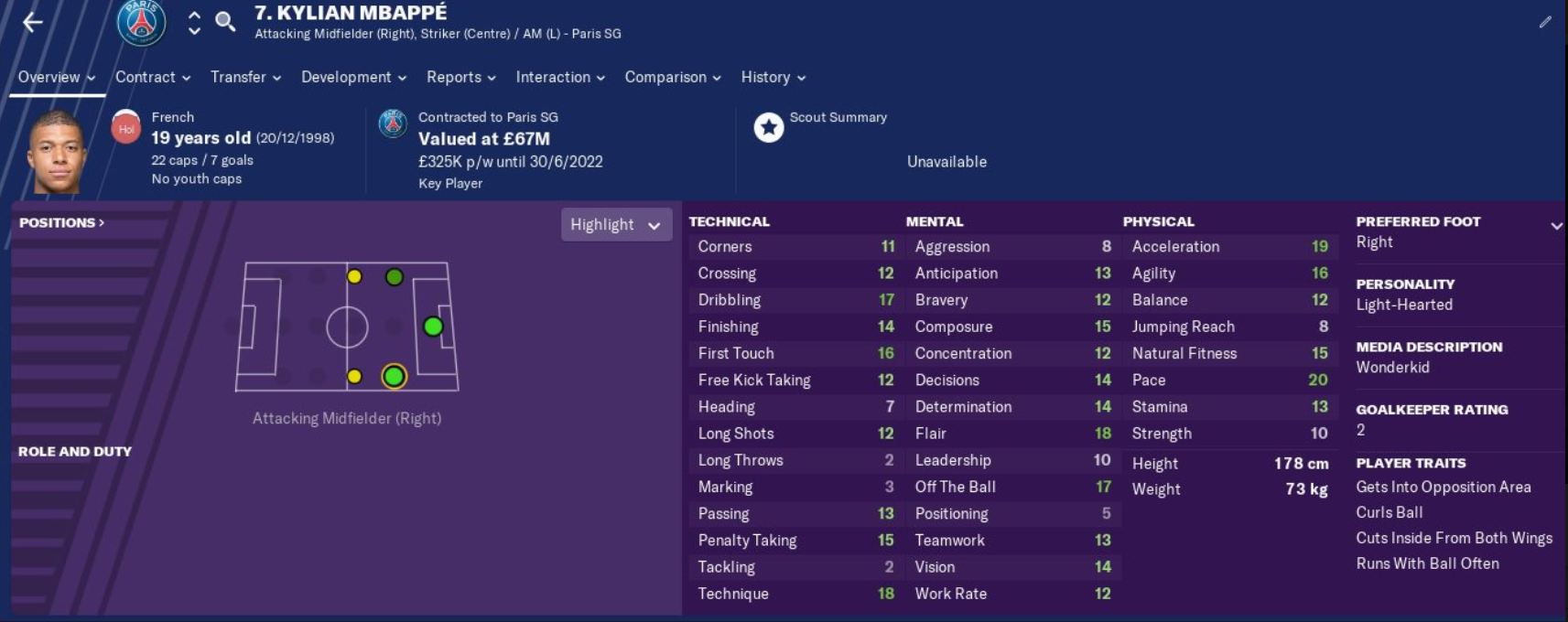
When scouting for players I look at their attributes. The game handily allows you to this via the filters and provided that you have a large enough database in action and scouts with sufficient knowledge a huge number of players will be returned through the search. We then sift through those and hope to find a game changing signing. What are we signing though? What are we actually looking for? The technical attributes appear to be fairly straight forward but what will those mental attributes deliver? What do the numbers for aggression, bravery and vision get you? Other attributes are more obvious, such as work rate and composure but on the whole these are numbers are ambiguous at best.
Do we need them? Football has made a move towards statistically understanding footballers and with an increased array of statistics being recorded there is more relevant data to utilise. On Football Manager the stat line is basic recording appearances, goals, assists, man of the match, yellow cards, red cards, shots on target, fouls, fouls against and average rating. For the average FM manager the stat line would not over ride the attributes when deciding on who to pick or who to sign. Yet the game does record more statistics and game data.
As football has made the move to the use of statistics could Football Manager? Is it possible to replace the attributes with the array of match related player statistics that are currently in use, increasing the realism and changing scouting forever?
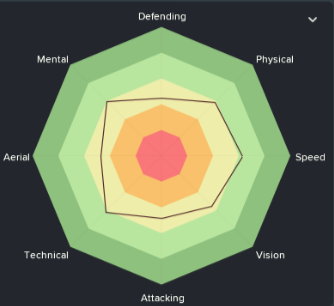
Football Manager offers the radar view as an alternative view to the list of attributes. I never used it. My personal feeling was that it didn’t really give me the information that I needed, but in reality it is closer to the models used in the real world.
This radar is very similar to the templates used by StatsBomb, overseen by Ted Knutsen, who has worked with a variety of professional clubs, most notably Brentford.
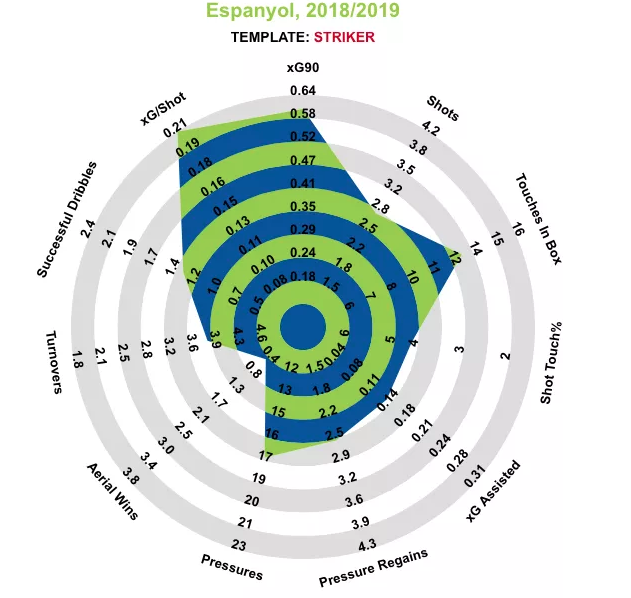
The StatsBomb model utilises different templates for different positions, the striker template (above), an attacking midfielder/midfielder. midfielder, full back and centre back template. They also have a centre back template though interestingly they note that this template is one of the least useful as it is the most heavily influenced manager style that the statistics of the defender may tell you more about the team than the individual player. StatsBomb also have template for goalkeepers that is, unsurprisingly, quite different from the outfield template.
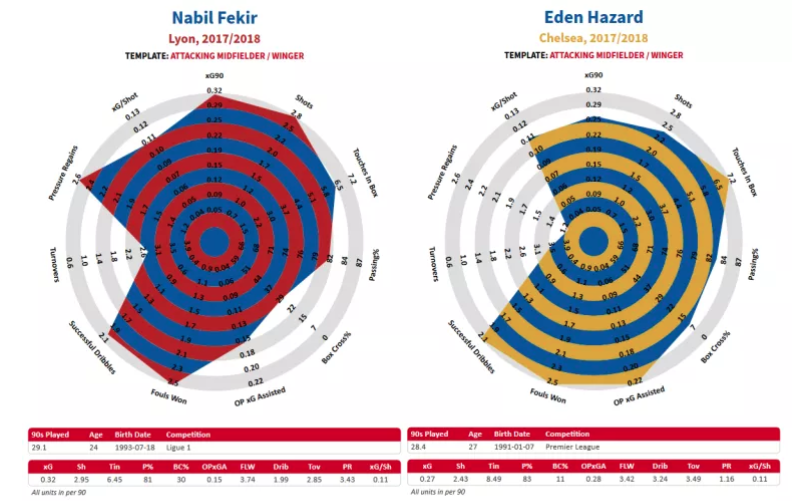
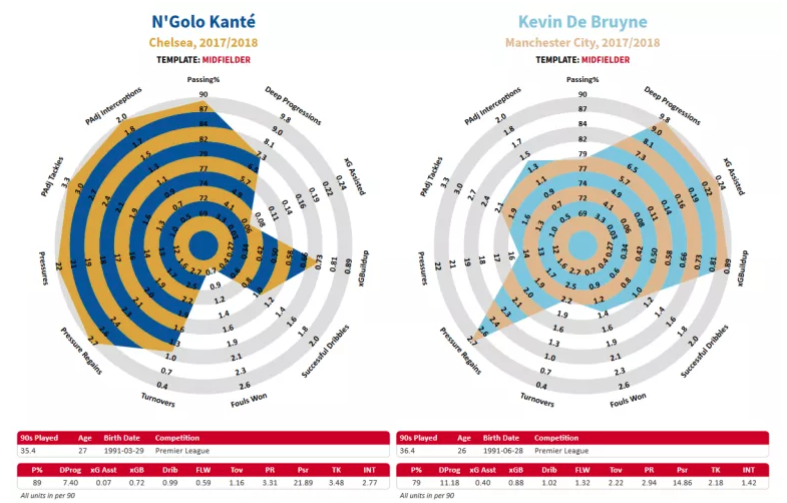
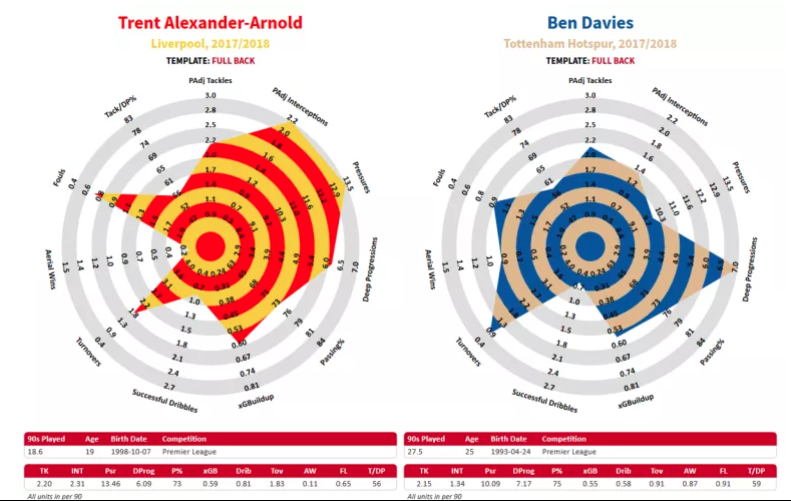
These templates and other statistical models can help us to work out which statistical attributes we need to play Football Manager. The potential list is huge and could be overwhelming. The StatsBomb model simplifies but there are still areas of ambiguity. One of the most famous new statistics is xG, understanding of it is growing and it would be a viable stat for a new FM, however not everyone understands what it actually is. There are others such as OP xG assisted, PAadj tackles and PAadj interceptions, which I am sure are very useful and important but are too inaccessible for our needs. For there to be a working model the statistics need to be useful, relevant and deep, but not so in depth as to be overwhelming.
WhoScored have an incredibly in depth statistical model. At first glance they are reasonably straight forward but one click on detailed unveils a huge number of subsections.
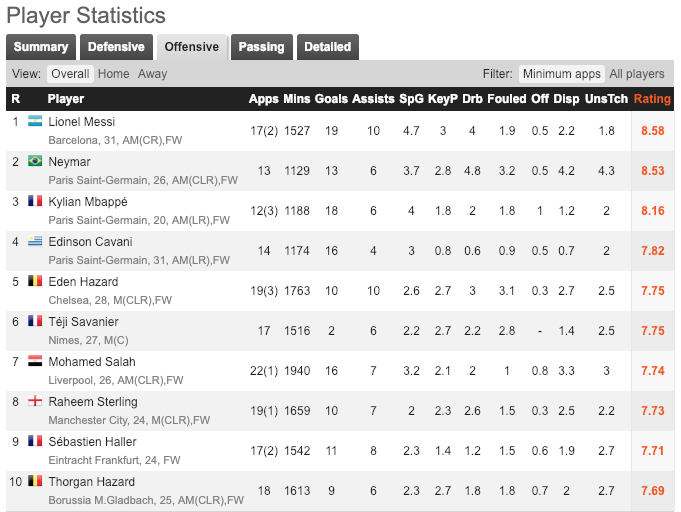
The “offensive” statistics shown correlate with those used on FM as indicators of how a player has been performing.
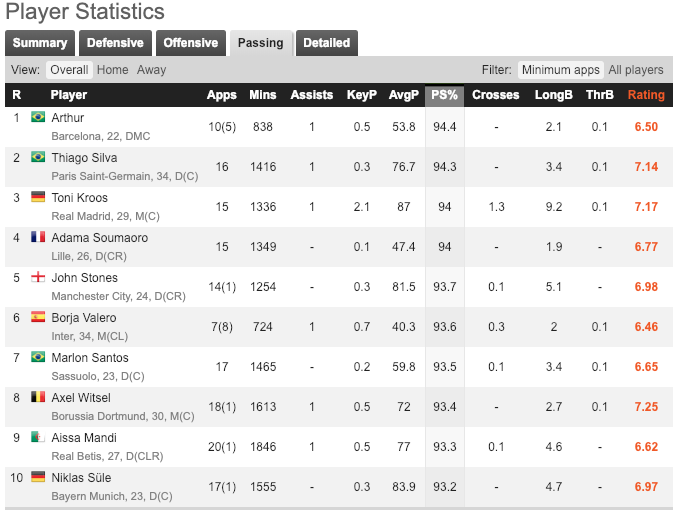
In the “passing” section things start to change, the statistics of average passes, long passes and through balls.
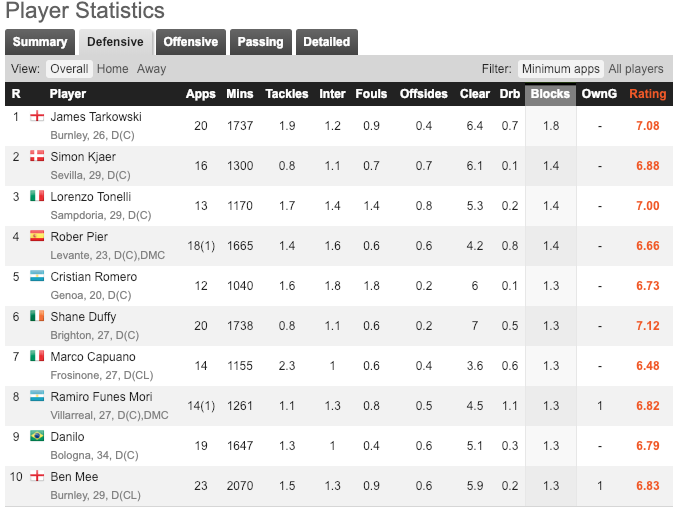
With the “defensive” statistics we enter an area that is often ignored on FM. It has always felt that the game has been weighted towards offensive attributes and statistics with the defensive aspects of the game far more influenced by the set up of the team (as StatsBomb imply for the real world) rather than the importance of individual qualities, yet we can see how in the real world individual qualities can over ride the team set up when we look at the difference made by Virgil van Dijk at Liverpool.
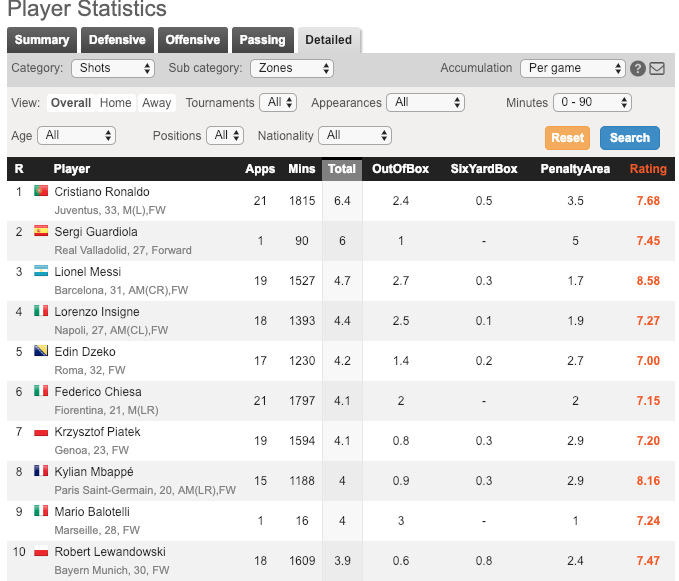
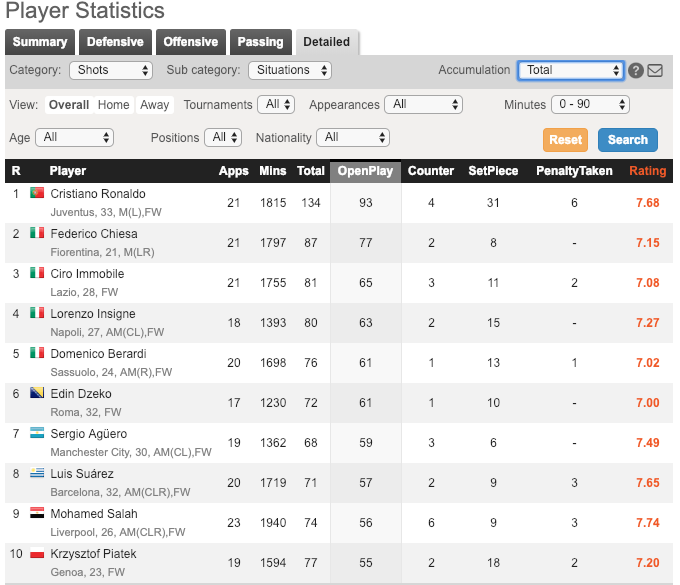
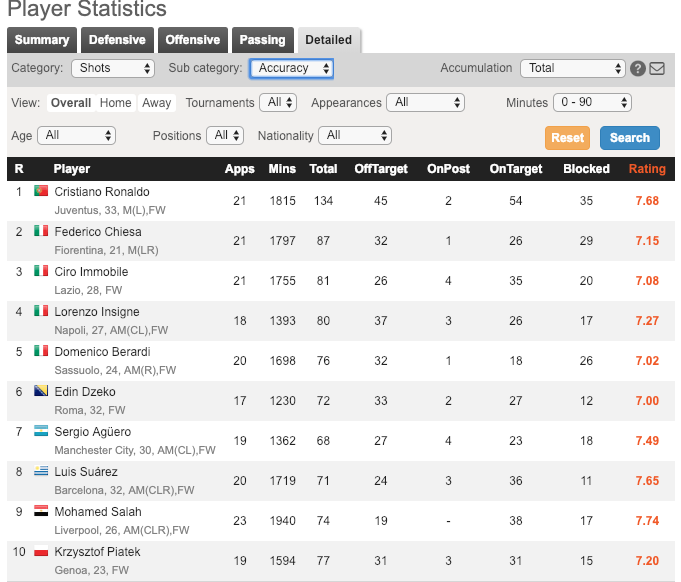
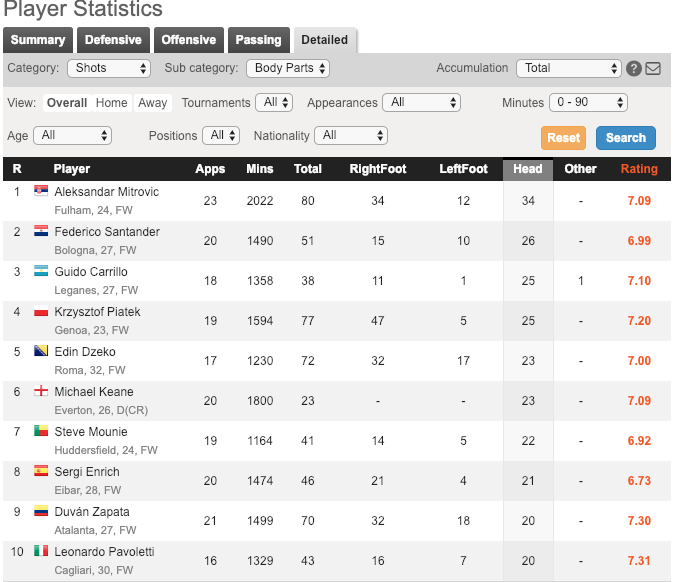
Shooting has the greatest number of subsections on the detailed analysis. Each section also features for goals, if we are looking to create a viable system for FM having a combination of both would provide enough detail.
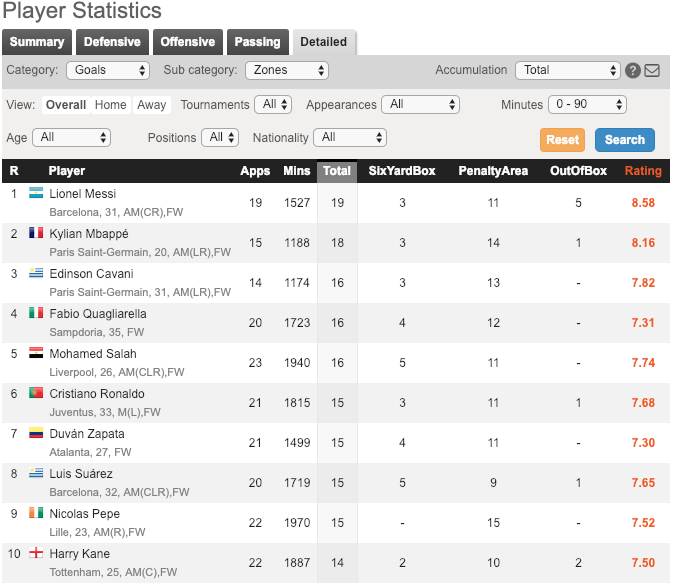
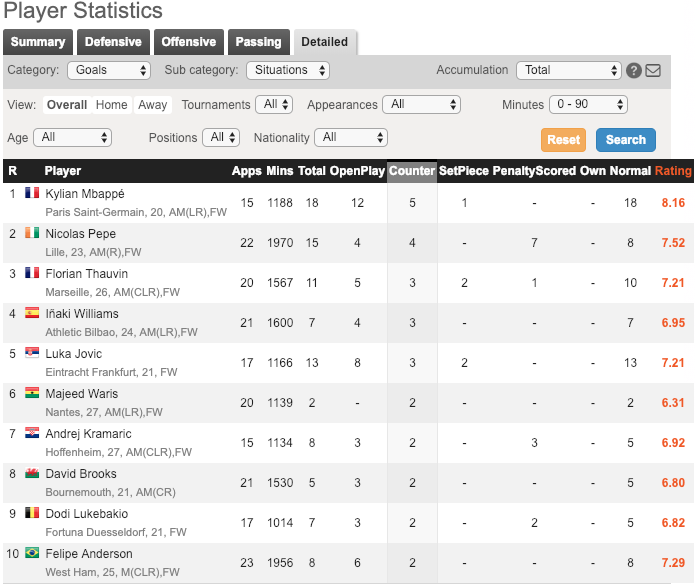
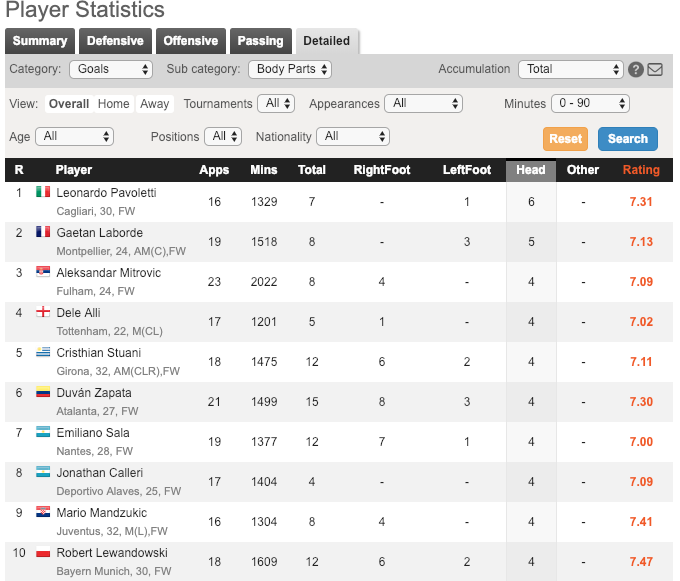
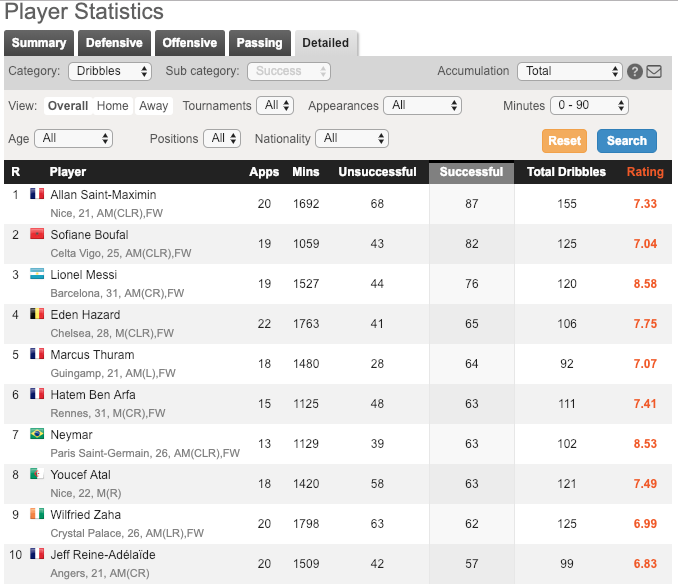
Successful and unsuccessful dribbles (plus a percentage) may be a stringer indicator than a simple dribbling attribute plus a number of mental modifiers. The detailed list provides viable statistics for passing and defensive areas.
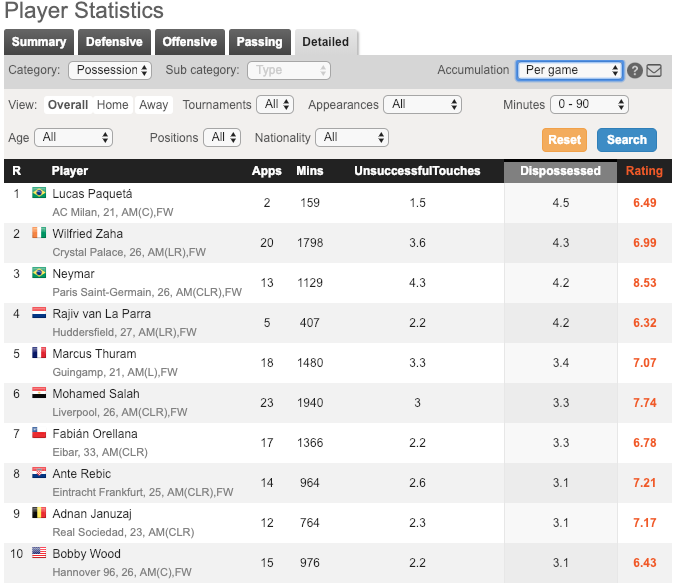
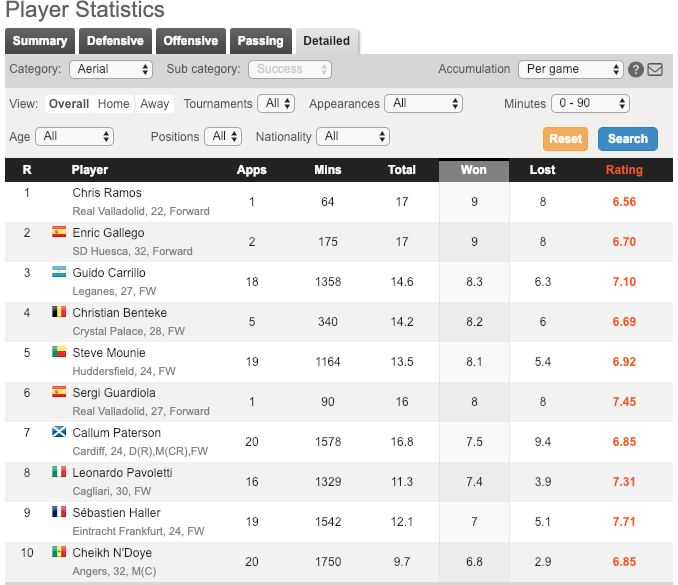
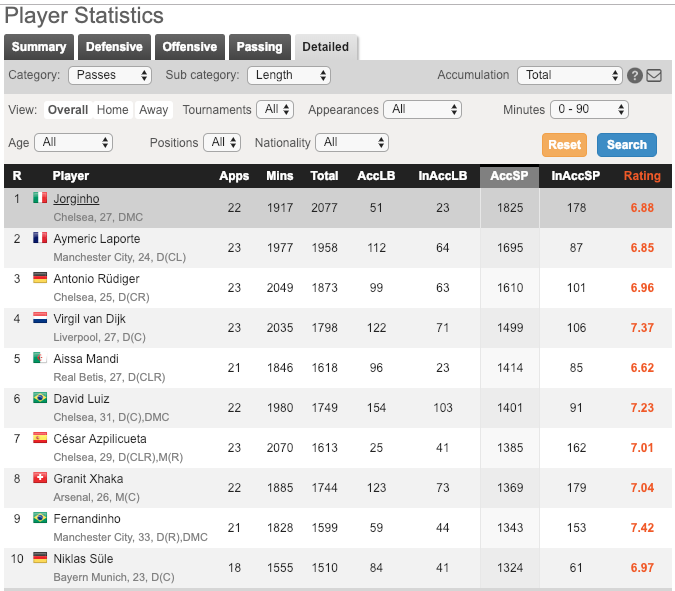
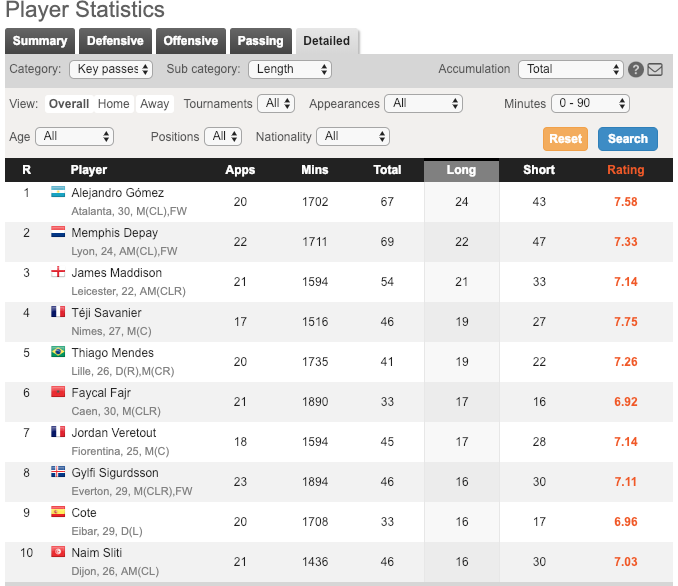
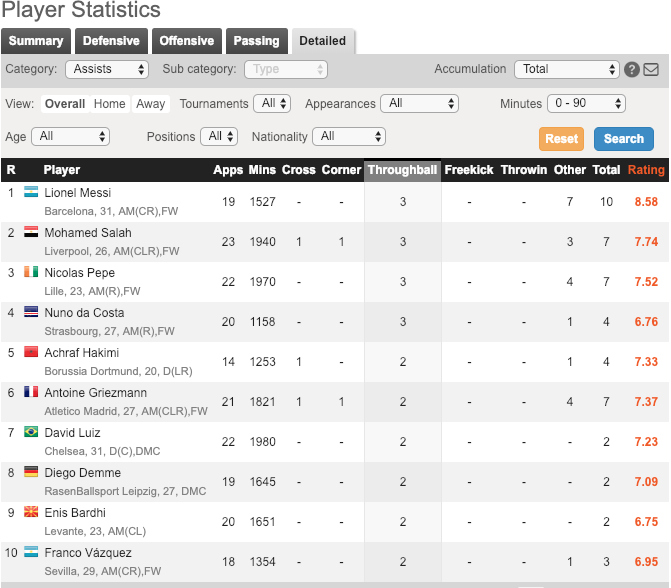
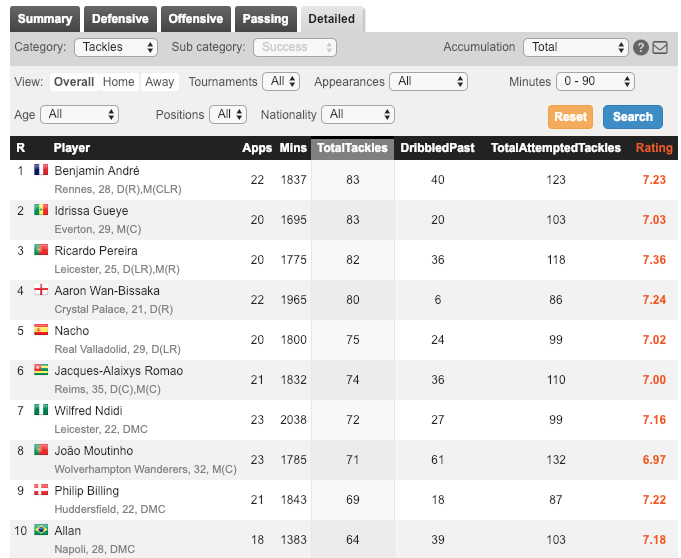
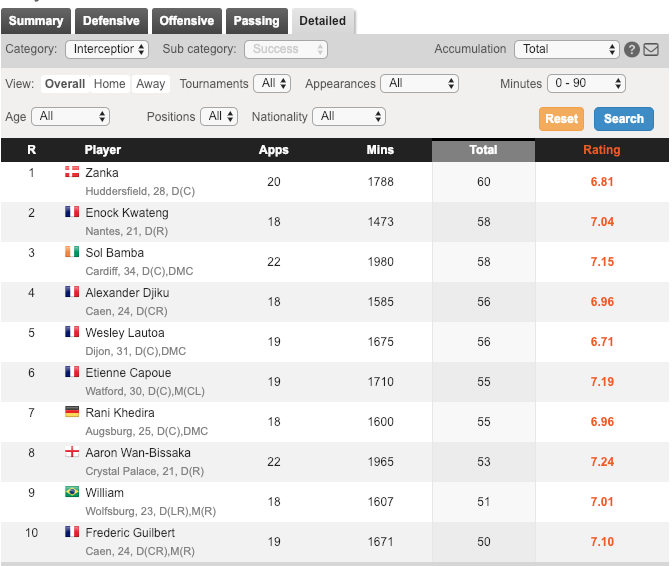
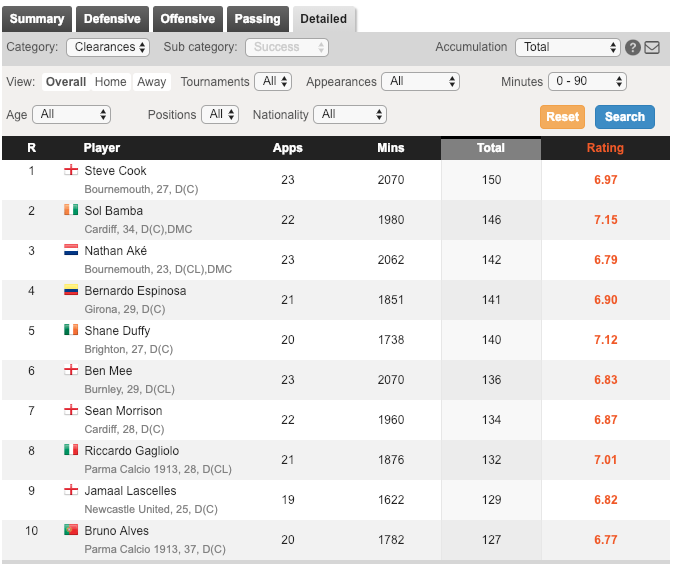
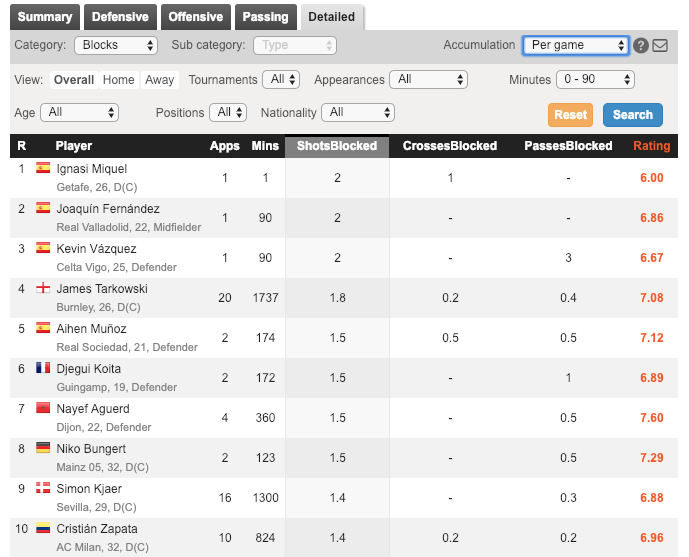
There are almost enough significant statistics to consider that the future for FM could simply be an official partnership with WhoScored.
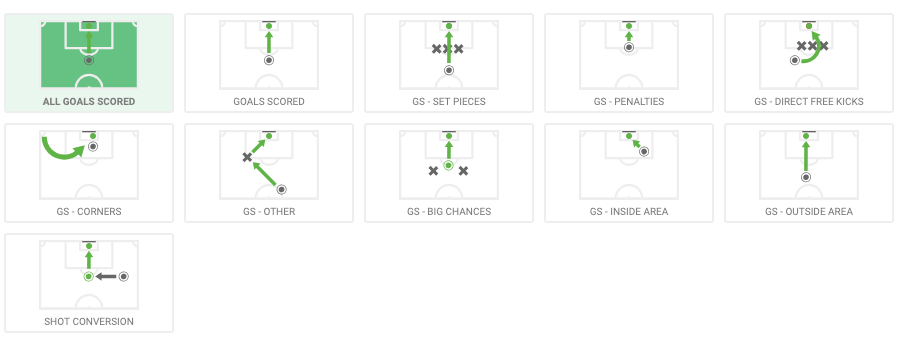
Squawka are another site that have an in depth amount of statistical information available for players, once again they are subdivided into shooting, passing and defensive sections. In addition they have a detailed section relating to discipline.
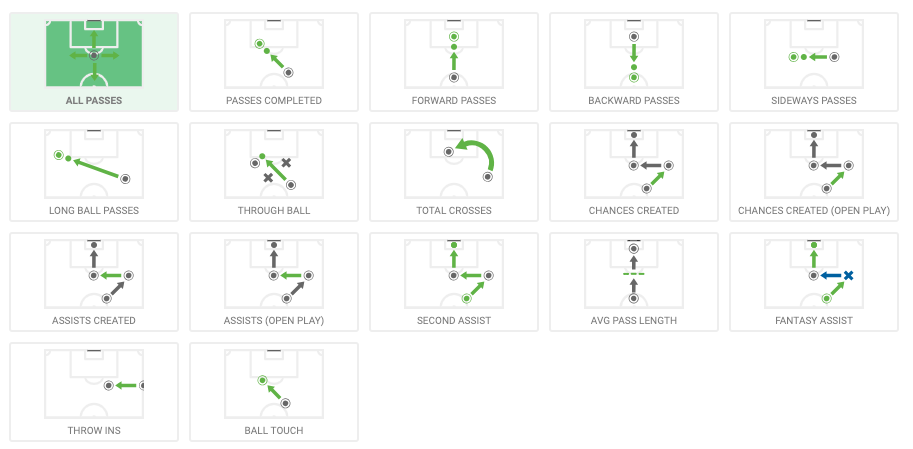
The passing section refers to the direction of passes. This could be a useful statistic for players but may also be dictated more by the style of a manager than a particular individual. I would expect Tony Pulis’ central defenders to play more long forward passes than one playing for Maurizio Sarri (unless their name is David Luiz).
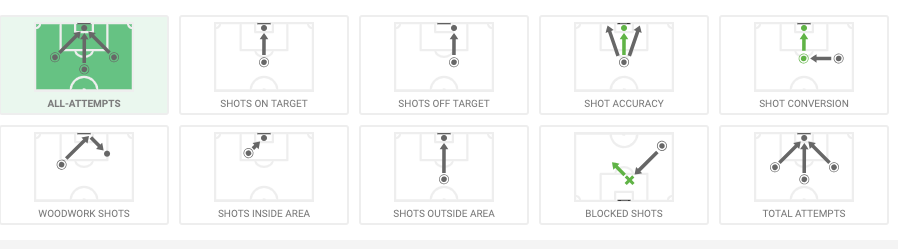
The stats for tackling and dribbling are sub-sectioned slightly differently in the form of duels.
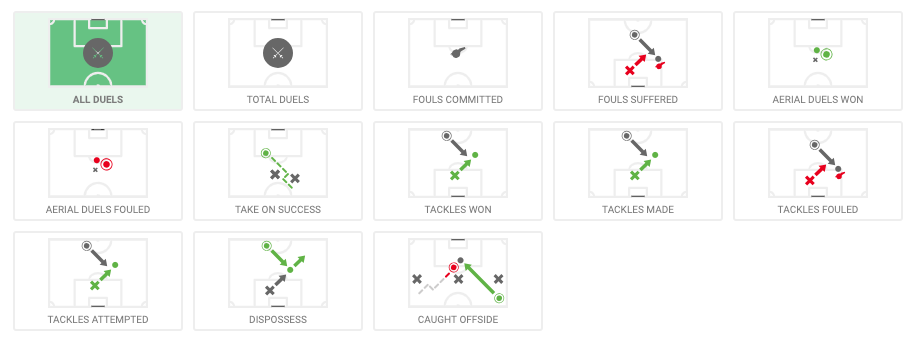
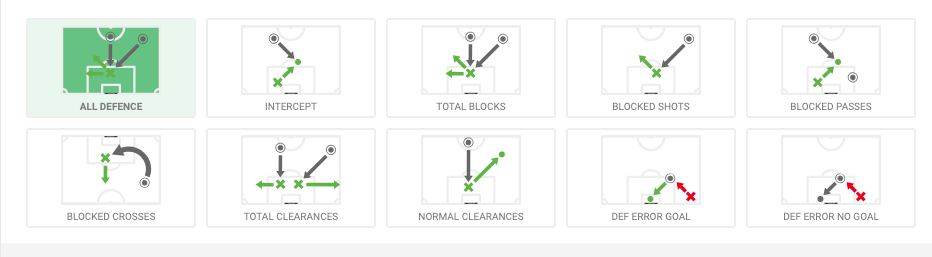
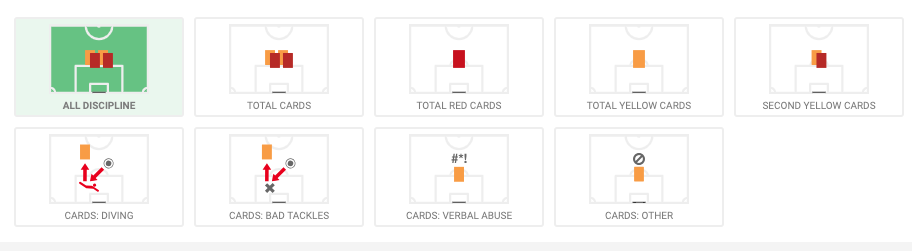
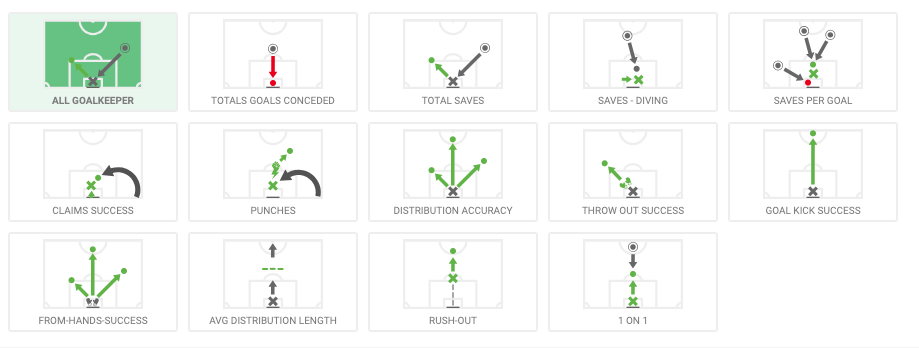
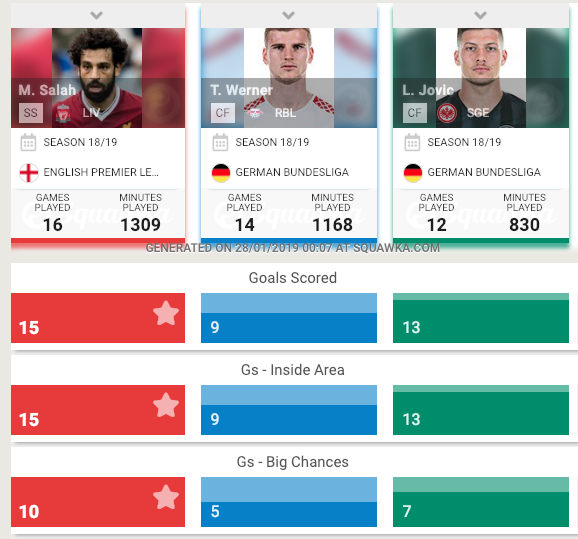
Squawka also has a player comparison facility, as FM does. FM compares the attributes side by side while Squawka compares the stats, a change that would need to be made if this method was to be integrated into the game.
What is the implication of all this data?
Across the three chosen providers a number of statistics are held in common. These must represent the key stats needed for our FM footballers. It is also note worthy that a number of physical related statistics are not available through these outlets, however we do know that they exist and could be included in the game.
My proposal is that each outfield player home screen contains statistical groupings linked to different areas of the game. These could be prioritised based on the player position or the user could choose to sort them in a way that allows focus on specific stats. It could also be useful for the user to have the option of seeing the statistics in the form of a percentage, per game, season average (career) or season average (current). Other contextual comparisons could also be needed to see how much of a statistic is because of the player themselves or the manager/team style of player. These might be a league/division average and a comparison with team mates. There could also be the need for an extra caveat as a player with good statistics in League One might not be realistically able to maintain such numbers in the Premier League. The division could carry a grade (Premier League, Champions League, International etc =A. Championship = B), a high number at a lower grade could translate into an average drop off in the statistical value on moving up a division or more. The grade combined with the opinion of scouts of a players potential/future potential would advise whether to sign the player. Granted this is complex, but it does not have to be complicated.
Potential categories and statistical attributes:
Shooting/finishing –
Goals – Per game – Minutes per goal
xG
Shots – Per game
Shots on target/shot conversion – Six yard box – Inside box – Outside box – Open play – Dead ball (taker/receiver) – Penalty
Body part – Header – Right foot – Left foot (this could potentially be connected to every passing stat as well as the shooting stats)
Passing –
Passes completed – Total – Per game – Percentage – Defensive third – Midfield third – Offensive third
Chances created/Assists – Open play – Dead ball (corner, free kick) – Through ball – Cross
Key passes (pre assists)
Pass Distance – Average distance – Short passes (percentage/total/per game) – Long passes (percentage/total/per game)
Dribbling –
Total dribbles – Dribbles per game- Successful take ons
Fouled – Total – Per game
Defensive –
Tackles – Total – Per game – Defensive third – Midfield third – Offensive third
Interceptions – Total – Per game – Defensive third – Midfield third – Offensive third
Clearances – Total – Per game
Blocks – Blocked crosses – Blocked shots – Total – Per game
Headers – Aerial duels won – Percentage – Total – Per game – Own box – Opposition box
Discipline –
Cards – Red – Yellow – Total – Per game – Diving – Tackles – Verbal abuse – Violent behaviour
Fouls committed – Total – Per game
Caught offside – Total – Per game
Physical –
Height
Weight
BMI
(A combination of these three should provide a logical indication of strength and potentially stamina)
Top speed
Sprints per game
Distance run – Total – Per game
One category that might be considered important but has no real basis in statistics is leadership. I would suggest that could be dealt with in the personality traits of players. Those listed as highly determined or natural leader would make logical choices of captain.
I do not suggest that this compilation is complete by any means and I am sure that people are able to think of other stats to include or leave out. The application of these stats in game would be fairly straight forward, the better the statistical attribute the more likely a player is to be successful in an action or in performing a certain role, or for a team that plays a particular style.
The comparison and analysis of player statistics could be too much to ask of the average FM player once the initial novelty has worn off but there is a solution. This method opens up the possibility for the hiring and management of a real analytics department at each club. This might be in house to keep track of player statistics and trends (upwards or downwards), in comparison with players outside of the club and connected to the scouting department. This would mean that rather than relying on the size of the database and turning off attribute masking to find players your team would rely on the depth of statistical data held and maintained by the club.
This potential model might excite some, it might appal some, but it would certainly increase the realism of the game and give people something to think about.