In 2010 I was asked to take an after school football session in North West London. The session was at a primary school, in a school hall/gym of below average size. Unsurprisingly for such a facility the surface was wooden, hard and far too bouncy for a football. Players spent a lot of time fighting over a ball that was pinging around at head height, crashing off the walls. The kids loved the speed of the session but I was concerned that they were not spending as much time with the ball as they might. Something had to change.
In 1995 Juninho Paulista signed for Middlesbrough. He was arguably the highest profile Brazilian to ever play in England and his wonderful dribbling skills enthralled the nation. Soon all the football magazines clamoured for interviews, within many of which he mentioned a game called futebol de salao, to which he credited with enhancing his skills. In the pre broadband era it was an immense struggle to find out any information about this miraculous game. I then heard that Juninho had become friends with a Brit named Simon Clifford. Simon launched a series of videos, books and Brazilian Soccer schools, for some time these were the only sources of information I could get my hands on.
I drew on this memory, finding and purchasing a futsal. The reaction from the kids to the ball when they first saw it was one of puzzlement and from some, rejection (this has never changed). However, after one session with the ball they were happy that the games now had more football action. I was aware of futsal being played to lines, the next week when the ball hit the walls or benches the other team got to restart play. The session slowly morphed. A little research online and I found an introduction to futsal course. The combination of the hall environment and my memories of Juninho started me on a road I am still travelling.
A few things to get straight before going into the meat of this post. I love the game of the futsal. I think it is criminally under rated and under valued. I also love football, and as much as I love futsal, football and I have had a far longer and deeper relationship than futsal, in this regard I expect that I am akin to the great majority, only a few have seen futsal over take football, I must repeat that although I am not one of them I still have a deep attachment to futsal. This is like cinema and music, I have always preferred the visual form but that does not mean that I lack love and respect for music.
This is intended to be my honest take on futsal and the relationship between futsal and football in England. Some people will think me right on things, some will think me wrong and they may well be correct. Other people will be privy to information that I am not or have greater experience of the game, seeing it from a different perspective. Therefore my take is not intended to be definitive or the be all and end all, it is merely my take.
Many extremely passionate people will also have their own take on what is happening. The FA have recently announced their strategy for futsal, for some this is sufficient for others it is too slow, not drastic or direct enough. Another, slender yet vocal group will never be satisfied with what is proposed. We must all remember that they are angry because they care, while they would do well to remember that just because we are not angry it does not mean that we do not care. We may simply perceive the speed of change required in a different manner.
“We write our personal story as intermittent authors; the narrator is always searching for a unitive point of view. We strive to perceive oneself from a unified perspective, but it is virtually impossible to do so. Human perception of the self is an illusion. We constantly sift through shifting memories. We experience the present under the fragrance cast by the past and under the illusionary aura of the future.”
The FA futsal strategy has a number of core strains. It has been well worded, well researched and well thought out, as would be expected of such an organisation. Though not perhaps what might be expected of an organisation often not accused of caring enough about futsal.
Vision
To make futsal the FA’s and the nations indoor game of choice for young players.
Mission
To ensure that every young player experiences futsal as part of their development.
Targets
By 2024, in the categories shown, we will have:
- Participation: 150,000 futsal players participating regularly across both genders and ages.
- Workforce: 15,000 FA qualified futsal coaches at Level 2 and UEFA B (currently 900*)
- Facilities: A defined network of futsal facilities, covering every county FA.
- International: A men’s futsal team in the top 20 of FIFA’s rankings (currently 54th*). An England women’s futsal team.
Five priorities
- Create a high impact identity for futsal in England
- Drive participation
- Establish competition and player pathways
- Create a specialist futsal work force
- Build the bedrock for succesful England futsal teams
Identity
- Improve visibility, particularly online
- Increase national and international profile
- Embrace best practice
- Create partnerships with like minded organisations
Drive Participation
- Track current participation numbers and drivers
- Embed futsal in the FA’s support for school’s football
- Establish futsal as a core offering of grassroots clubs
- Maximise the role of FA-funded colleges and universities
- Empower county FAs to co-ordinate futsal growth
- Harness the positive power of the private sector
- Improve the quality, quantity and accessibility of facilities to play futsal
Establish Competition and Player Pathways
- Encourage youth leagues to take a winter break and offer futsal
- Link competitions from grassroots to elite
- Evolve the National League to better support England teams
- Launch a short, high impact futsal competition to raise profile
- Embed futsal in the women’s and girls’ competition and pathways
Create a Specialist Futsal Workforce
- Promote futsal coaching courses to existing licensed FA coaches
- Encourage teachers to take an FA futsal coaching course
- Increase the number and quality of futsal referees
Build the Bedrock for Successful England Futsal Teams
- Embed futsal in the talent and grassroots pathways for 5-11 year old children to start
- Shift responsibility for England futsal teams
- Establish a competitive England women’s futsal team
- Further research the contribution futsal can make to player development
- Make futsal a recognised progression for players exiting club academies
- Build ‘Dual career’ opportunities for elite futsal players
- Commercialise the sport
From the FA’s Futsal Strategy 2018-2024
* Correct at the time the strategy was published.
The FA and CFAs had not actively counted those participating in futsal. This is now changing, with participation a part of the CFA’s key performance indicators and budgets available to boost participation in futsal. The FA estimate that 10,000 people participate regularly in futsal but a great deal more are involved in some way as part of their football experience. In the coming years these numbers will become clearer and there will be greater understanding of who is playing futsal and why? (Just as the question is asked why do children play football?) It is quite astonishing that there is no real measure at present, which only adds to the impression of futsal remaining an outlier that is not entirely embraced. I think there can be little doubt that has been the case. The past struggles to find and attend coaching courses related to the game provide evidence for this, with courses appearing and then disappearing or changing from Level 1 to Level 2 and back again. As a deliverer of courses I have seen this and it is a frustrating thing to experience, though it may also indicate something else. If courses are vanishing because of a lack of uptake it might be because the courses are not being advertised well enough, but it could also simply be that futsal is less popular and/or fascinating than we would like to believe that it is.
It is not so long ago that the FA released their high profile England DNA, a document of great depth and (perhaps fittingly) mostly presented in a non linear with strands shooting off and out, here and there. This can make it quite difficult for some to follow, flitting from link to link. The most important aspects are:
Who We Are:
Pride – We are proud to be part of the development of a winning England culture.
Integrity – We strive for the highest standards on and off the field. Nothing less is acceptable.
Excellence- We aim to be the best that we can be both individually and collectively. Excellence is the minimum requirement.
Collaboration – We work together as a team to create and sustain winning England teams. Everyone has a part to play.
How We Play:
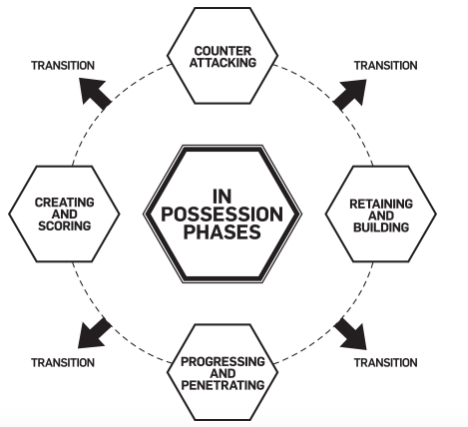
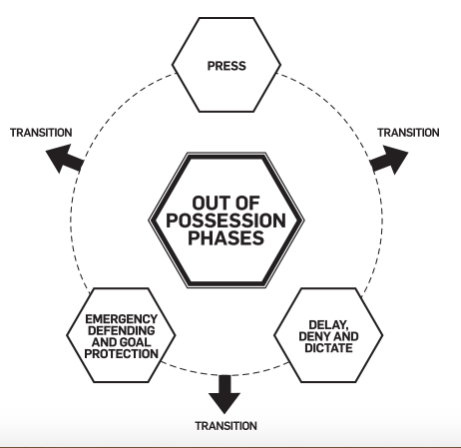
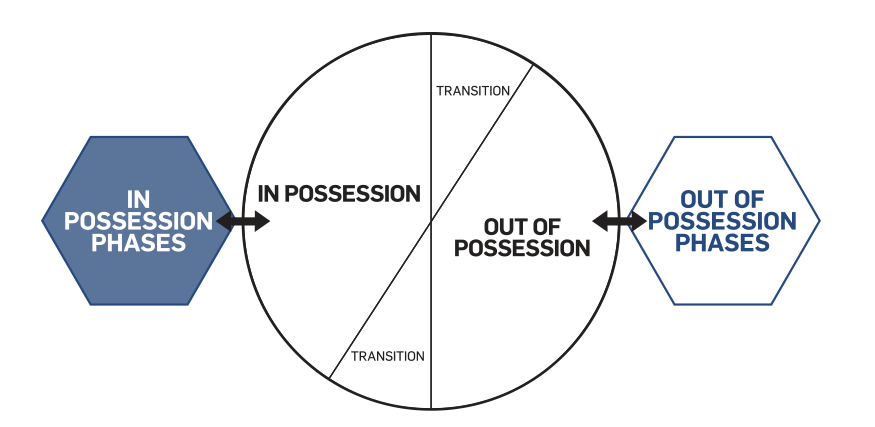
Perhaps unsurprisingly this is the area that comes in for the most scrutiny. Perspective and understanding create differing points of view with people declaring it to be too detailed and rigid while others would prefer there to be far greater detail (there is more detail involved than I have presented here but that would demand far too much time and space) and definition. A fair summary would be that the style sought is representative of the modern game as seen by the best teams in world football. Though teams may not perform in exactly the same way there are numerous common threads in the ways in which they defend, the ways that they regain possession (through pressing, counter pressing and then organising into a block), retain and secure possession (short based passing style with tight triangles around the ball), create opportunities (switching play, use of half spaces, under laps, overlaps and low crosses) and transition (use of fast players in wide positions and longer passing). In order to play in this manner the players will need certain attributes.
Technical:
- Receiving skills
- Turning skills
- Travelling with the ball
- Passing over varying distances
- Attacking and defending skills
- Finishing skills
- Aerial ability
Tactical
- Recognise and adapt to the state of the game
- Achieve winning performances by maximising strengths and exploiting weaknesses
- Understand and apply individual, unit and team roles and responsibilities
- Adopt varied playing styles and formations
- Perform effectively against varied playing styles and formations
- Deal with varied environments and conditions
Physical
- Agility/balance and coordination
- Speed/speed endurance
- Flexibility
- Power
- Strength
- Nutrition and lifestyle
- Physical resilience
- Recovery
Psychological
- Confidence
- Creativity
- Concentration
- Communication
- Control
- Commitment
Social
- Behaviour
- Reflection
- Teamwork
- Relationships
- Accountability
- Responsibility
- Independence
It falls upon us to develop players who have these attributes and abilities. We do not know exactly what he game will look like in ten years team, but what is for sure is that it will evolve as a result of what is happening at the moment, either as a counter to it or as a further adaptation. One other possibility is that tactics of the past will become popular again or be altered in some way.
How We Coach:
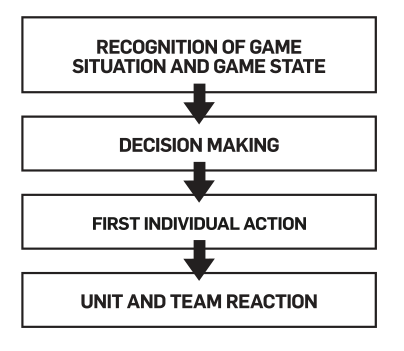
Plan – Do – Review
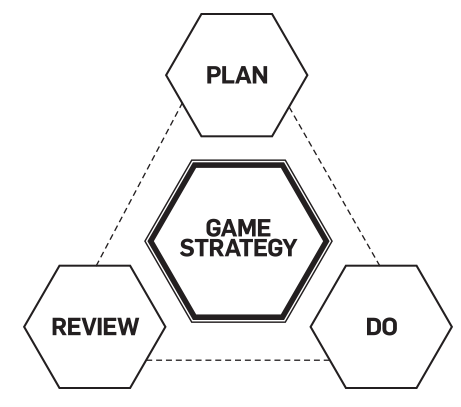
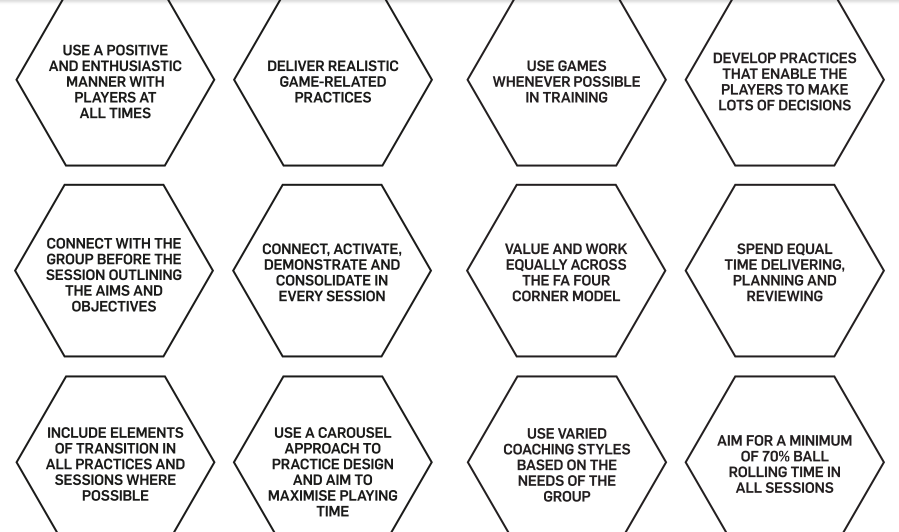
Plan – Do – Review applies to both games and training/practices. The one bleeds into the other and can not exist in isolation. The second image relates to how we as coaches deliver practices that link in with the DNA.
The major points to pick out are:
- Deliver realistic game-related practices
- Use games whenever possible in training
- Develop practices that enable players to make lots of decisions
- Include elements of transition in all practices and sessions where possible
- Use a carousel approach to practice design and aim to maximise playing time
- Aim for a minimum of 70% ball rolling in all sessions
From here it is apparent that the FA strategy is geared towards a teaching games for understanding/ constraints led approach rather than blocked practice (although it is not saying that there is no place at all for blocked practices). Greater game like situations, with more randomised outcomes afford more decisions and actions. Less repetitions, but with careful design the opportunity to repeat and work on outcomes is there. The players should also have increased opportunity to express themselves creatively as the solutions will be less prescriptive because the action is more unpredictable. More often than not this manifests as small sided games, but with older players this may not always be the case.
All of which is a very lengthy way of bringing us back to futsal. A great many of the aspects outlined fit with the game of futsal. Without applying a great deal of genuine futsal strategy to the game the format lends itself to many of the strands of the England DNA. The format of the game immediately is a small sided game with a high ball rolling time. The hard surface means that the ball speed is fast which creates a high tempo game, higher tempo games generally create more situations of instinctual decision making. A smaller sided game affords itself more 1v1 and dribbling opportunities (though players do not have to take them, it is after all their decision), greater numbers of opportunities to combine and create. Plus there will be more shots on goal.
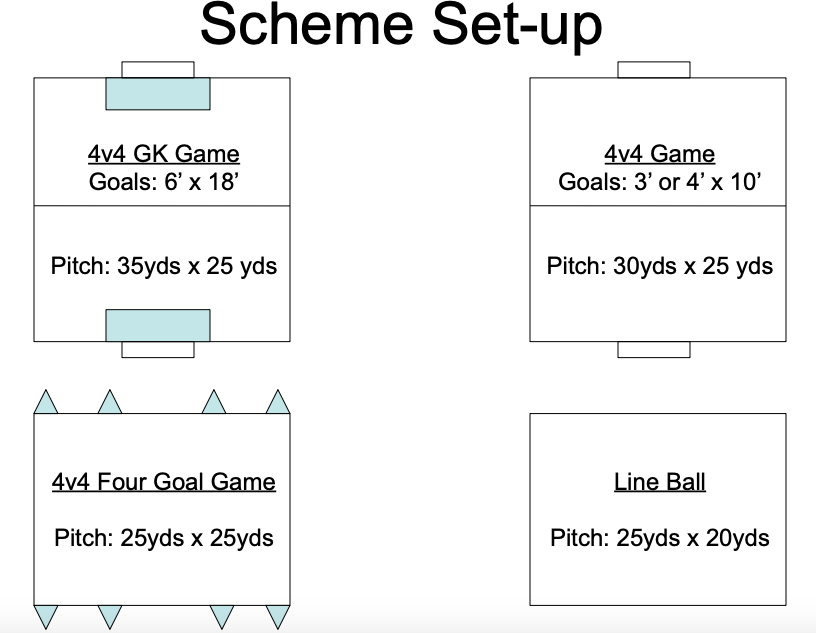
In 2013 Manchester United commissioned research comparing 4v4 with 8v8. The key findings were thus:
On average 4v4 versus 8v8 had:
- 135% more passes
- 260% more scoring attempts
- 500% more goals scored
- 225% more 1v1 encounters
- 280% more dribbling skills (tricks)
The scheme used the below practice areas.
Other research has shown similar findings, with small sided games, with little adaption to what we would recognise as a game (directional, markings, goals) creating more affordances for players than practices with larger numbers.
All of which has enabled futsal to gain traction within the England football DNA, particularly embedded within the Foundation phase DNA, which further illustrates the points laid out above.
If you are indoors in the winter and have limited time – just play the game.
- The players will have increased touches and decisions to make (master the ball)
- The players will have increased opportunities to: accelerate, decelerate, change direction, stop and start, dodge and feint (master your body)
- Players are under constant pressure and have limited space (seek creative solutions)
- The players will have more tactical challenges to overcome (instinctive decision making)
- There will be more opportunities to shoot, pass, move, dribble and play 1v1 (be exciting with the ball)
- The players will have to react to transition more often (instinctive decisions)
- The players will have to defend as an individual and a team (intelligent defending)
And whilst all this is going on the players are having fun and enjoying the game.
(From the Foundation Phase DNA)
Futsal has been placed in an important position within football. This is not seen as good news by all. Futsal aficionados are almost offended by this stature as a development tool for football rather than being respected as a game in it’s own right, with a rich history and tradition completely separate from football. Except while that might well be true in South America and Europe it is not the case in the UK. Most had not heard of the game until the Juninho days, many still have not heard of the game even now. The rich history and tradition of futsal in England is being built right now, we may not be living through the big bang itself, but the universe is certainly still being formed.
Futsal is still in a position where it is in need of greater exposure. There is not a national television deal in England as there is in other countries that allows the casual viewer to drop in and discover the game. In England we rely on Eurosport at the time of major tournaments or the sharing of various streams. I have likened being a futsal fan in England to being a wrestling fan in the 90s, with the exchange of tapes and info now being sharing out the links or highlights packages that have been discovered via social media. The feeling remains that of the underground, of the hardcore, but futsal will only prosper when it emerges from the dark.
Fortunately there is a game with many similarities to futsal with a passionate fan base that could help.
Football and futsal need each other. Football is beginning to acknowledge how futsal can help football by being a part of the development of the modern footballer. While the England DNA remains the national strategy players aged 5-11 will discover futsal, even if they do not play the game regularly they will at least know what it is. That in itself is a vast improvement as many players are still not discovering the game until their teenage years. For the England team and for English futsal it would be a sea change. Most followers of futsal are aware that it took England many years to win their first futsal match, a large part of this was that the squads were made up of footballers trying to play futsal, which meant that they received the ball in a way relevant to football, tried to score goals as they would in football and defended like footballers. While there are a great many things that transfer there are technical differences that might not matter too much within development phases or at lower levels, but come the elite levels of futsal it is the details that make the difference. When footballers have had no exposure to futsal deeply ingrained habits need to be broken, when footballers have had futsal experience in their formative years the job for the coaches is far easier.
Brazil is the stereotype. For a great many years the credit for Brazil churning out huge numbers of high quality and exciting footballers was given to all that lovely weather and beach football. Credit then shifted to the hunger of the poor playing to escape the favella. Then people discovered futsal and credit shifted once more. In Brazil futsal is played in primary school by every child, it is a virtual guarantee that every young person will have had some sort of exposure to futsal. Other latin countries echo this, Spain, Portugal, Uruguay and so on. As a child my family would holiday regularly in Spain. There was not much green space but everywhere we saw these hard, red courts with kids kicking a ball around, little did I realise that a lot of the time what I was looking at was futsal. These courts are everywhere in South America too and as good as the Spanish are at futsal it is still the Brazilian flair that we have in our mind’s eye.
When I went on my introduction to futsal course a handout went round the room. On it was a list of quotes from legendary footballers talking about futsal. There was nothing from any futsal players, simply because we would not have known who any of them were! A huge part of the futsal level 1 is selling the game to football fans/coaches. It will be this way for the foreseeable future, but may change in a decade when futsal has been pushed further and more of the players who have tasted futsal start to coach. For now though, a large part of the job of coach educators is that of salesmen. Selling the uninitiated the game via the stars. Fortunately there are plenty of them.
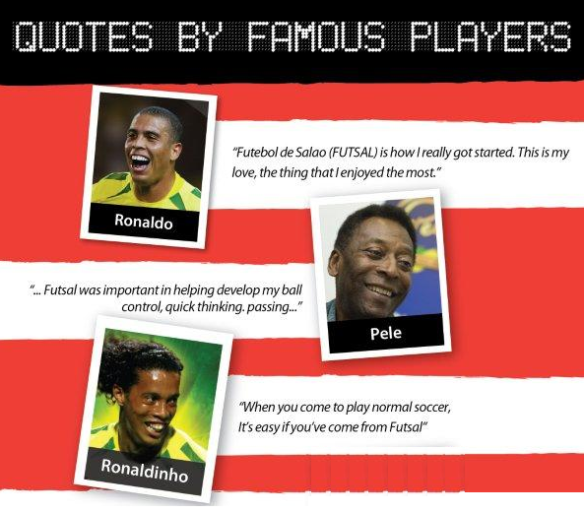
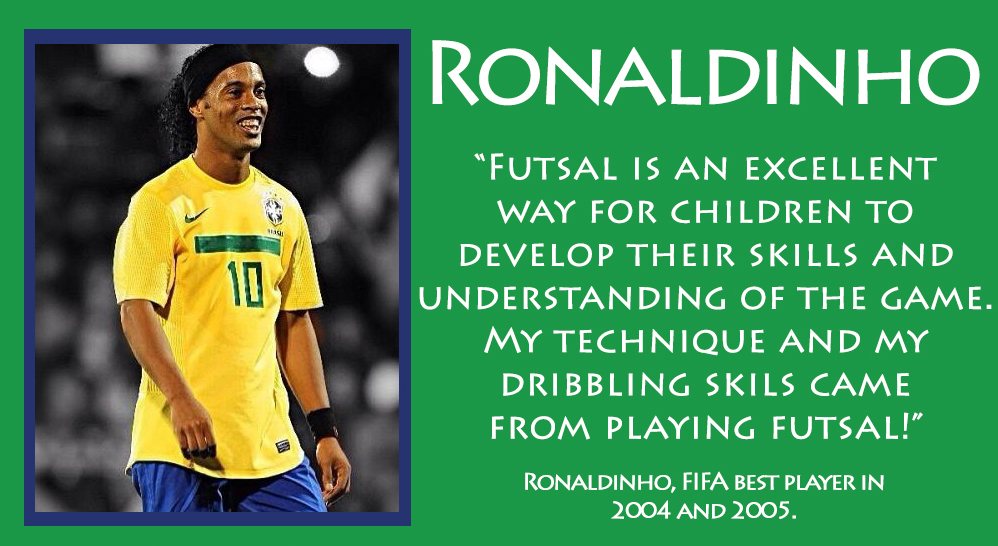
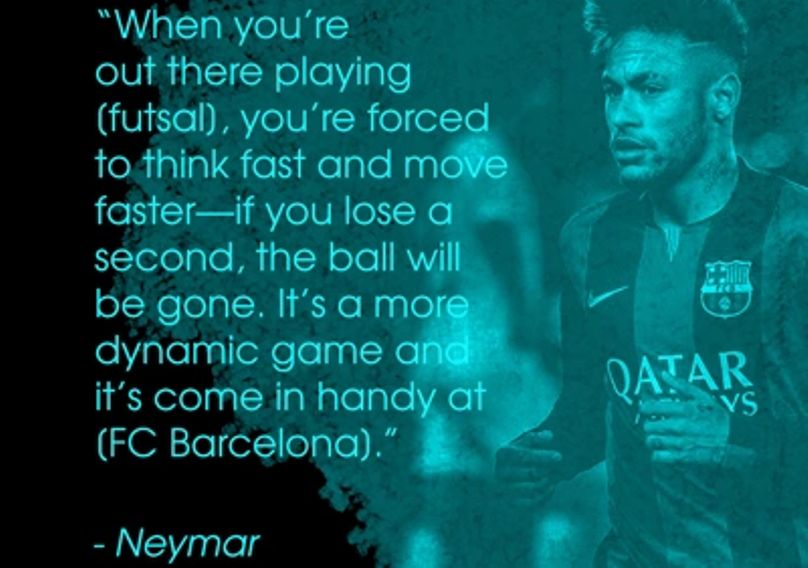
With Ronaldinho, Neymar and Coutinho it is relatively easy to find YouTube videos of them playing futsal in their formative years, displaying the magic that has become the stereotype for futsal, freedom of expression with the magic ball. Ronaldinho’s 2005 goal against Chelsea in the Champions League garnered more attention for futsal as the technique of striking the ball with the toes (a big no in football but encouraged in futsal) transferred into a brilliant piece of improvisation. Retrospectively the famous toe poke finishing of Romario has been reviewed with the conclusion “that came from futsal”. We are not just hearing of the benefits of futsal from attacking players. Manchester City goalkeeper Ederson has attributed his kicking ability to futsal, David de Gea’s use of split saves and the k-shape (the cross) have been attributed to futsal. De Gea is the first non South American on the list, he will not be the last. Kevin de Bruyne is the most recent player to be claimed by futsal enthusiasts as their own.
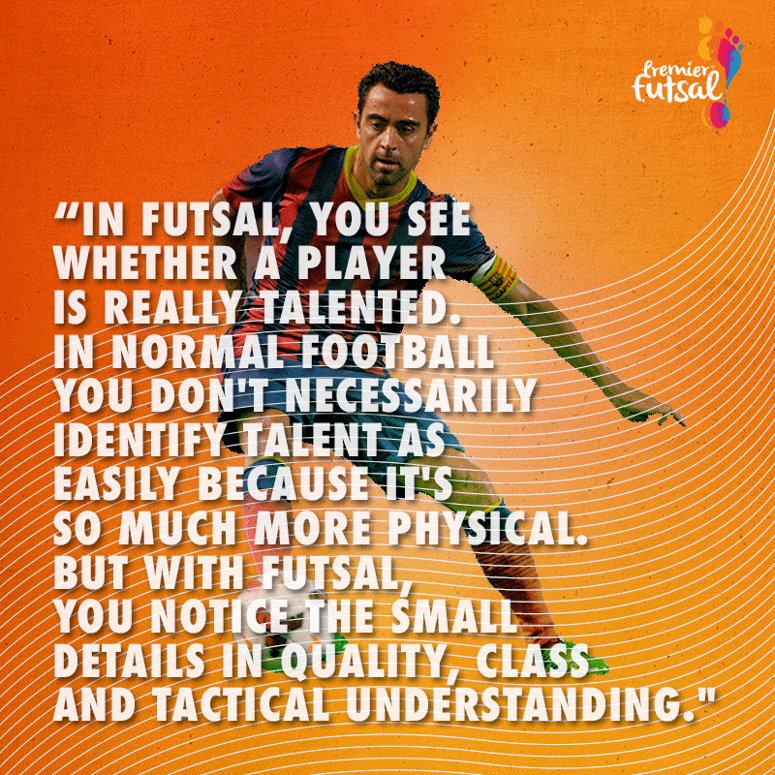
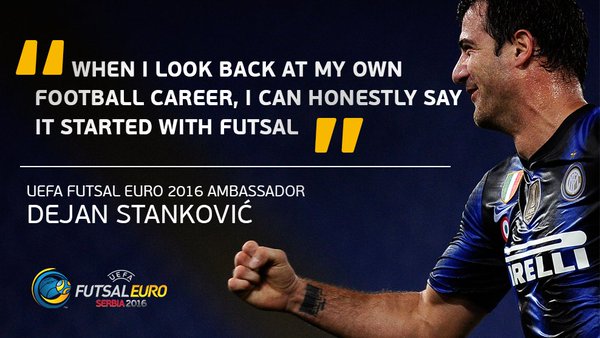
If it is good enough for these guys it must be good enough for your players? To turn them from average players into super players? A sprinkling of magic dust. We are using football to sell futsal and futsal to improve football.
Yet, it was two extraordinary goals by a futsal player in 2016 that did more to promote the game in England than anything that the FA had at that point. Ricardinho struck twice for Portugal at Euro 2016, both goals featured amazing dribbling skills, one a version of a sombrero, the other a rainbow flick, both finished on the half volley. The goals went viral and people caught sight of this called futsal.
Of course, if this was true every player who ever touched a futsal would be a professional footballer. Clearly that is not the case. The transference does work both ways, football can be seen as a development tool for futsal. Arguably that has been the way for the last twenty years. It might be suggested that football in England has done just fine without futsal, and in many ways it has.
The fantasy version of futsal development gives English football a Neymar, Ronaldinho, Coutinho, perhaps even its Messi. For futsal a greater pool of players might give England futsal its Ricardinho, Falcao or Robinho. However, not every futsal player is Ricardinho, Falcao or Robinho. Although the game of futsal creates the opportunities for creation, imagination and flair we desire, a great many futsal players are tidy, intelligent, technicians. Our fantasy version of futsal is not the reality.
This fantasy game does not rely on futsal. Coaches with open minds and a mentality that is acceptive of creative traits can develop an environment that brings forth the same fantastical returns. A coach who plans football session with the aim of maximising opportunities to pend time on the ball, decision making and 1v1 opportunities can achieve many of the same results as futsal in regard of opportunities to be creative and imaginative. The benefit of futsal may well be that because it naturally creates these affordances then it might be less reliant upon the knowledge and understanding of coaches. Having said that, there are other environments such as panna, 3v3, cage football and futevolei also foster these outcomes without relying on a great deal of coaching input. The difference being that these formats have not had specific backing from FIFA and the FA. Futsal is certainly an answer, but it may not be the only answer.
The reality of futsal depends on where you are watching it being played. In most countries that posses a developed futsal history what will be seen is a highly organised game in both attack and defence, there will be moments of wonderful individualism but in the main the game is filled with passing and moving patterns, the rotations that give futsal a distinctive look. This intelligent movement and organisation will also transfer into football, if the players are given an opportunity to learn it. Which generates the question, when we are asking young players to play futsal are we teaching them to play futsal? That could also be applied to older players. Is the game we are seeing just five-a-side with a heavy ball or are we seeing the nuances that are the game of futsal?
Near the beginning of my futsal journey I have vivid recollections of being asked to play a number of traditional, English style, five-a-side games. In a sports hall with a big fluffy yellowish green ball. Something that would often happen is that players would be late, rather than waiting an undefined length of time for them to arrive we would start four vs five. The four would play in a zone rather than the usual man to man method. It was always much harder for the opposition to score, even against a short handed side, against the zone than against the man to man. I asked “why don’t you just play zone all the time?” I got no real answer to that question. Immediately futsal came to mind with the two basic zonal shapes.
This is where we might consider basic futsal to be a more sophisticated tactical version of five-a-side. Generally there are no real tactics in five-a-side, or rather, there are but most of the time the players do not bother using them. You do not need to be a tactical or mathematical genius to work out that the simplest fixed shapes are a diamond and a box/square, both in defence and attack. The diamond blocks the middle and the wings but has a space in the middle and in the corners, which the opposition can exploit with a square or 2-2 shape of their own. The box/square is slightly inaccurate as the top two players tuck in to create a a shape that is more akin to an isosceles trapezoid (this is why people settle on box/square). The shape has weaknesses in the centre which can be exploited by a diamond. The game then becomes a constant shift from shape to shape reacting to what the opposition are doing. We have shapes within shapes when taking into account the comprehension of there being a “safe side” when defending, this is effectively giving up a certain amount of space, akin to a defence shifting across in football, if this is well understood then a defender might step up and tuck inside to cover the weak middle of the square, an alert goalkeeper or dropping defender can cover the space that has been left, but only once the ball is travelling, not before.
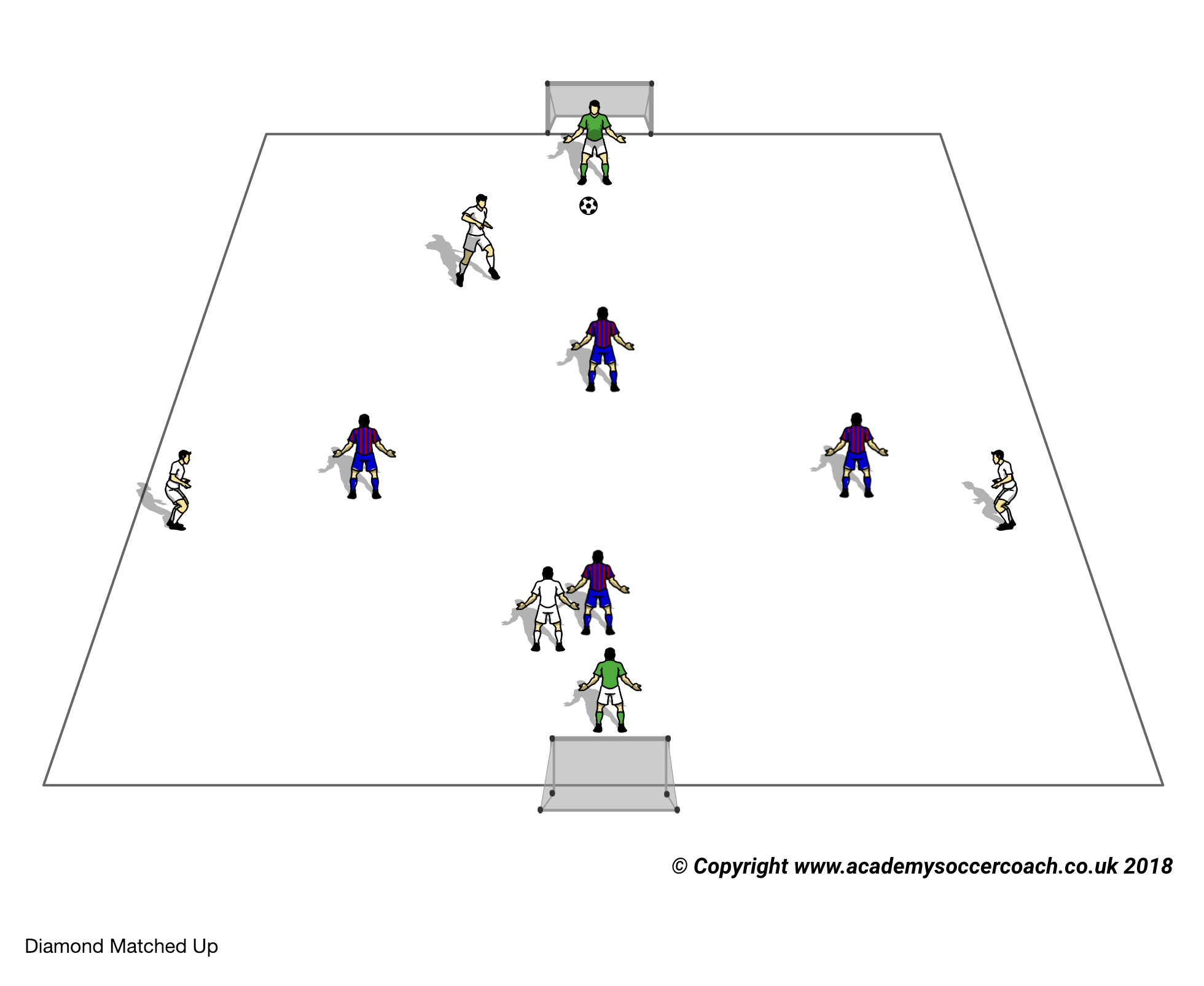
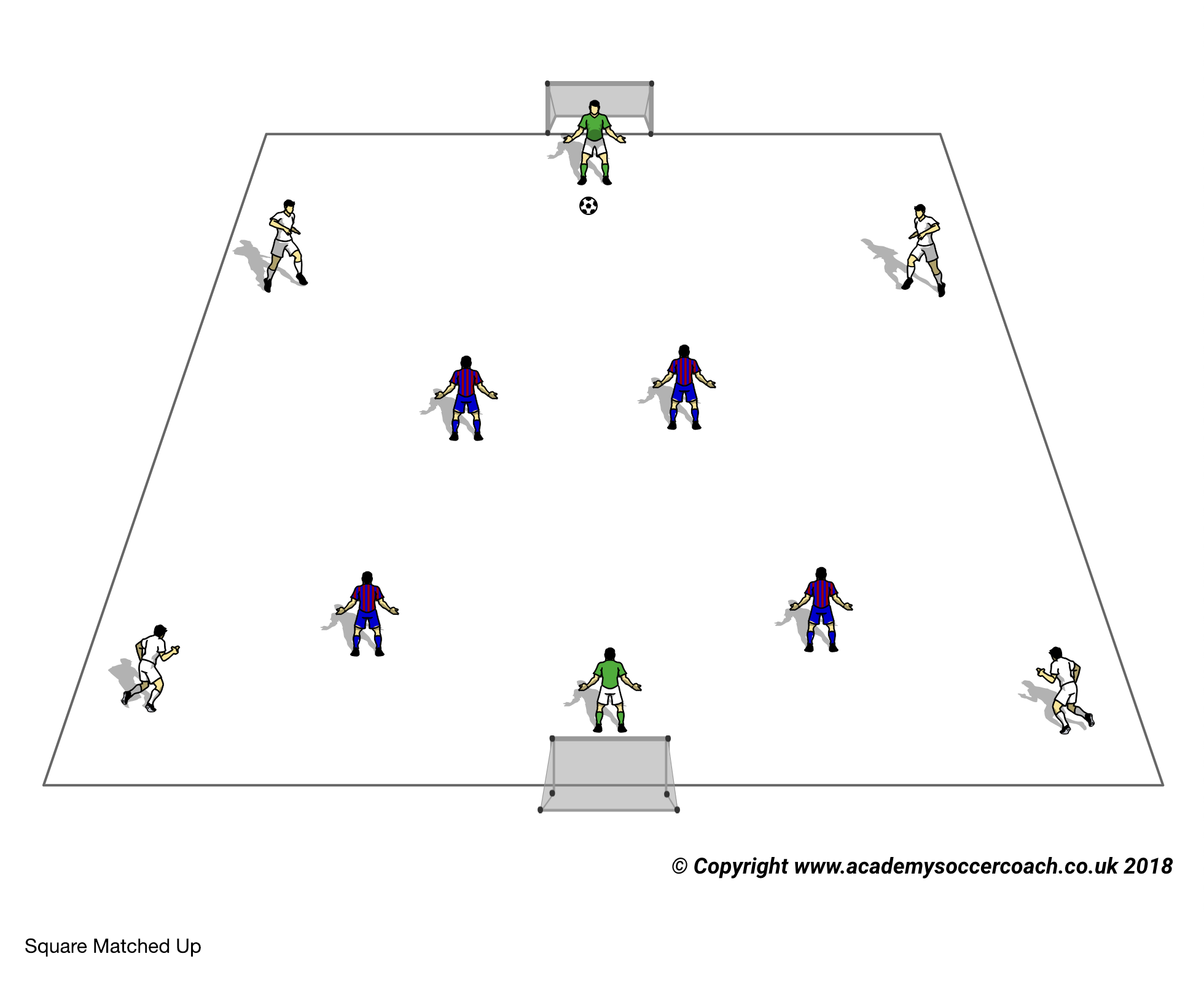
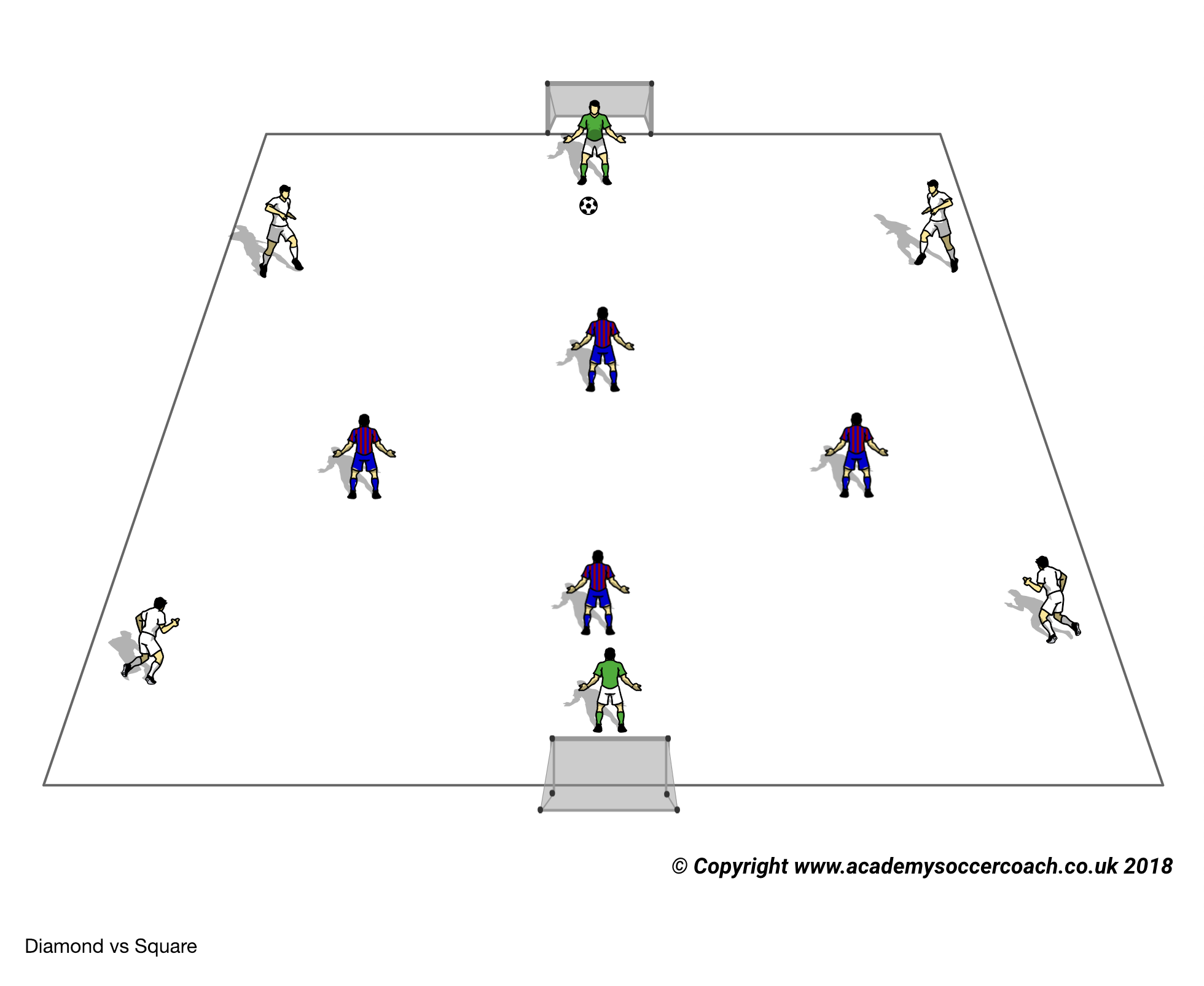
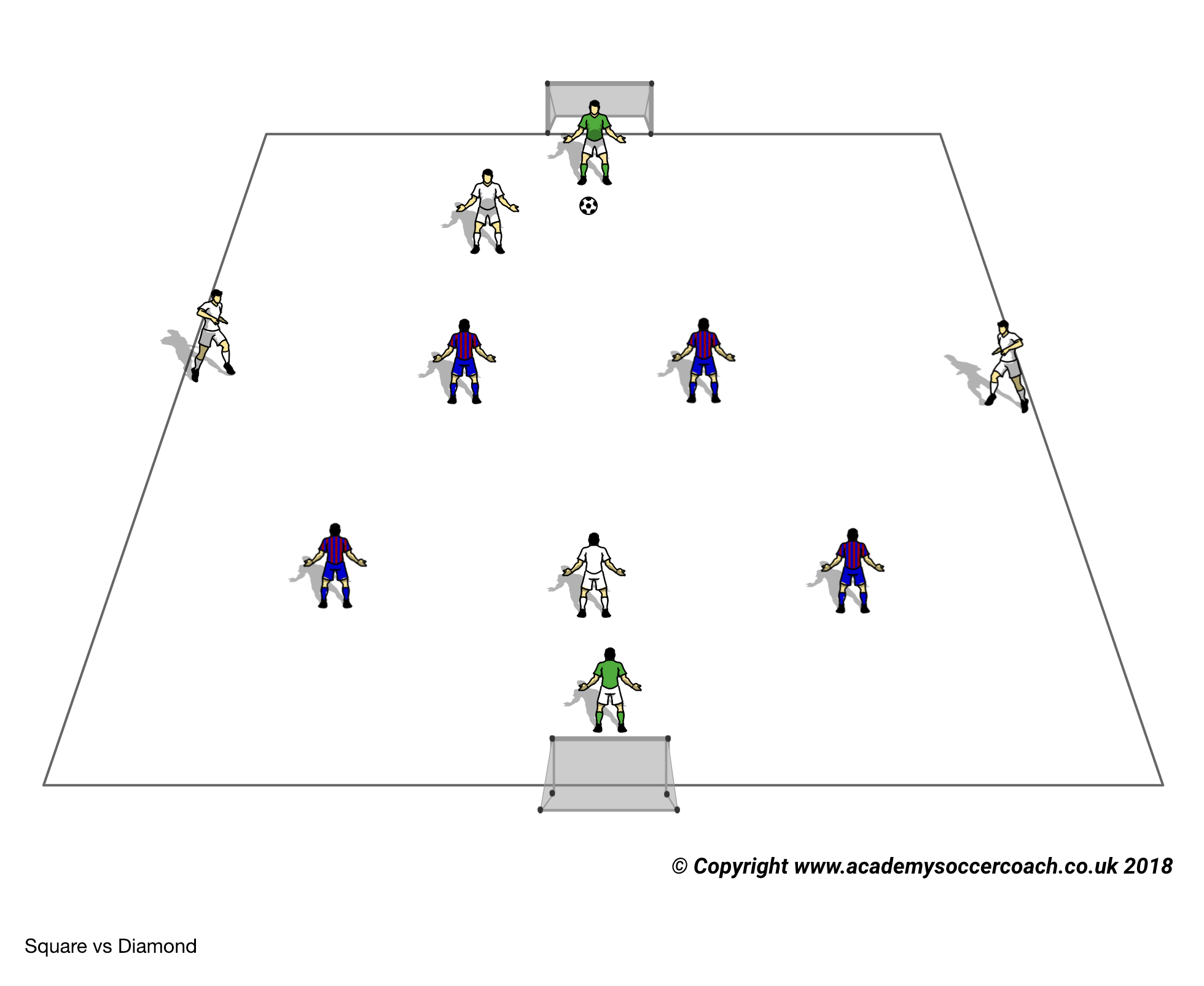
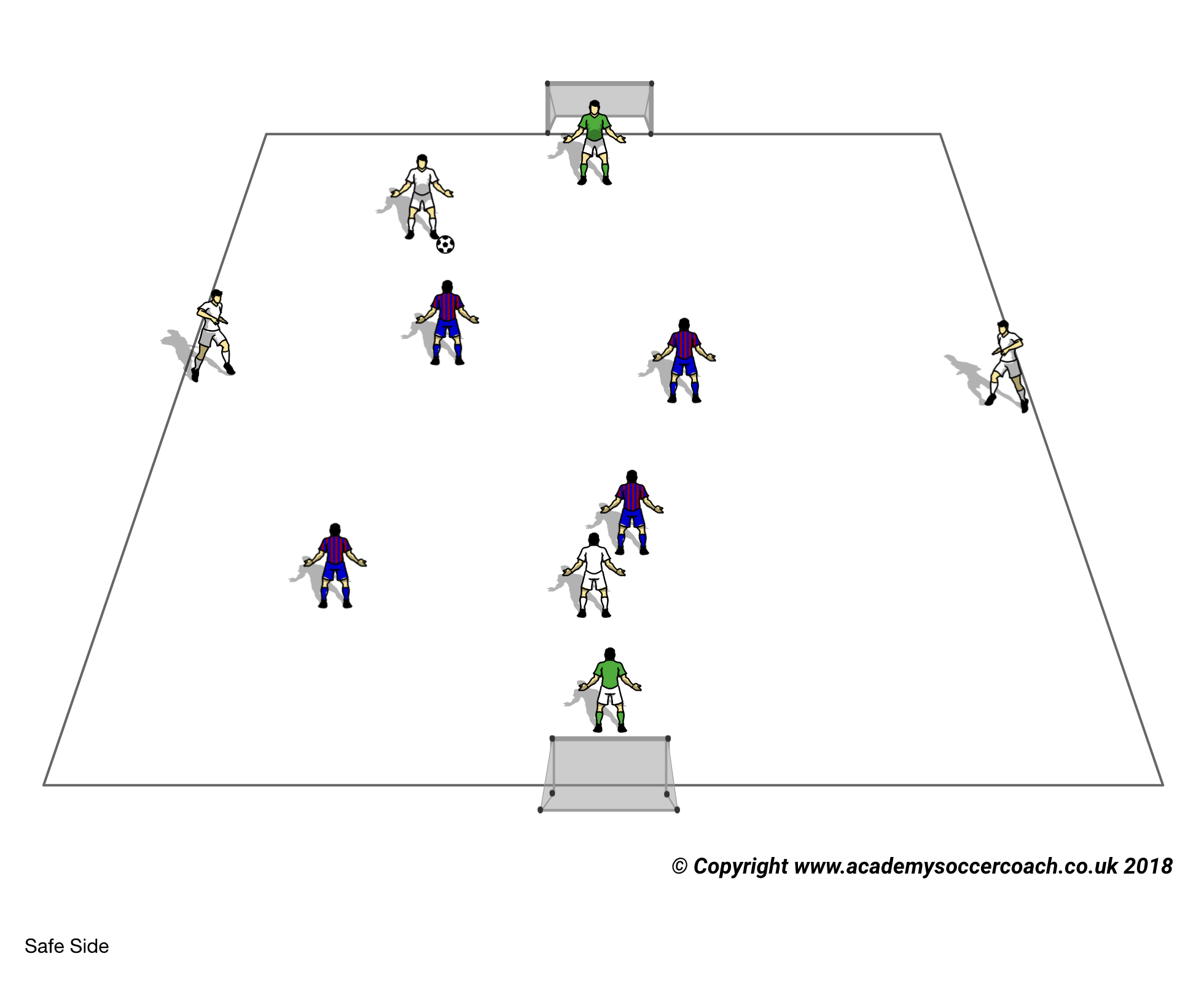
Within the tactical elements are possibly the greatest benefits to young footballers who are looking to use futsal for football.
If we take the offensive and defence shapes of football we can see that diamonds and squares occur everywhere (and where ever squares and diamonds are we will get triangles).
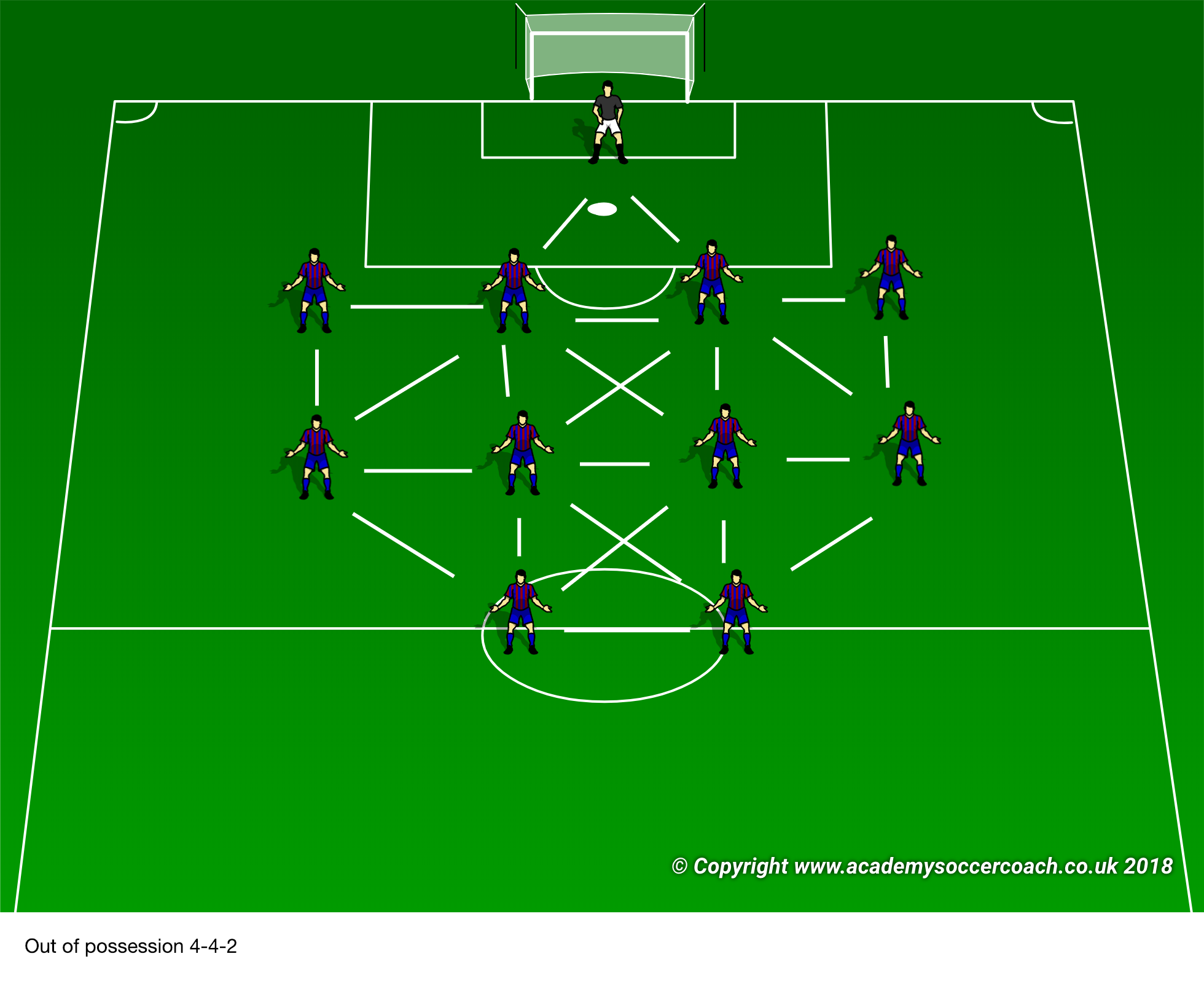
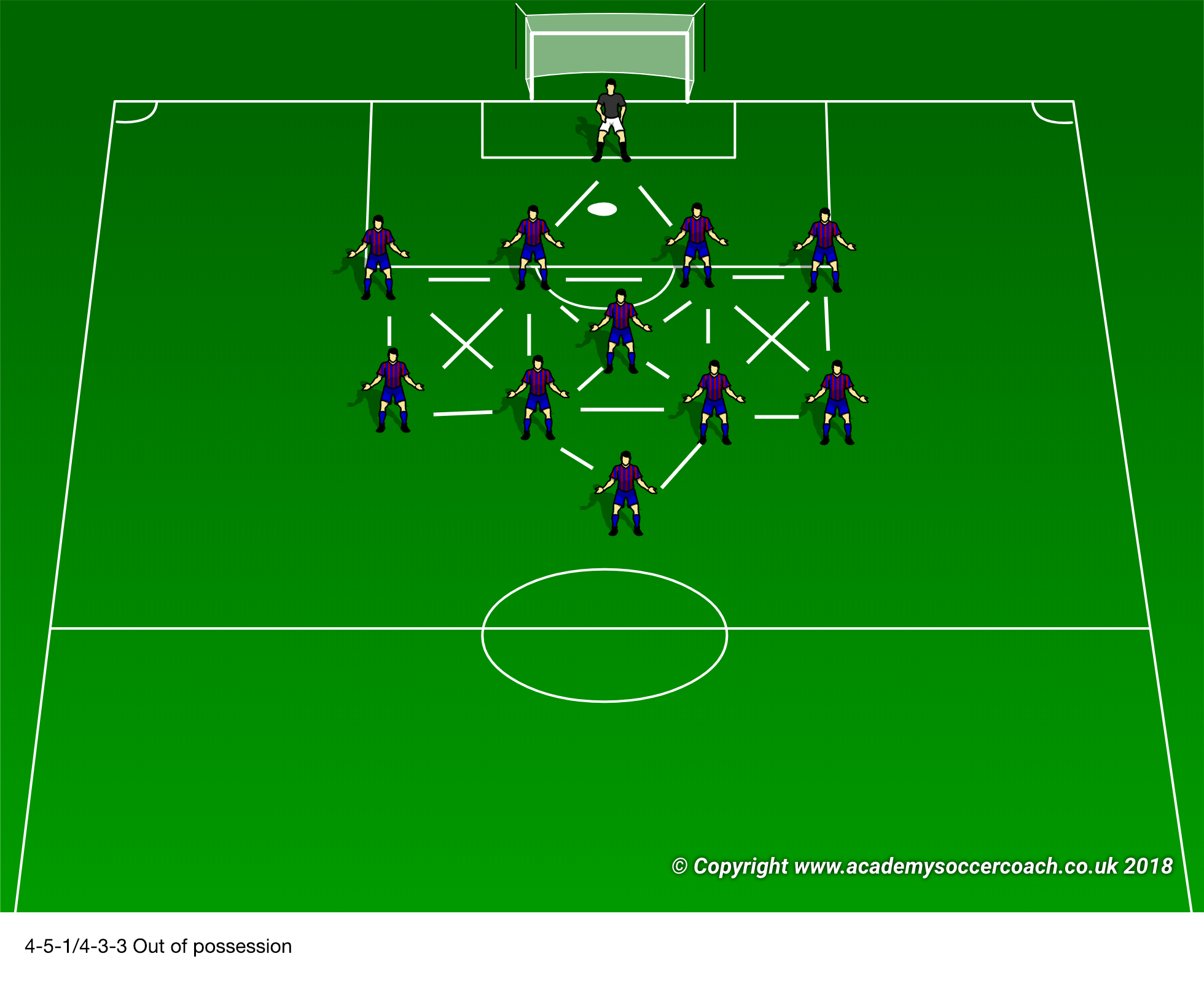
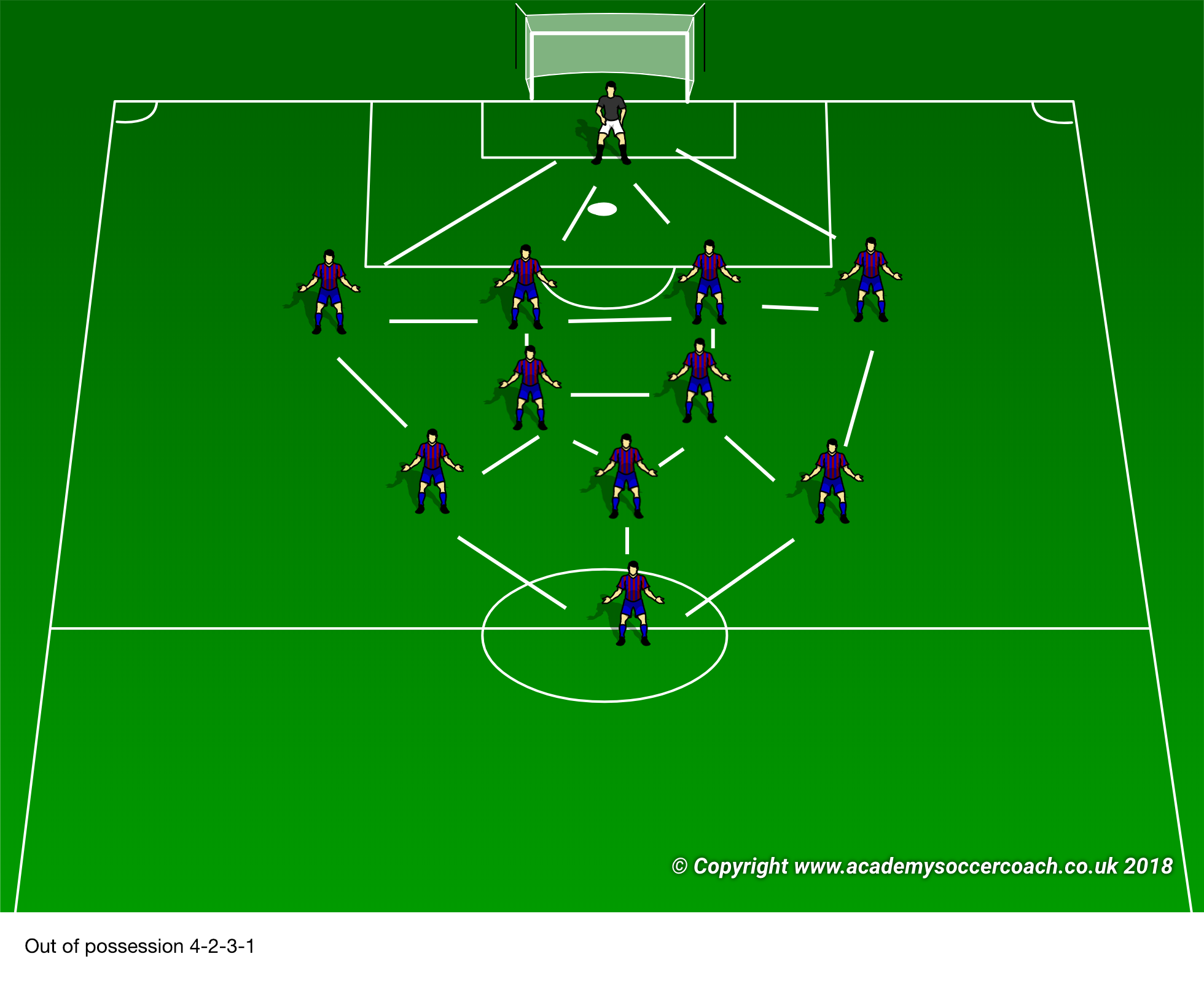
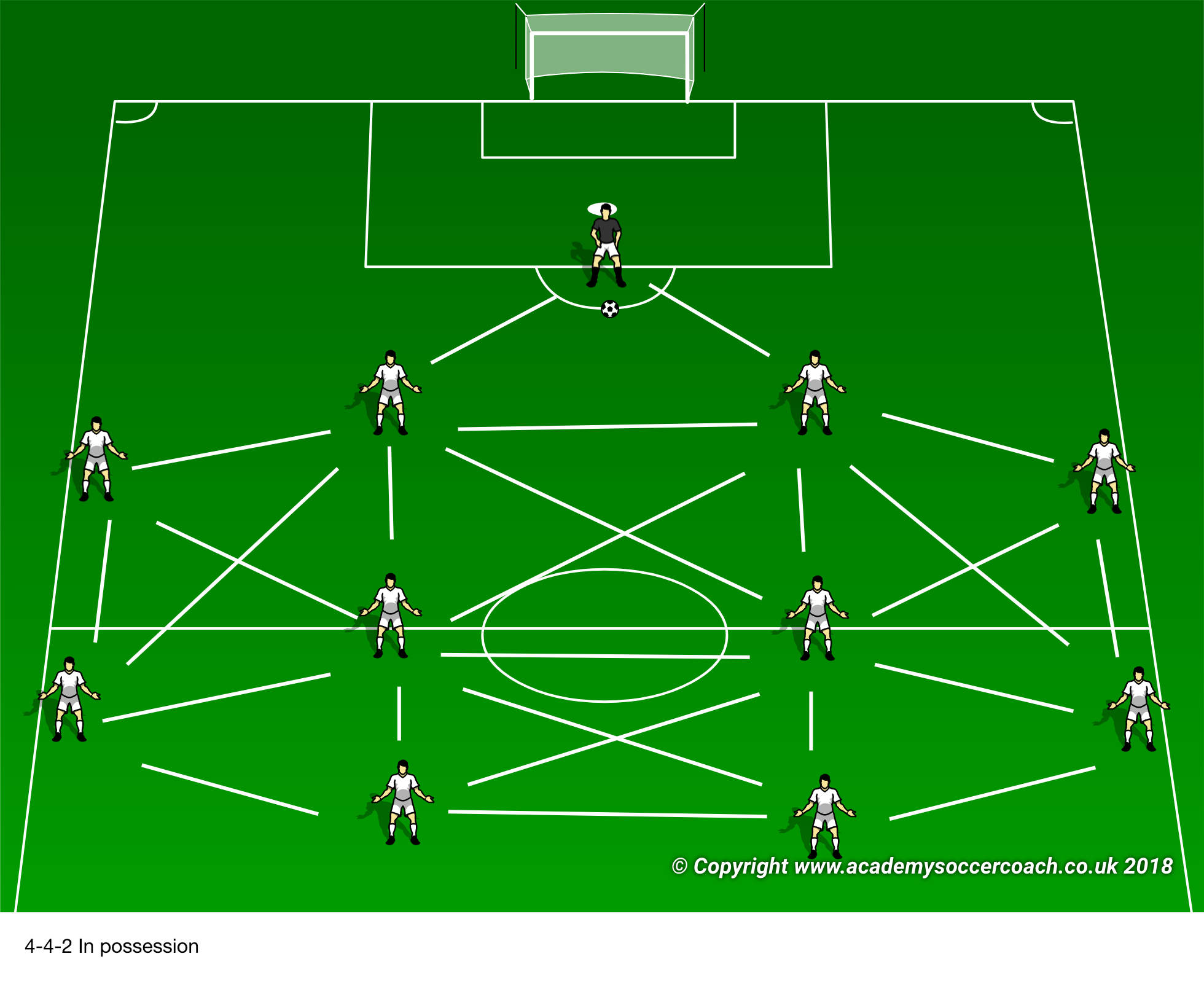
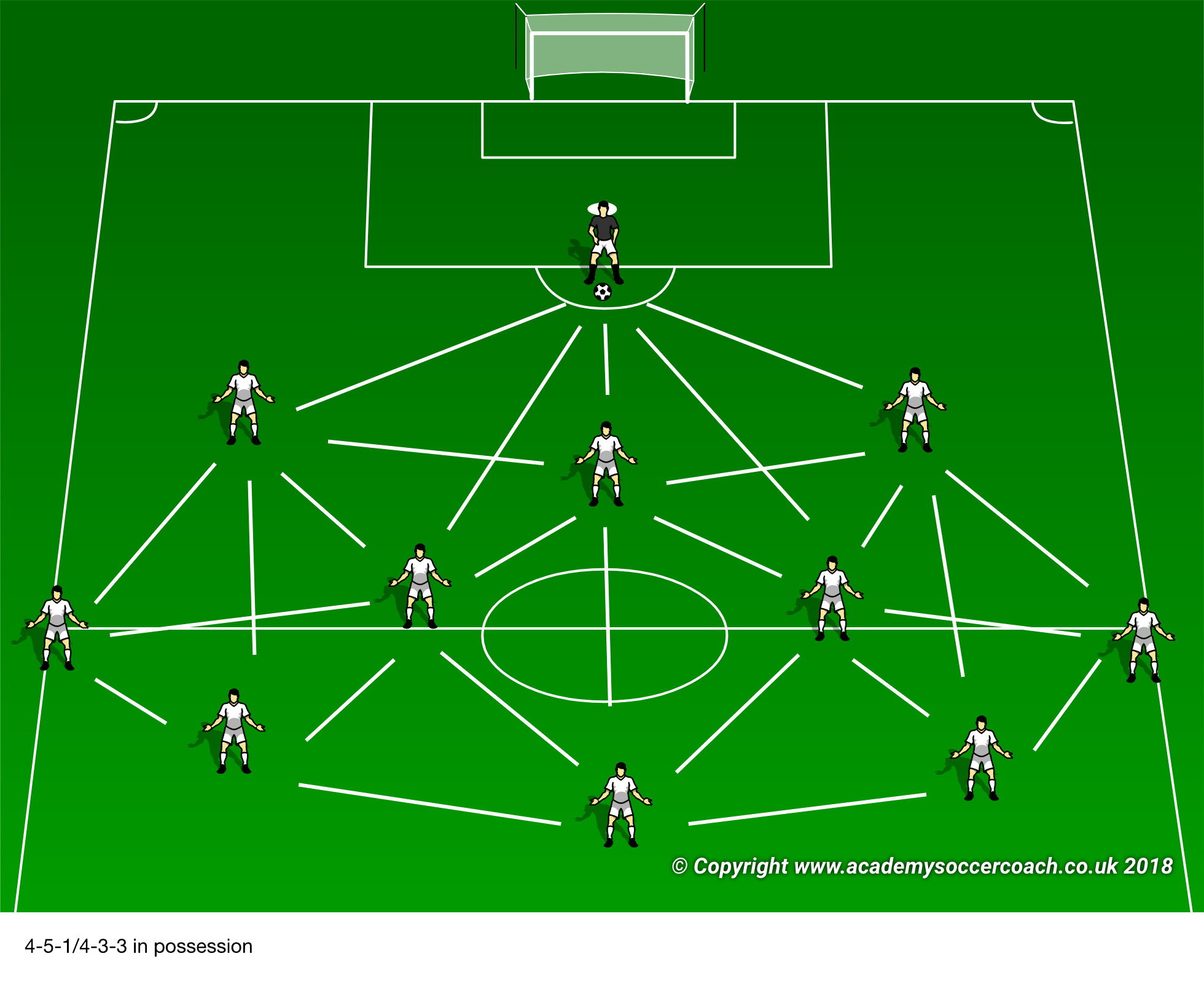
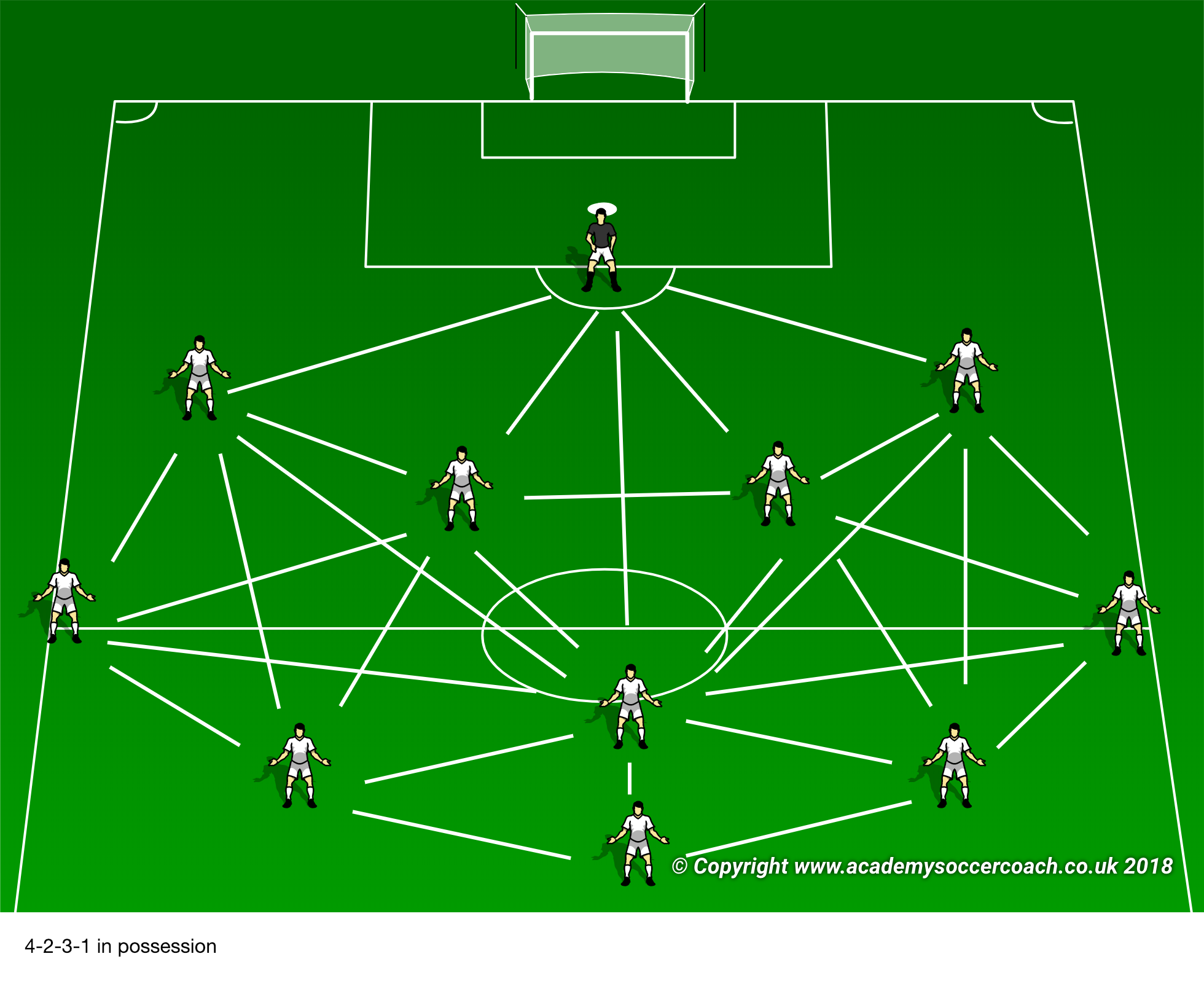
Thus, the units of four in the game of futsal can be used to represent groups of four in the game of football. The left back, left midfielder, left centre back and left central midfielder form a box out of possession. The defensive midfielder, the two central midfielders and the striker (or 10) form a unit in a diamond shape. The permutations go on and on. The transference might not even be so obvious. Without the ball the pivot in futsal (which we could see as the forward or top man) has more in common with a holding midfielder in football, shifting in front of their team mates, blocking forward passes. The actions of the fix (last man) might also translate more closely to a holding midfielder as in futsal this player looks to mark in front of the pivot rather than behind.
In possession in both football and futsal we are looking to find combinations to move forward but also retain and secure possession. On the futsal UEFA B course we had a guest tutor, Miko Martic, the Croatian with a wealth of futsal experience. He delivered one particular practice that he described as “futsal basic” that you will often see teams use as a warm up exercise. Within it players practice the 1-2 into a finish, the diagonal to cut out the goalkeeper and find a team mate at the far post and the parallel, a movement towards the corner and a pass flicked with the outside of the foot that travels parallel to the side line. These basic moves have immediate and obvious transfer into football. The tactic of taking the goalkeeper out of the game by firing the ball across the goal at pace or drawing him out and laying a soft pass across to a team mate may have been popularised by FIFA but has existed for far longer in Futsal.
Other fundamental futsal principles will filter in. One is related to counter attacking and is a principle that is often incorrectly executed. When players pass too early defenders are able to deal with the threat more easily. The player with the ball needs to drive at the defender, rather than at the space. The space is for their supporting team mate. This might mean driving in diagonally from a wide area while the player who occupied the centre loops round into the wide area. Once the defender comes to the ball, or the ball is taken to the defender. the pass is released, taking the defender out of the game and giving the receiver a shooting or far post pass opportunity. Of course the decision making process belongs to the player but I would be encouraging players to take this course of action with the preference being the far post pass.
The famed rotational movements of futsal can be extremely complicated. Even the more basic principles we apply can have implications for actions on the football pitch. All players should like to pass and the run forward, no matter their position or the team shape. A common problem for futsal teams and players is that they set up in a diamond shape and the fix (last man) is a player who is or has been a pretty good central defender or holding midfielder in football. What these players do not grasp is that they will be vital to starting attacks and running forward. With their football brains switched on they see this as running out of position, leaving a gap. Which they do, but it is the job of the wing to move round and fill the vacated space. This constant moving and filling of space is key to futsal and also key to the way many teams play football. Allowing midfield runners to get in behind, full backs to go forward or even central defenders to move up the pitch, while still providing cover. Runners, or cutters, in invasion games are always extremely difficult to defend against.
When it comes to running in behind and providing cover one futsal tactic tops them all. Like the player who wants to play as the fix is often a player who wants to sit and hold defensively, the player who wants to play as the pivot (forward) might be someone who wants to be a goalscorer or hold up the ball. Often the fix will outscore the pivot due to the fluid nature of the game. The old way of playing futsal did use the pivot as that link man, but has since developed that a lot of teams will use a false pivot who drifts into different areas to pull away the fix and create spaces. Or they will play with no pivot at all in the 4-0 system. Again, I will only focus on the very basics of this, there are a number of very good, very detailed videos easily available on media platforms.
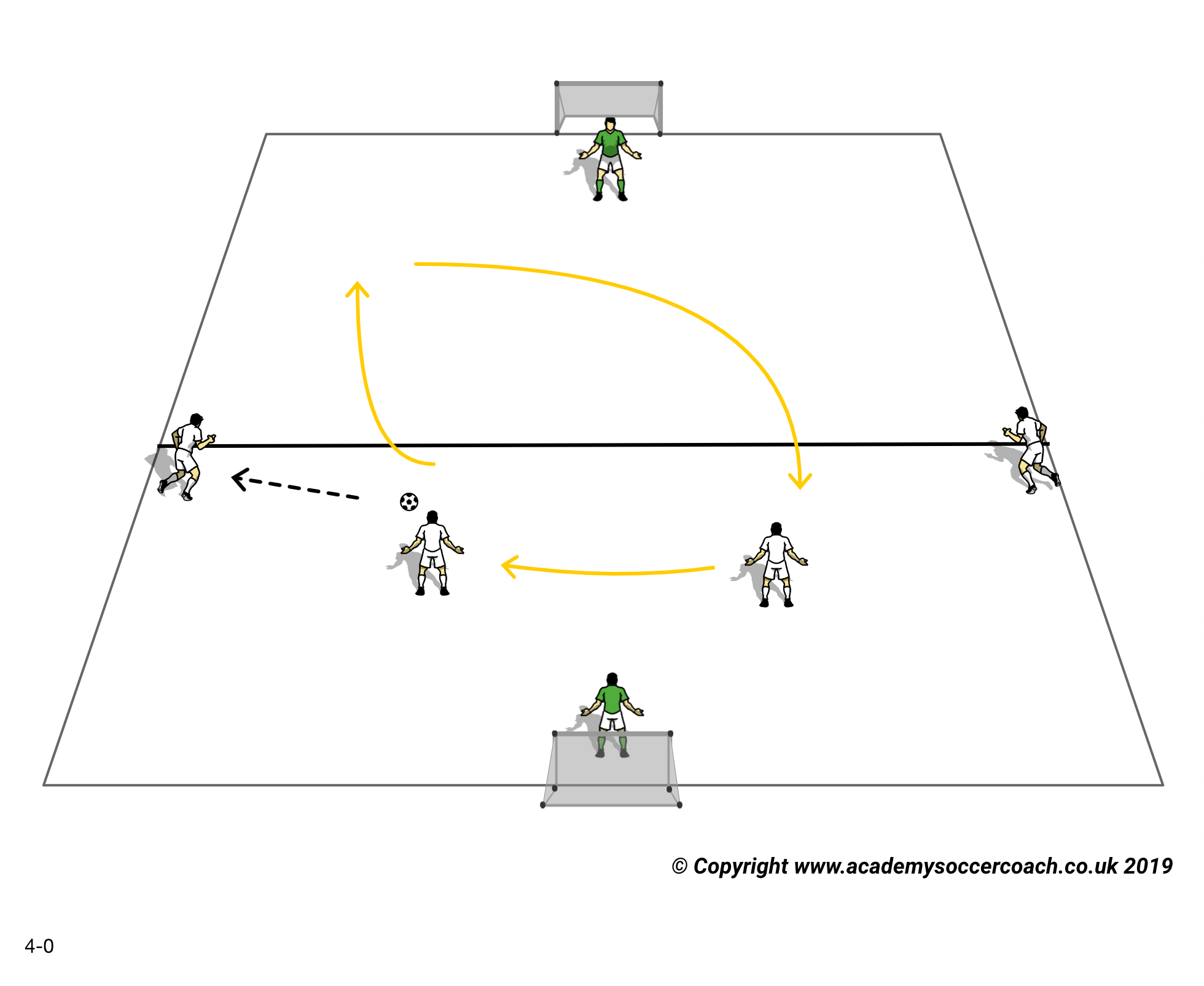
Fundamentally, the team organises itself with two wings and two fixes, no pivot in a curved/arched line. The player who passes the ball makes a long forward run behind the defence. The objective for the attacking team is to draw the opposition out and reduce the number of lines of defence they have (a diamond would have four lines of defence, pivot, wings, fix and goalkeeper, the box would have three lines of defence) until there is only one line to break with a simple 1-2, parallel or forward pass. The keys to this attack are forward runs off the ball and the principle of the a player filling the space that has been left. If the player who made the forward the run does not receive a pass they need to loop back round and fill an empty space. Linking this into football there are a number of offensive positions who need to make forward runs to receive in behind, or even just to stretch and disturb the opposition positioning. By playing a 4-0 futsal shape we might create opportunities to practice such runs, especially when we emphasise that it is desirable for these runs to be curved, checked and looped, very good habits to get into in any invasion game. Thinking about football we will often find that our players brilliant at running forward off the ball, but they need assistance when it comes to running back from those positions when they don’t receive. The reaction can be one of dissent rather than one of rejoining the group and looking for the next opportunity.
When I began working in futsal it was my belief that the most basic and fundamental way to play the game was with a diamond and looking for rotations built around the fix running forward. My belief has changed. Organising in a diamond is not natural or easy to young/new players to futsal (or football). What is easy/natural is man to man marking. Who is your man? Ok, now follow them. After a relatively short time the players are normally very tired, so this adjusts to: Who is the man closest to you and not being marked by another player? From this base we can then use diamonds and boxes as and when needed. When coaching a men’s national league team at the beginning I was often asked the question “are we a diamond or a square?”. My answer would be “it depends on what they are doing”. This was never satisfactory to the players, but this was partially my fault and also partially due to their lack of prior exposure to futsal. Top teams will often use what is called a “mixed” defensive style, which is literally a mixture of man to man and zonal. If we start with man to man it is my belief that young players have a better chance of being effective when using the more fixed diamond and box.
In attack organising in a diamond can also be unnatural for players. With it in mind that as futsal coaches we are often dealing with footballers it has become my belief that 4-0 is actually less complex for players to learn than other rotations. Players are used to running forward after passing and the distance of run required to cover the player who has vacated the space is generally a lot shorter than that of the 1-2-1 or 2-2. The hard part is making the recovery run back into space. When Mico Martic coached this I vividly recall his use of the phrase “it is all good” when it came to the forward runs with out the ball. Of course the 4-0 can be far more intricate than I have outlined, but a form of 4-0 is reasonably simple to use and for players to understand. The biggest limitation on the 4-0 is the length of the average futsal court in England. The majority are not long enough meaning there is little space in behind, however, there is usually going to be space to be found in the corners and exploited with good runs.
The 4-0 has been favoured by many of the best teams of the last decade of futsal. The response to this has been highly co-ordinated and aggressive pressing. Once more this links with the preferred style currently deployed in football. At present in England Jurgen Klopp, Pep Guardiola, Maurico Pocchetino and Maurizio Sarri are at the top of the table, all four are associated with pressing or counter pressing. In football we generally talk low blocks, medium blocks, medium presses and high presses. With futsal these terms are also added to with the phrase “point of engagement”, describing which areas on the court pressure will be applied. The high press will have a high point of engagement. The mid court press will be on halfway. The pressing language often has more in common with basketball than football. Tactically the game also draws upon ice hockey, with the use of the goalkeeper as an extra attacker when behind.
The fly-goalkeeper is at times controversial in futsal but it is one of the features of the game that provides a piece of futsal’s identity. The common usage of the fly goalkeeper is when a team trails and is chasing the game. Due to the use of rolling substitutes it is possible for teams to remove the goalkeeper and replace the goalkeeper with an outfield goalkeeper wearing a goalkeeper’s shirt, the fly-goalkeeper.
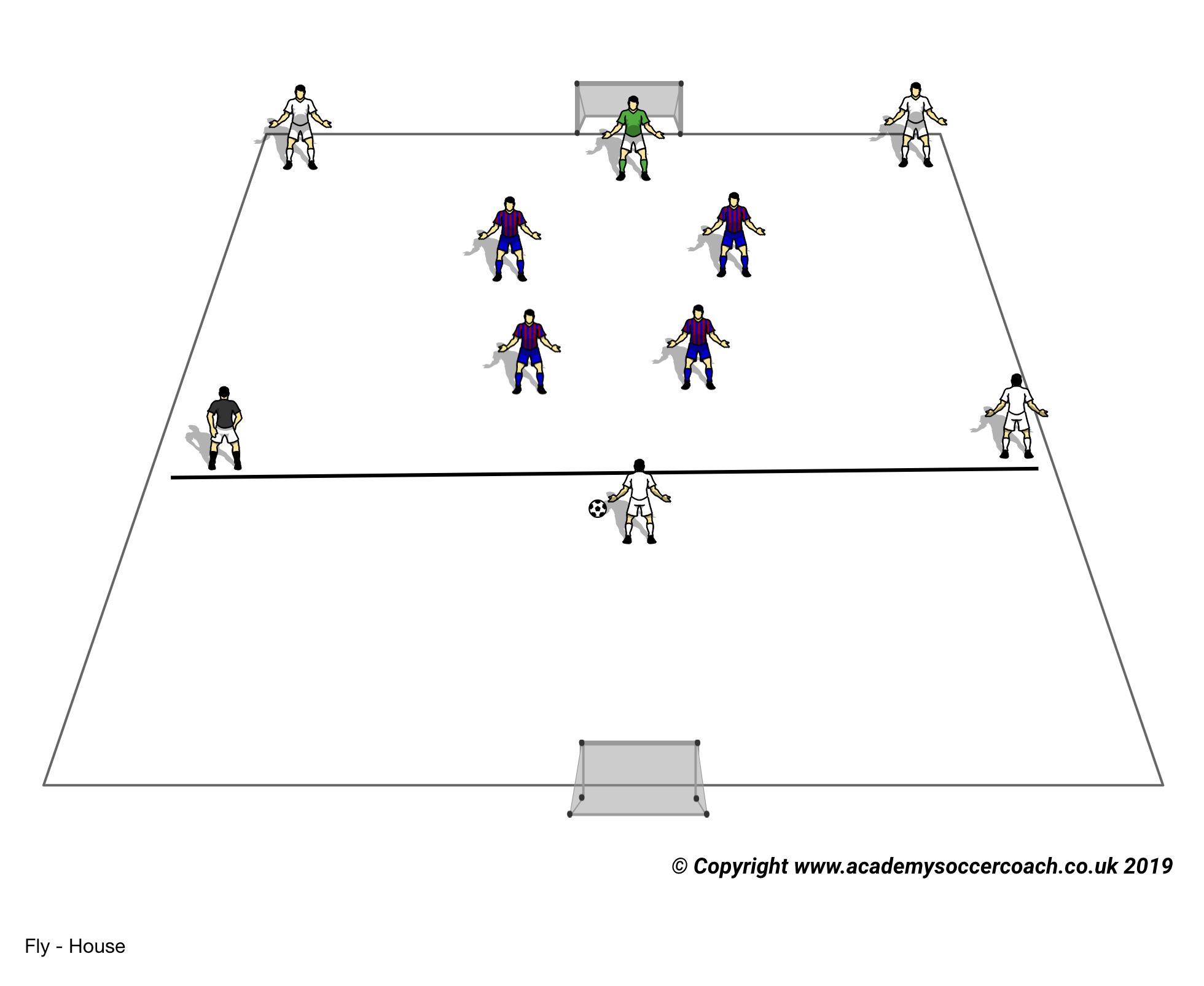
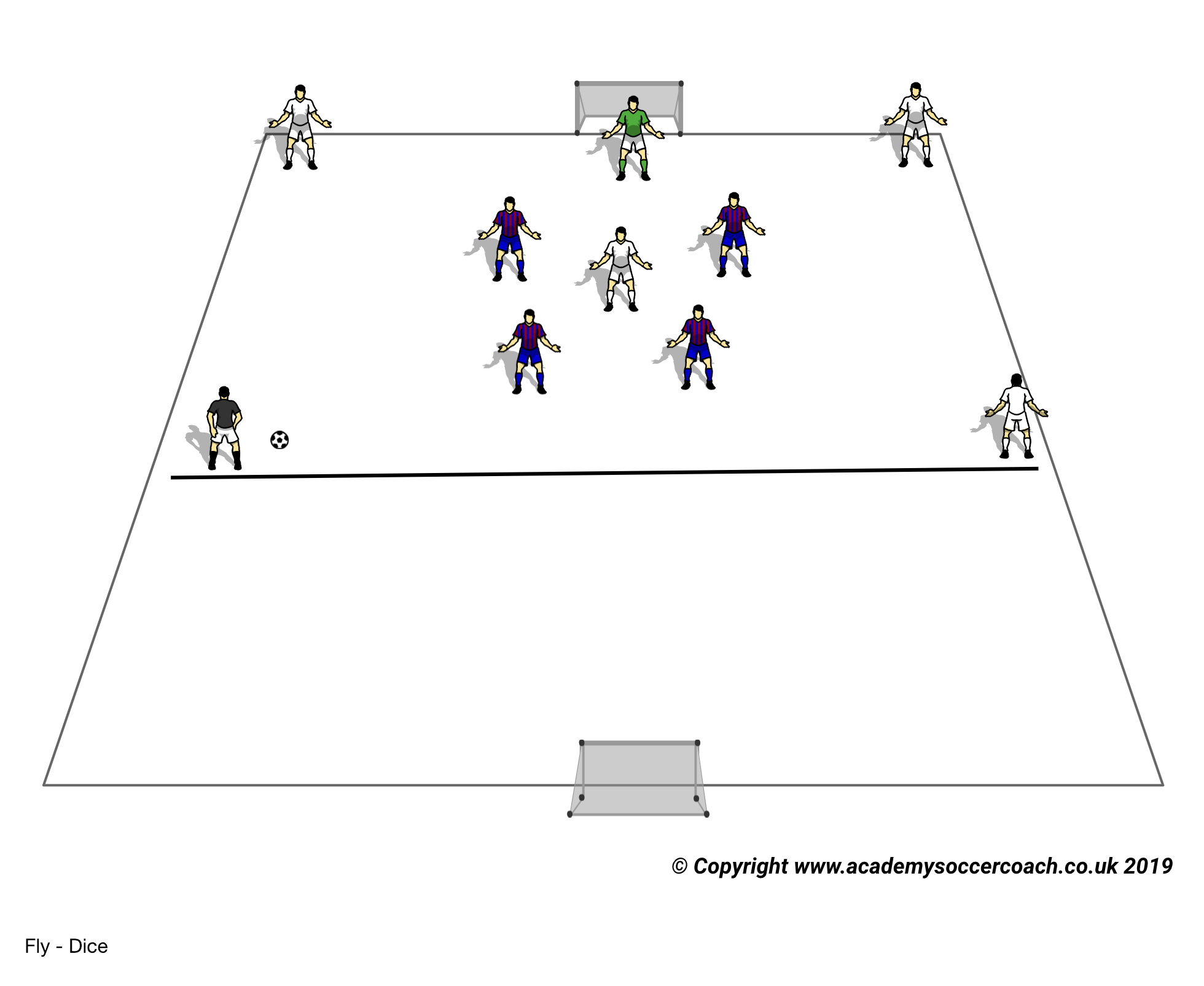
The use of the tactic leaves the goal open and can create simple scoring opportunities when the ball is turned over, hence it is considered a last throw of the dice. Unless the team is using the fly in a different manner. The extra outfield player can make keeping possession much easier, usually the fly is unsuccessful because the ball is being moved too slowly to create a chance, but if the aim is to control the game the chance creation is of less importance. Here is where the tactic is controversial slowing down the game to the extent where some consider the product boring. The question becomes: What is the job of the coach? To play exciting futsal or to get the best result for their team?
Not all teams substitute the goalkeeper when using the fly. Higuita of Kazakhstan is considered technically good enough to perform the role. Indeed the goalkeeper can afford passing options on kick ins that can allow for a brief yet significant numerical advantage. I believe this to be something that is not utilised enough in futsal in England, with it being common to see outfield players looking to receive in positions that actually block the passing line to the goalkeeper or the goalkeeper being very conservative in their positioning, remaining within the width of the posts rather than occupying space to receive. With development in mind, a football goalkeeper could benefit greatly from playing futsal and have greater opportunities to pass and receive, something that is now vital for the football goalkeeper. Considering the use of futsal related goalkeeping techniques by top level football goalkeepers working in this area can also help them. Unfortunately it was not until the futsal UEFA B that I received my first taste of futsal goalkeeping training and no goalkeeper specific futsal courses exist. It is hoped that this will change in the near future.
The defending of the fly goalkeeper tactic has been a source of some discussion. I have seen coaches put on highly detailed clinics on how to defend the fly with causal actions chained together. I have also experienced coaches distill the means of defending into two or three simple movements very similar to the process of choosing whether you are defending in a diamond or square. However, I have also heard an overseas coach with experience of the national league in England comment “English teams cannot defend against the fly, they all use the diamond when you just need to use the square” (words to that effect).
When watch the national league, what is it that we are watching? If teams do not know how to defend against the fly, what level of futsal are we watching, or are we even watching futsal? A comment that is a sweeping generalisation has spawned further qeneralising questions. Of course what one team does will not be the same as another, some will play in a style that is aspirationally closer to the top teams in the world while others will choose to operate in a style that is more akin to football with a different ball than it is to futsal because that suits their players and gives them a greater chance of cohesive success. All coaches and managers are free to play in the manner they choose. However, there have been fairly recent complaints from England players that what they encounter opposition teams at international level it has little resemblance to what they face in the national league. Most specifically around pressing and the preference for teams to set up in a half court press, with pressure only applied with intensity once the half way line is crossed. Again, the duty of the national league teams is to their own results rather than to English futsal as a whole, they can only deploy the players as they see fit, which comes down to the pool of talent, which in turn depends upon the development and exposure of young players futsal. The foundation phase DNA for football shows where the two games need each other and can ultimately help each other.
Unfortunately, one major bump in the road for futsal is that it is a surprisingly and shockingly difficult game to play. Not just technically, tactically, psychologically and physically. The bigger barriers are social and environmental. The national league is far better placed than it has been for a number of leagues but constantly hanging over the game we have the cycle of rise and collapse of clubs. I was involved in one such club, taking part in the process that saw the club rise rapidly and become a part of the process of becoming a part of the national league, then witnessing the events that could have only one ending, unless something was done to halt it. I left the club when it was apparent that nothing was going to be done and the inevitable happened, the club folded. If only this was a one off. Futsal clubs are inherently unstable because the majority are self funding with next to no income from outside sources. I include fans in this. The fan bases of clubs is paper thin. Without picking on clubs, I am taking examples from the league tables, where in England is Helvecia, where is Genesis, where is Kickers? I am aware that there is a certain history behind these names and also that the position is far better than it once was, but in general people will support teams from their area, when seeking to attract new fans, it is quite hard to attract local fans if they do not know what is local, this when the name plays a part. Even with an easily recognisable area name (such as Manchester) the quickest route to recognition is likely to be through a connection with the local football club, something that a very few futsal teams have, or at least do not have in their name. In Europe futsal clubs have a slight advantage in this area. A great many of the globally famous football clubs are not just a football club, they are a sports club. Taking Barcelona as an example, they have national basketball, handball and roller hockey teams as well as their football and futsal teams. In general in England this is not the case, clubs are not working on a multisport basis. Nonetheless, Bristol City, Cambridge United, Tranmere Rovers and York City have leant their name to futsal teams. If the big name clubs were to attach their names to futsal teams I have little doubt that we would see the support for the game grow. Doing so may suggest a lack of respect for those teams already involved and their heritage, I would like to assure you that is not the case, merely a recognition of the marketing power of a big name endorsement and the benefits that can bring. Futsal could really do with the buff that football can give it, beyond just tagging into a few names who have played the sport in their formative years.
For younger players futsal can be difficult to play. At present teams have low visibility. Those outside the game and looking in struggle to see very much at all. Searching online does not yield a plethora of useful results, it provides a very thing film of information for people to try to decipher. Finding a team for their child is no easy task. Once they do there is often a disappointment in the number of fixtures it is possible to play. The teams who are thriving have to work incredibly hard to find and generate fixtures. While this is different from region to region it remains far harder than it should be. Local leagues are not common place, but if it becomes common practice for youth football leagues to head indoors for winter they will not have to be. This green, weather battered land has for too long chased a dream of being able to play football unimpeded through the winter months. Anyone who has payed attention will have seen the sheer weight of fixtures that have been wiped out between December and February. As summer football seems to be unwanted it is logical for us to take the freezing cold, wet and muddy children indoors to experience futsal before stepping back outside once the worst of the weather has passed. Of course futsal is deserving of far more respect than being a shelter from the storm but we are still at the beginning of the journey and greater exposure, however it comes about, must help to sow the seeds for the future.
Then we have the aspect of competition between football and futsal. It may not be direct and it may be that both sides aim to avoid it as much as possible, but it is there. Unfortunately futsal always loses. Always. When looking for a night to put on a futsal session an organisation will avoid the night that football is on. When it comes to running a futsal college programme or a college football programme, the football programme will receive priority. Always. Part of this is down to the public perception, it is parents and players who make the final choices and culture drives them towards football. Futsal has to work alongside or around football, it cannot compete if a choice has to be made. This means that we have to avoid making people choose.
What happens to futsal beyond 2024? It depends on a lot of things. If the FA are able to achieve all that they set out to in their strategy there can be little doubt that futsal as a whole will be in an improved place. However, the waters have been further muddied by the recent emergence of the GB Futsal Association whose affiliation is to the Associacion Mundial de Futsal (AMF) rather than FIFA. An already complicated and ocacsionally combustible futsal environment might get rockier before it becomes smoother when we have multiple organisations attempting to lead the game. Or, it could be that the competition pushes both to improve the overall futsal environment further still. The creation of the England football DNA and foundation phase DNA has given futsal a stronger position than ever, but it is not futsal for its own sake. Not just yet. As ever, the path will be one that requires patience, commitment, dedication and belief. We are fortunate to have people in English futsal who posses these qualities and the game will continue to evolve.