Control the middle, control the game.
One of the most remarkable aspects of Barcelona and Spain’s period of domination circa 2010 was that they shifted the focus from the front of the team to the centre. By controlling the middle of the pitch they starved the opposition of possession and greedily kept it for themselves.
Having the vast majority of possession has a number of effects on a match, some of which are quite obvious. If the opponents do not have the ball it will take something quite remarkable for them to score. `When possession statistics indicate over 75% then possession has proved itself a tremendous defensive tool. Such domination of the ball can also allow a team to dictate the speed and tempo of a game. They may then be able to play the game on their own terms, rather than bending to that of the opposition.
It is worth asking if domination of possession to such an extent can be a hindrance? Having so much of the ball allows opponents to organise themselves and gaps in defences can be harder to find than when the oppositions push forward and fan out.
Also, controlling midfield does not necessarily equate to maintaining possession in those areas. For Barcelona and Spain it certainly did, but, for Mourinho and Inter it did not, especially when they faced Barcelona. For Inter they controlled the midfield by preventing Barcelona from utilising it. They blocked off the area, controlling the space rather than controlling the ball. Claude Makelele’s positioning in front of the defence at Real Madrid and Chelsea gave the team security and the ability to control the space. Mourinho took this much further, effectively deploying four players in a 2-2 shape to control the space, preventing forward passes and sending the play wide.
This box shape was nothing new to the footballing world. It had been introduced to us by Brazil with their famous box midfield and what many called a 4-2-2-2 system. The contrast between Mourinho’s midfield box and the Brazilian midfield box is extreme. One using the shape to help create and one to destroy. Brazil did not deploy their shape as a way to control the midfield, but as a way to best serve the attributes of their players (in general). Control can also be about deflection and destruction rather than domination.
Most often the mechanism to create midfield superiority is to seek numerical advantage. This can only work up to a point. The plausible options for midfield deployment are limited.
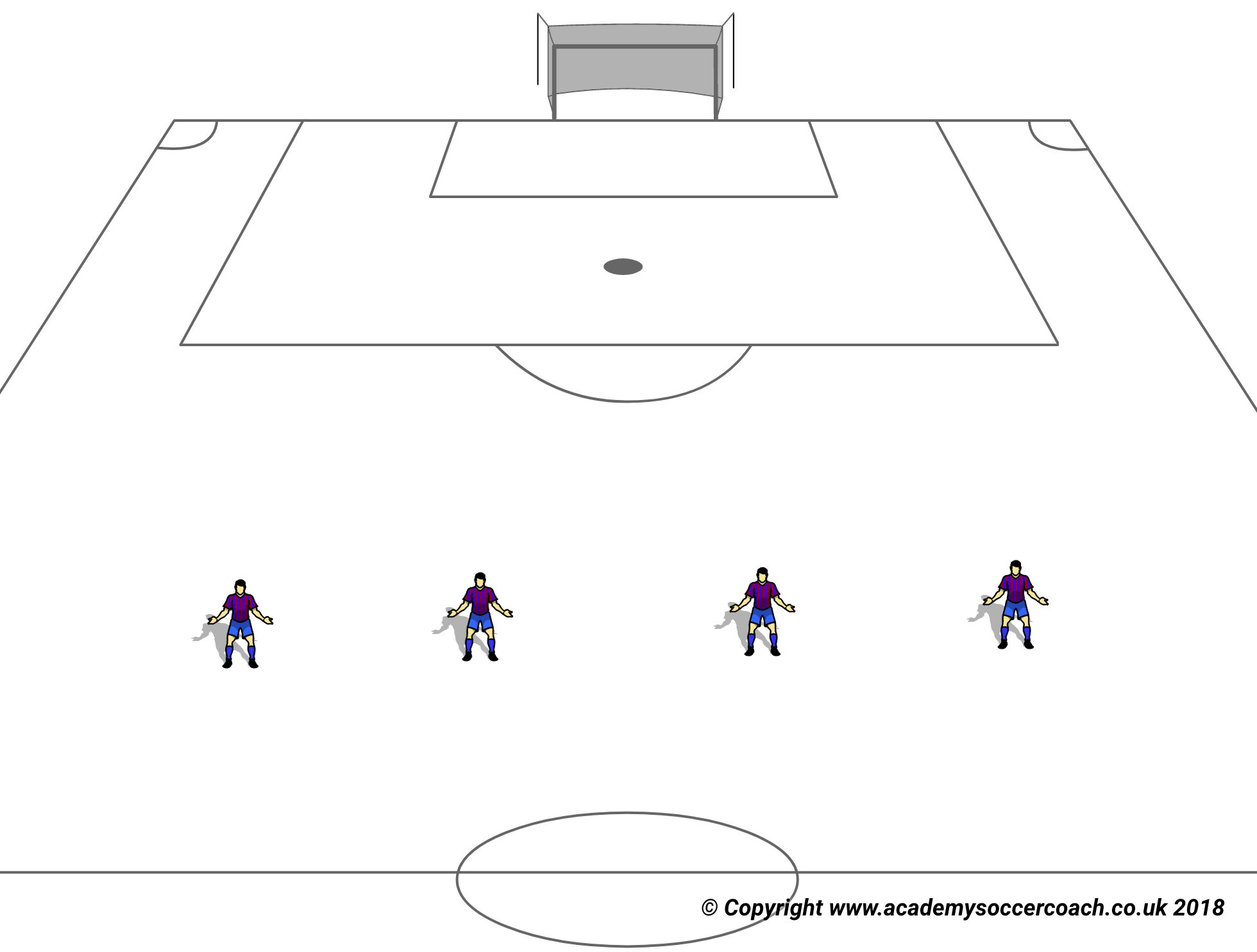
The basic 4-4-2 set up consists of two central players.

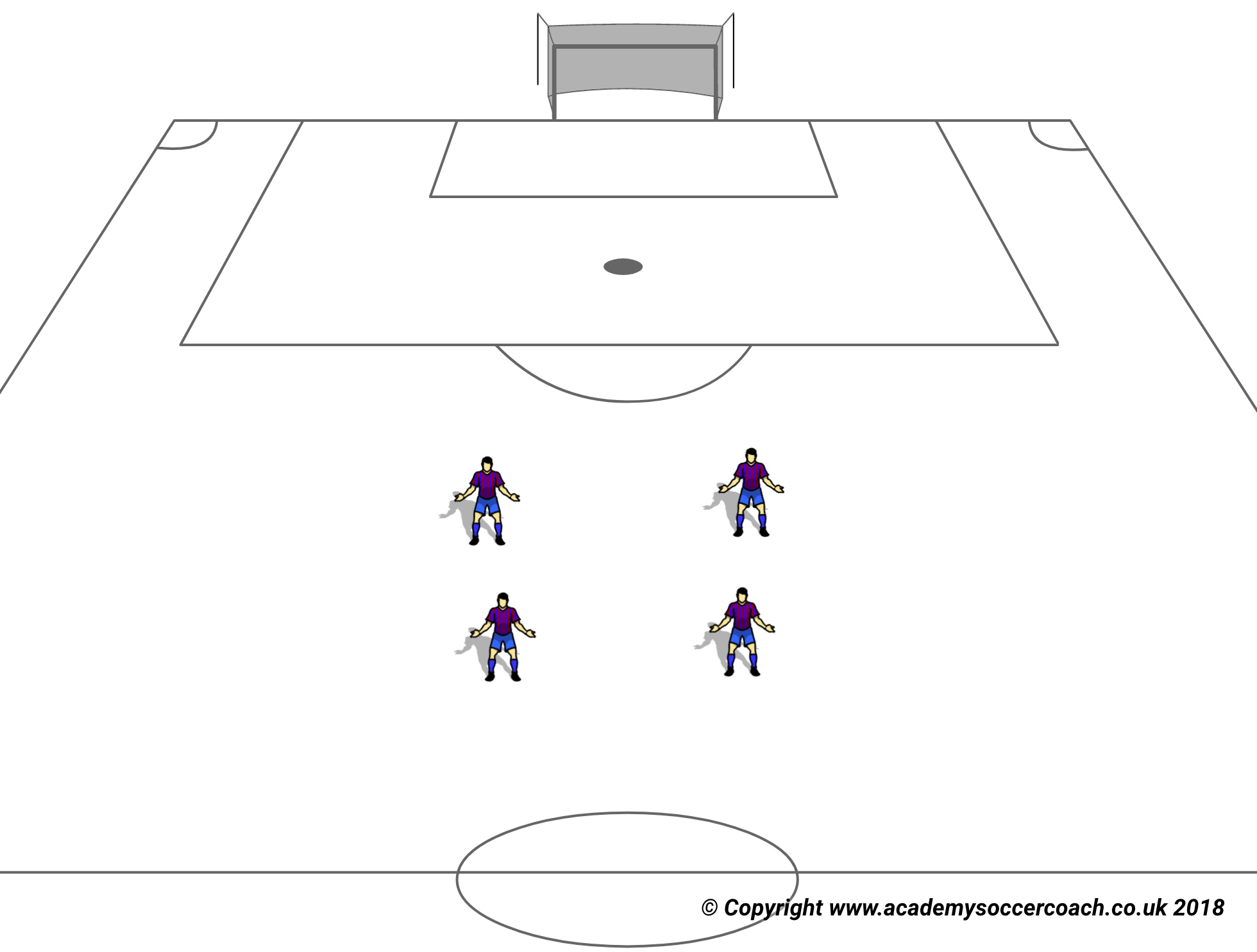
Deploying the four different forms creates the diamond and square forms.
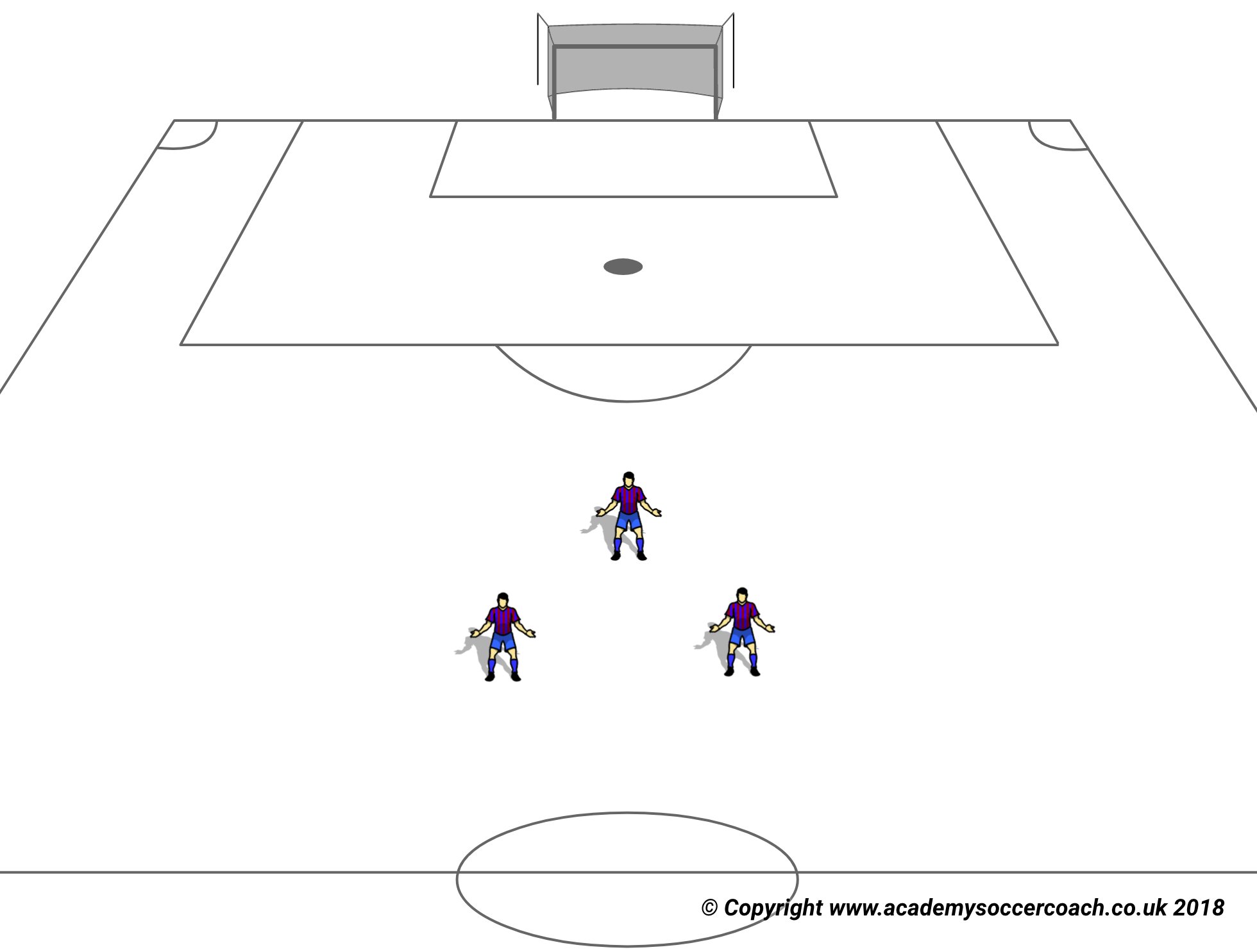
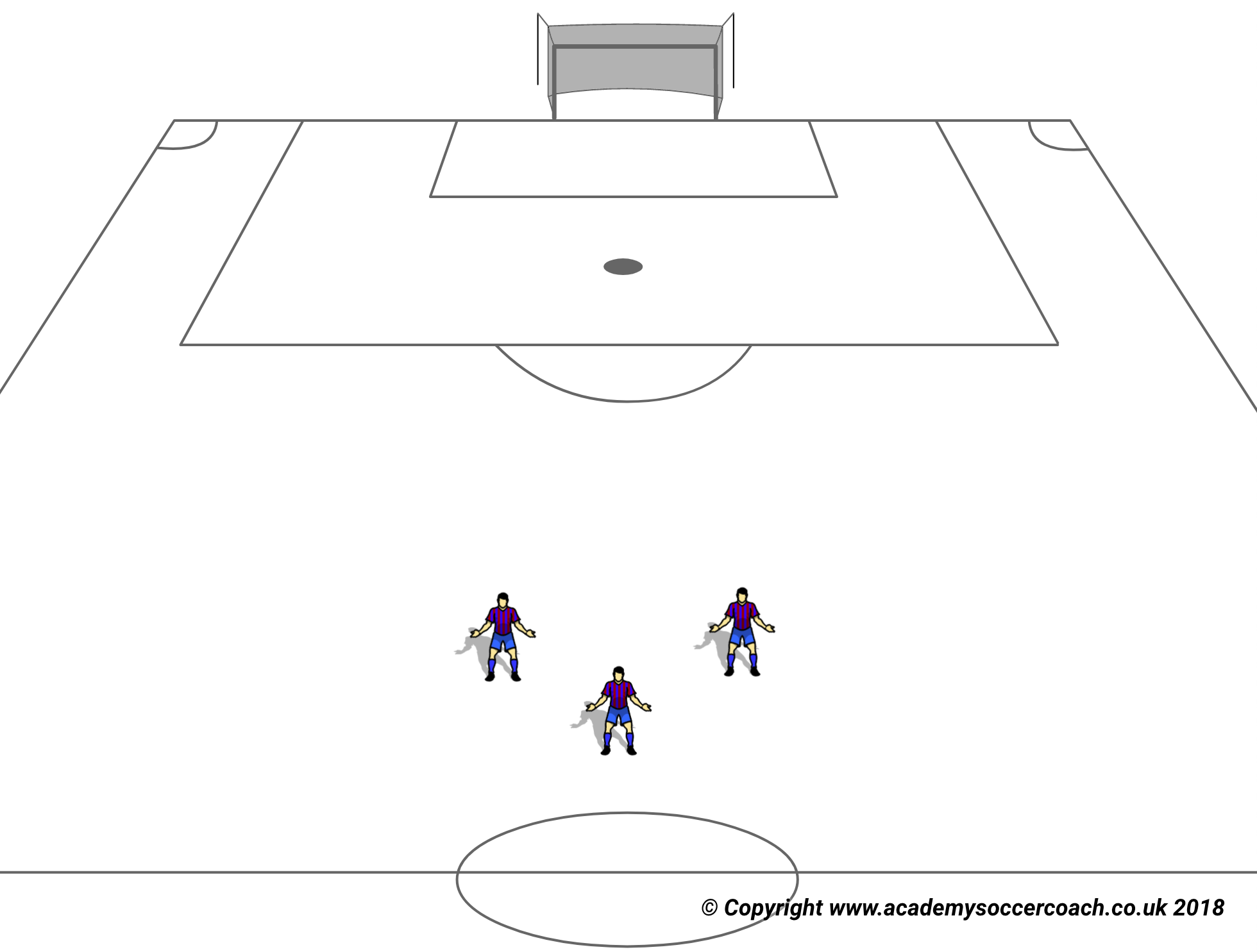
Three man midfields are generally deployed in a triangular shape, with either a two player base (often called a pivot) or two player base (a double pivot).
From here it becomes the kindergarten maths. Three is superior to two, four is superior to three. Yet, it is an extraordinarily rare event to see five deployed against four. The simple reasoning being that in order to pull extra numbers into midfield sacrifices must be made elsewhere. These sacrifices are most commonly applied to wide areas or forwards. How great a priority is midfield control when balanced against other areas of the team?
The roles in a midfield system have grown to carry considerably more nuance over the last twenty years. Mere use of the term central midfielder has been deemed insufficient. Even defensive midfielder and attacking midfielder are not considered enough. The aforementioned Claude Makelele having an entire role named after him, that of the holding midfielder, the player who sweeps in front of the back four, screening and blocking passes into strikers. This is more than a defensive midfielder or holding midfielder.This role is unlike that of players who destroy and dominate through their physicality rather than their positioning.
In England there has always been a predilection towards box to box midfielders, players like Steven Gerrard with fantastic stamina and the capability to do a bit of everything. There are then varying types of play maker, those who take up deep positions and dictate like the great Italian regista Pirlo or those who position themselves slightly higher, a playmaker in the Paul Scholes manner. There is then the advanced play maker, what was once called a “schemer” in England. There will always be outlier, playmakers who play in wide positions, but end up in central areas. Other outliers will be hybrids, players who take on the characteristics more than one of these roles, or players with technical, tactical and physical attributes to perform different roles are different times. The standard for success appears to be a balance of roles. Deploying players with identical skill sets creates limitations. Deploying players whose attributes and abilities are complimentary seems to be a key part of the path to controlling the midfield.
Matching up against a midfield four with a four of your own relies on your players being superior to theirs. The diamond may have a chance against the box because it can exploit the spaces between the players as short diagonal lines create better angles than horizontal and vertical passing lines, but given the congested nature of a four vs four centrally the chances of success are slender without extraordinarily gifted technicians.
Not all match ups will be even. Some two versus two or three versus three situations can be controlled because of the superiority of a set of individuals over the other. Physical superiority when combined with technical ability is very difficult to wrestle control away from. The oft used description of N’Golo Kante is that he is like having an extra player in your team because he does the work of two players. Yaya Toure, Patrick Vieira, Naby Keita, there have been and are a number of these individuals but they are rare. On occasion they have been paired together to create an impenetrable barrier. Vieira was paired with Emmanuel Petit, who may not have been quite as physically imposing as Vieira but was a formidable midfield force himself. At a time when most teams utilised two in midfield it was rarely an even match up for Wenger’s Arsenal. More recently the combination of Busquets, Xavi and Iniesta rarely physically matched their opponents. Sergio Busquets is over 6ft tall but is not a powerhouse footballer, his frame translates into elegance rather than ferocity. Xavi and Iniesta are both 5ft 7inches tall. Physicality was not the weapon of this trio. It was their intelligence and collaboration in combination with a game model that allowed them to control the whole game, not just the midfield. These players specialised in finding spaces between players, dropping into pockets deeper than the ball to receive while team mates circulated and rotated into positions to receive pin point passes. Operating between the defensive lines.
Both examples of Arsenal and Barcelona had other advantages that enabled them to control the midfield area. For Arsenal Bergkamp would drop out from the forward line to act as an extra midfielder when in possession. At Barcelona Gerard Pique could step out of defence to add an extra player when in possession, they also had Lionel Messi who is granted the freedom to take up any position he feels will aid the team. In possession tactical flexibility and intelligent, versatile players can by pass formational rigidity to exert control of the game. While players are often removed from either the forward line or defence to bolster midfield numbers when designing a formation, in game players can step up from defence or back from defence to bolster the numbers. In possession it is generally easier for a player to step up from defence than it is when out of possession. Out of possession it can be useful for a player to drop in to hassle the opposition in the manner of Carols Tevez, Wayne Rooney and Roberto Firmino. In effect, a ball winning forward.
In possession the actual formation is less important than the overall shape of the side. The work of a great many analysts has shown that successful sides will form something resembling a large diamond or kite when in possession. When the passing lines are added we see a web formed.
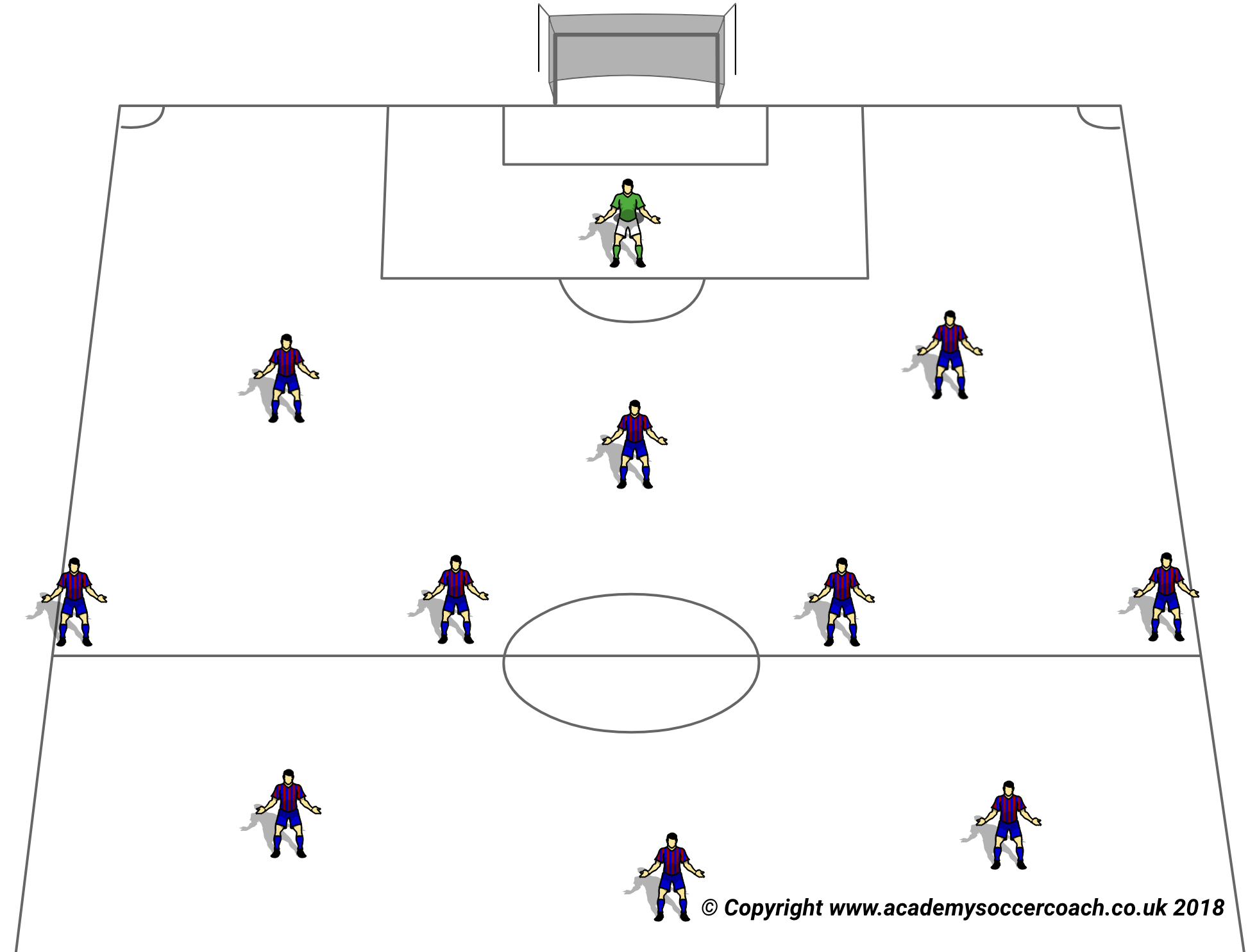
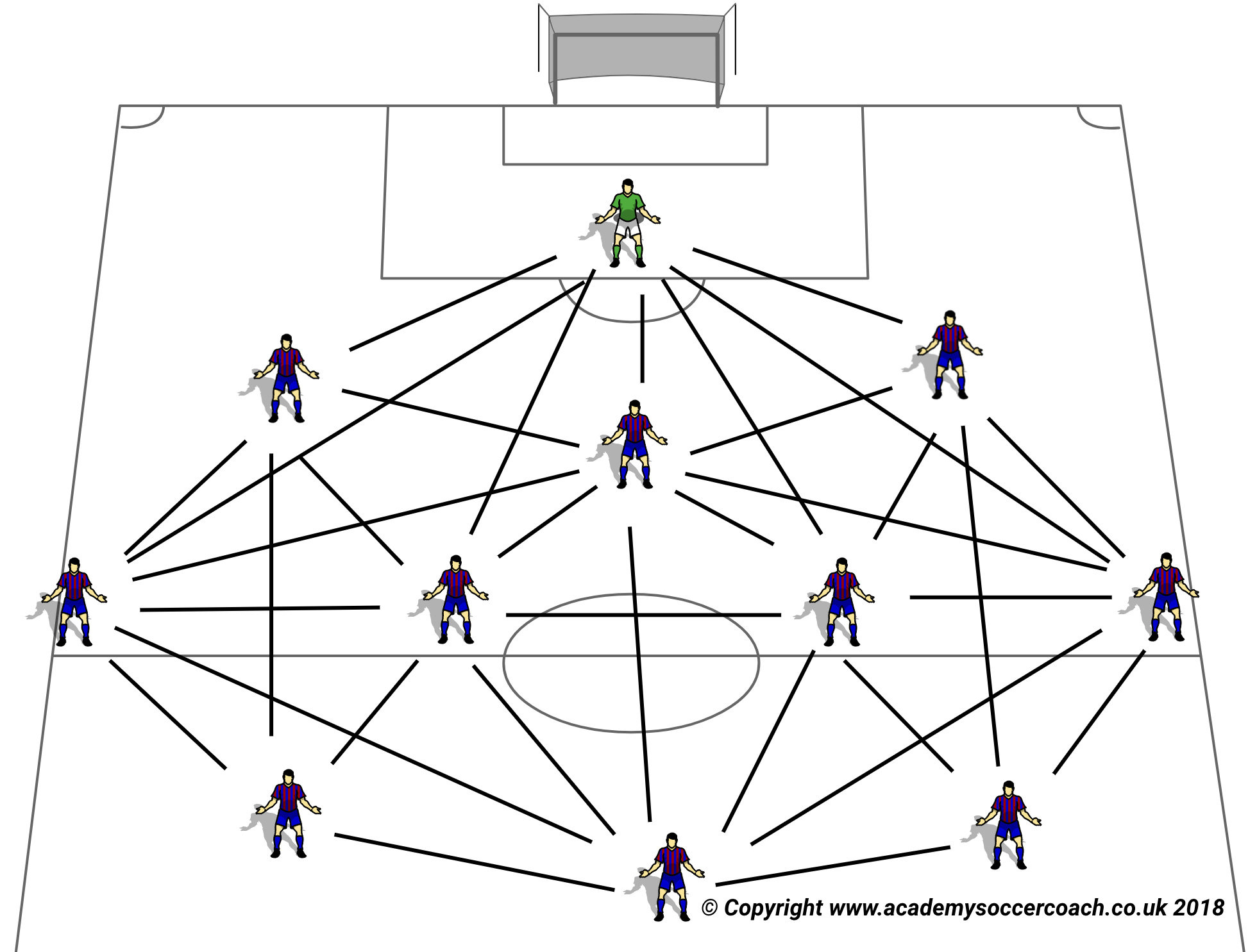
I have marked this a 4-3-3, however, it could very easily be marked as 3-4-3.
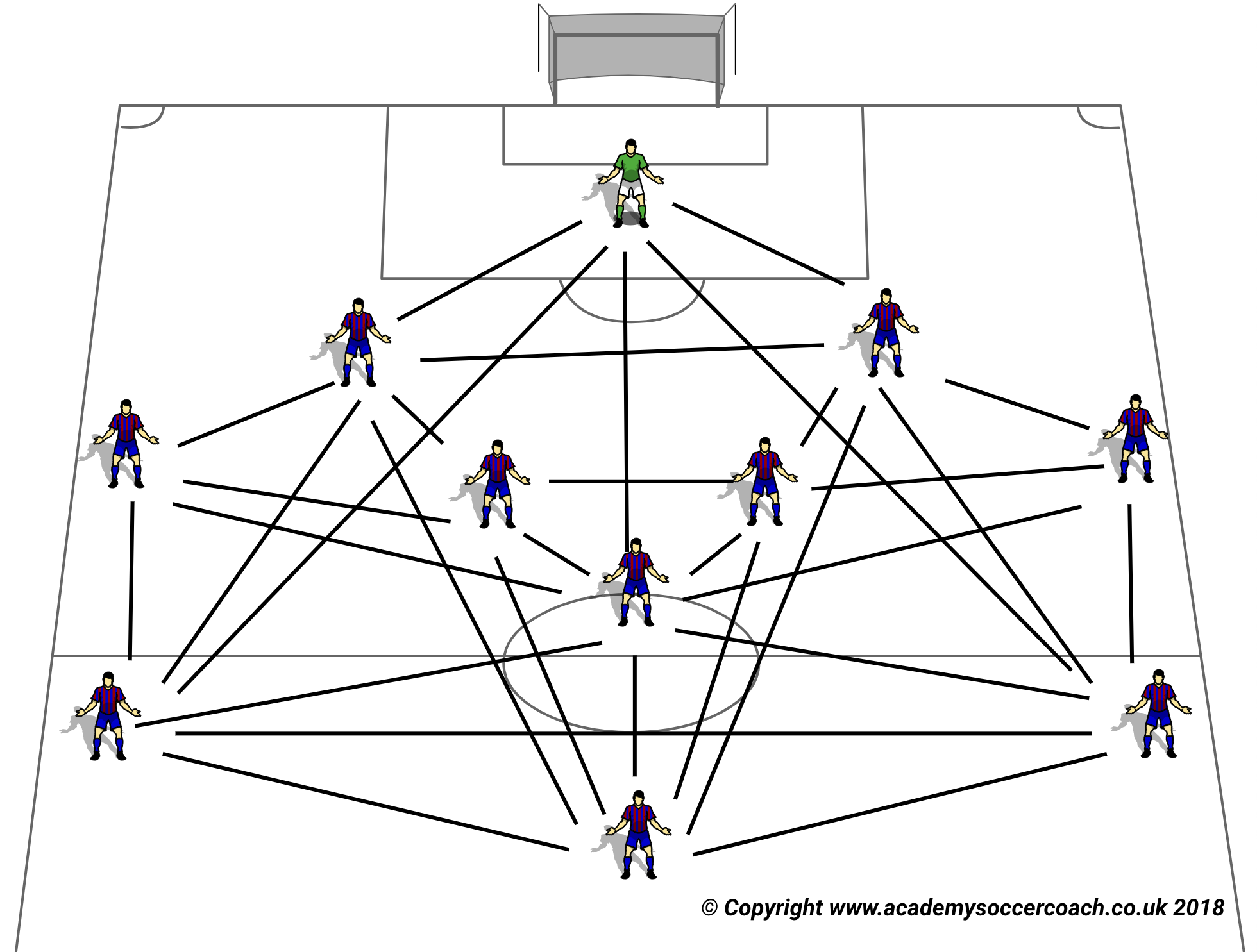
The above image could be seen as a different type pf 4-3-3 with the wingers pushed out further. However, this could also be seen as a version of Arsenal’s 4-4-2 with Bergkamp dropping in. We can see how many passing lines he has and how many players can get the ball into him.
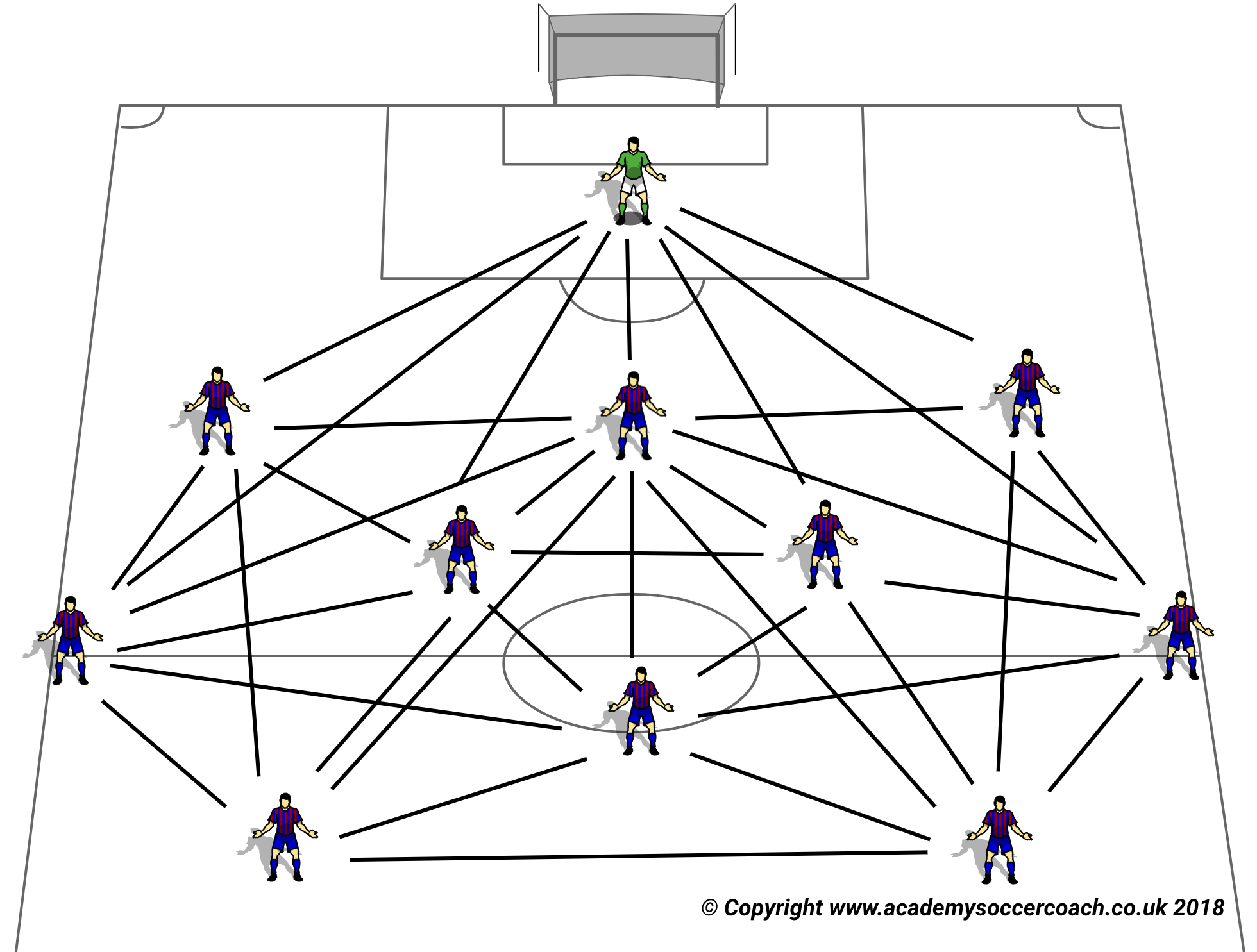
The 3-4-3 is the most versatile and flexible of formations. Provided that the players are intelligent. If they are not it can be the most open and exposed of formations. The key to it is having a central defender who is capable of stepping into midfield and a forward who can drop back into midfield. That means that whatever system the opposition decide to deploy they can be out manoeuvred both with and without the ball. Even without possession the defender can step into midfield provided the wide players are familiar with playing as full backs, they can slot in and create back four. If the flow of the game is heavily against the team they might slot in to form a back five, but controlling the midfield should prevent such a situation.
What the illustrations above also show is that by changing our formation and shape the main elements that we change are the number of options we have in wide positions and the distances the team pass/run. By decreasing the numbers in midfield the remaining players have much more distance to cover and are far more detached from the rest of the team. As a result the players in wide positions may end up drifting inwards so as not to be isolated. Adding more central players (or having more players who can occupy the centre) will increase the attachments to other positions, meaning that wide players can positions them selves further out on the exterior to stretch the opposition. The passes that link the play can be shorter and safer, while the distance to cover during turnovers decreases, allowing less athletically gifted to players to cover spaces and press together as they are close to each other at the point of turnover. The players may still run great distances, but over much shorter spurts.
Out of possession most teams will choose to control the midfield by plugging the area. Especially if they are facing a team of technically superior players. The approach of using two banks of four has been popular for many years. Creating two compact and robust defensive lines. Teams have progressed to tucking in the widest players and creating further lines of defence for opponents to break through. In doing so they make certain sacrifices in wide areas, backing themselves to be able to defend against crosses from deep positions. A midfield three is also able to generate the extra defensive lines but offers a less intimidating block.
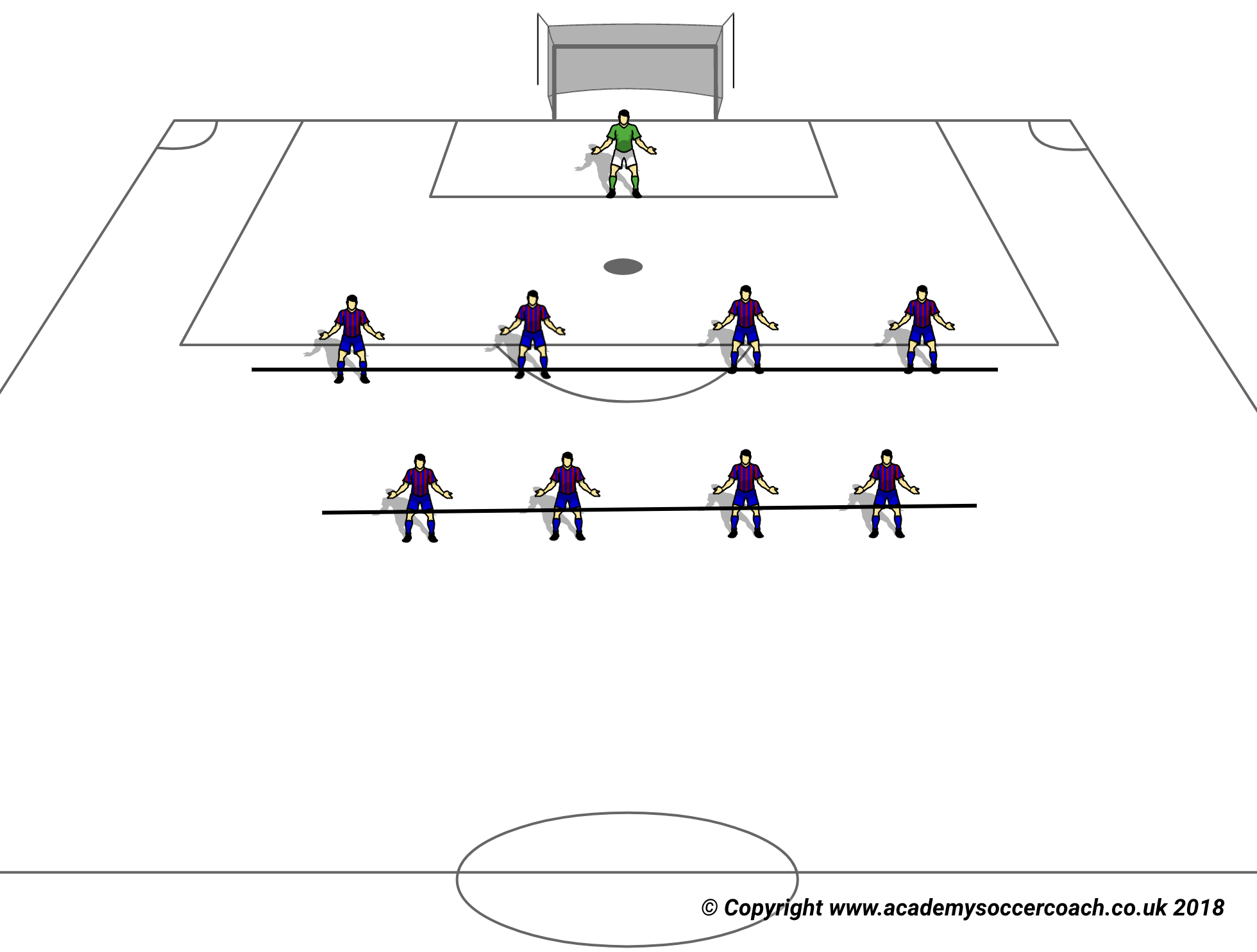
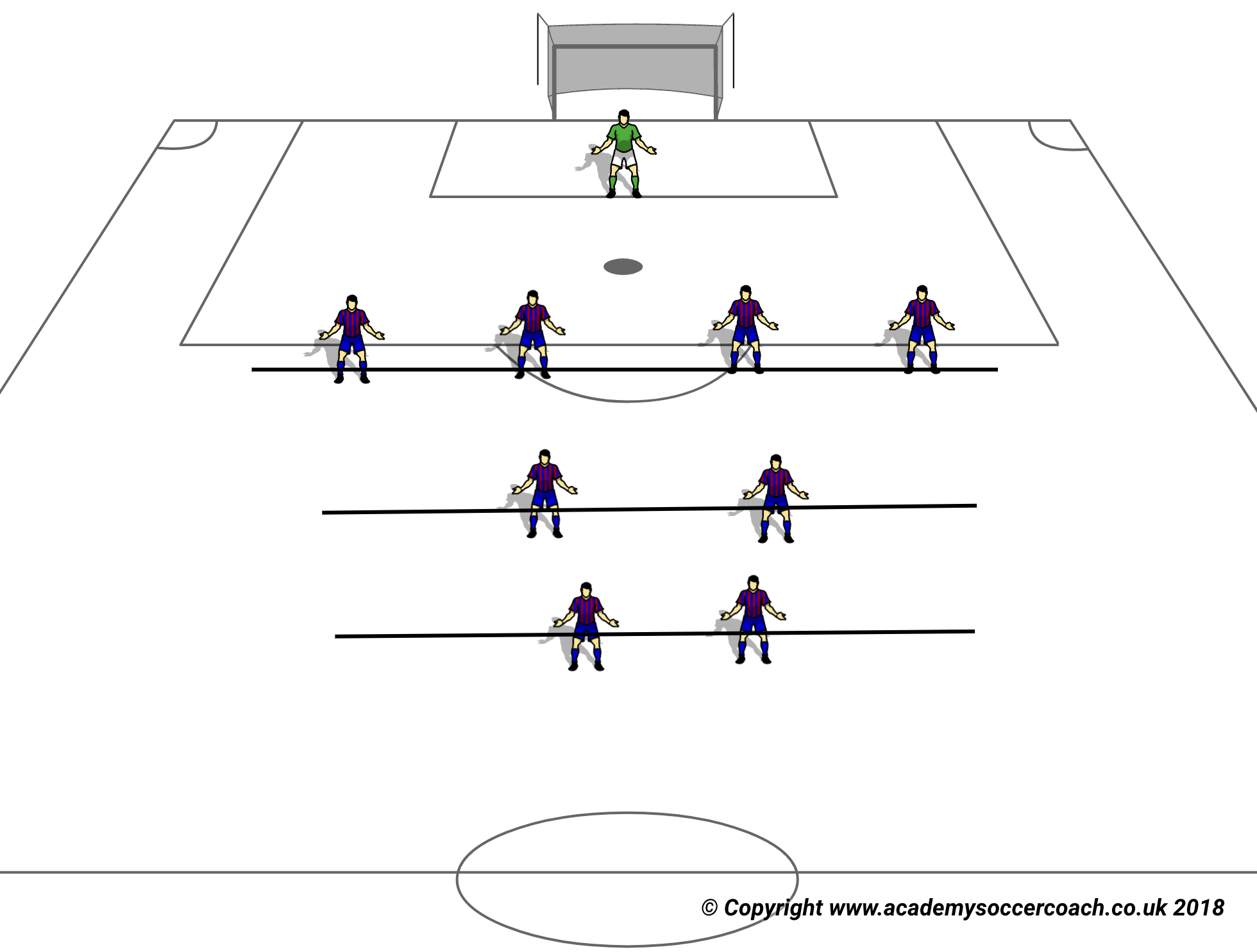
It now seems almost inconceivable that a team will line up without a holding midfielder to protect their defence. Although they are not directly controlling the midfield by having a player screen and prevent easy forward passes they are dictating the speed of the game, by stopping easy forward passes into forwards teams have to play in a slower manner or pass the ball into wide areas rather than being direct centrally. Yet there are teams who do not have a designated holding player. They aim to prevent the ball enter dangerous positions by applying pressure. With forwards pressing the role of the midfielders is less about screening and more about mopping up anything that beats the initial press. One or more of the midfielders may also become a part of the press, though it is likely that at least one will be positioned to cover, even in the most aggressive of pressing teams. The midfield space is effectively controlled by not preventing the opposition from getting the ball into the area. Aggressive pressing teams are happy to retain possession in midfield but prefer not to allow opponents to get into it because this would be the result of an unsuccessful press. Other positions are being used to enable the control of the midfield.
There are a number of ways to control the midfield, in what might be seen as negative ways (smothering the area) or positive ways (dominating possession). The fewer players you can have to commit to be able to control the area, the more options there will be in other areas. Ideally we are versatile enough to change the numbers without having to change our personnel. At the top levels of the game they have the advantage of scouting reports and can prepare accordingly, at other levels they are less fortunate. Can we ensure that we always have one more defender than the opponents have attackers? Then we need have at least one player on each flank who can exploit a 1v1, From there we try to have one more player in midfield than the opposition. Whatever is left can take up attacking positions. From this base we have chosen our formation, dictated our shape and controlled the midfield.
Thank you for reading. If you enjoyed this article you may also enjoy my new coaching book. Take a look at the link below.